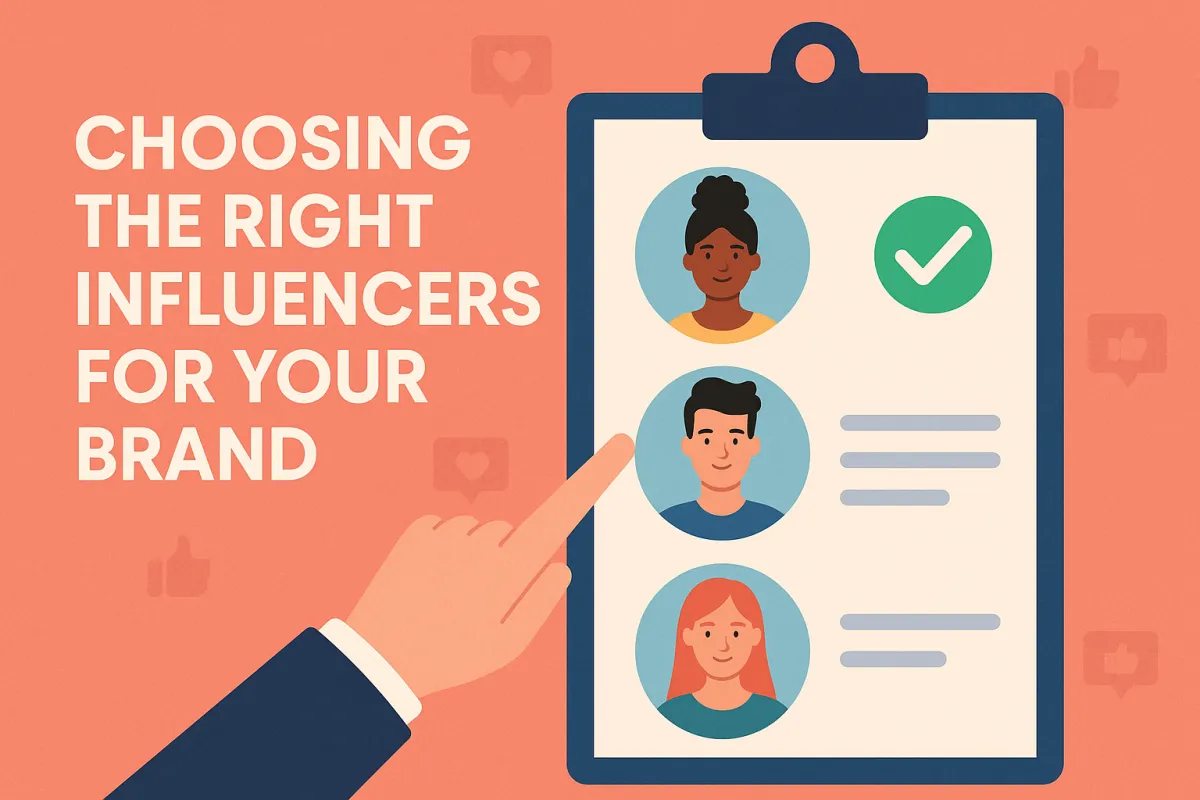
Choosing the Right Influencers for Your Brand
Looking for the fastest way to build brand trust, engage new audiences, and boost ROI without spending a fortune on traditional ads? Influencer partnerships might just be your answer. But not just any influencer will do. This guide breaks down how to truly find a right-fit influencer for your brand—based on values, not just vanity metrics.
In this first section, you’ll learn:
Why influencer marketing is more than just follower counts
How to define your campaign goals before outreach begins
The difference between a creator and an influencer (and why it matters)
What to look for in a potential influencer’s content and audience
How to start building your influencer persona (with long-term growth in mind)
Whether you’re a solo founder or a growing ecommerce team, mastering the influencer selection process will save you time, budget, and your brand’s reputation. Let’s dive in.
Why Influencer Marketing Isn’t Optional Anymore
The ecommerce space is saturated. Your product might be exceptional, but if it’s not getting in front of the right people, you're already behind. That’s where influencer marketing shifts from a nice-to-have to a critical part of your growth strategy.
A well-matched influencer doesn’t just promote—they humanize. They become your voice in communities where ads simply can't tread. And because they speak directly to tight-knit audiences built on trust, the results feel natural, not forced.
“People buy from people they trust. Influencers collapse the distance between brand and buyer.”
But don’t make the mistake of thinking every big follower count guarantees impact. Without audience demographics that align with your target customer, or without brand alignment, even the most “viral” influencer can fizzle fast.
Step One: Define What Success Actually Looks Like
Before even typing your first outreach email, you must have clarity on your campaign goals and KPIs. Without a goal, influencer marketing becomes a guessing game.
Consider your objectives:
Brand Awareness: You’ll want influencers with broader reach and a strong presence on relevant media channels.
Lead Generation: Target influencers whose audience mirrors your buyer personas.
Conversions & ROI: Look for creators with a history of influencing purchase behavior—trackable via affiliate tracking or promo codes.
If you’re unsure where to begin, a quick free audit of your brand’s marketing strategy can give you clarity and focus.
Creator vs. Influencer: Why the Distinction Matters
Many marketers mistakenly group content creators and influencers together. While the line between them is often blurred, their motivations—and outcomes—can differ dramatically.
A content creator is focused on the art—developing visual or written work that resonates with their audience.
An influencer, by contrast, is focused on action—driving engagement, clicks, or sales on behalf of a brand.
Understanding this difference can guide your approach. If your campaign requires visually branded content for reuse, a creator might be a better partner. But if you're after impact metrics like conversion rate or traffic, an influencer with proven credibility and trust might outperform.
Building an Influencer Persona
Rather than casting a wide net, start narrow. Build an influencer persona—a profile of the ideal person who could represent your brand online.
Ask yourself:
What niche relevance should they have?
Which platforms does your audience engage with the most?
Should they be a micro-influencer (10k–100k followers) or a nano-influencer (<10k), depending on your budget and desired engagement?
An example influencer persona might look like:
A wellness-focused mom with 20k Instagram followers, based in Canada, known for honest skincare reviews and DIY wellness tips. Her posts average 6% engagement and she shares values around sustainability and conscious consumerism.
This kind of clarity helps not only with outreach but also improves your influencer vetting process and future influencer relationship management.
What to Look for in a Quality Influencer
Finding the right influencer isn’t about who looks the part—it’s about who performs and aligns.
Here’s a quick checklist of what to evaluate:
✅ Audience Alignment
Check their audience demographics—age, gender, location, interests. You can request this in their media kit.
✅ Engagement Rate
Don’t be wowed by likes alone. Measure real interaction. Engagement above 2.5% is considered healthy for most niches.
✅ Content Quality
Is their photography and messaging aligned with your brand tone? Does it feel professional or overly sponsored?
✅ Authenticity
Do followers trust them? Scan comment sections. Watch for generic replies or unnatural engagement patterns (a sign of influencer fraud).
✅ Brand Values
Do they align with your ethics, mission, and long-term positioning? This is key to sustainable brand advocacy.
If you're managing campaigns yourself, our services page outlines how we support ecommerce teams with custom strategies and influencer matchmaking.
The Importance of Platform Fit
Not every influencer belongs on every platform. A skincare tip video might perform well on TikTok, but a professional tech product needs a deeper-dive YouTube review or LinkedIn voice.
Matching influencer and platform fit is essential. Here’s a quick guide:
PlatformIdeal ForInstagramAesthetic brands, fashion, lifestyleTikTokGen Z, humor, quick valueYouTubeIn-depth reviews, how-to contentLinkedInB2B, leadership, professional services
Choose influencers who already thrive on the channels your buyers use daily.
Influencer Vetting: How to Spot Red Flags and Gold Mines
With your influencer persona in hand, it’s time to dig deeper. This phase—influencer vetting—can make or break your campaign. The influencer space is filled with impressive numbers, but not all of them are real.
“Viral doesn’t always mean valuable.”
Here’s how to separate solid partners from surface-level performers:
🔍 Red Flags to Watch For:
Sudden follower spikes: May indicate paid bots.
Low engagement rate: Especially on posts marked as “sponsored.”
Generic comments: If 90% of responses are “love this” or “great pic,” it’s likely not authentic.
Misaligned niche: A tech brand being promoted by a fashion influencer? That’s poor brand alignment.
No past partnerships: While not a dealbreaker, it's important to ask for a media kit to review prior results.
Consider using social listening tools to see who’s already talking about your niche or brand organically. This can surface micro-influencers already aligned with your values—and potentially lower your acquisition costs.
The Threat of Influencer Fraud (And How to Avoid It)
Influencer fraud isn't always malicious. Sometimes, influencers buy followers early on to “prime” their account. Others fall victim to fake engagement services promising growth. Regardless, it skews your data and wastes your budget.
How to prevent influencer fraud:
Use influencer discovery tools like HypeAuditor or Upfluence to verify real engagement.
Cross-check audience demographics with your target customer. Look for odd geographies.
Don’t ignore quality comments—look for consistency and specificity.
Ask for results from previous collaborations, especially involving affiliate codes or trackable links.
You don’t need to be a data scientist to detect fraud. You just need to know what real influence looks like: connection, community, and consistency.
Aligning for Brand Safety and Long-Term Growth
Your influencer is, in essence, a public extension of your brand. And in today’s hyper-connected world, what they post—even outside of your campaign—can affect you.
Brand safety checklist:
Review past posts for controversial content or inconsistencies.
Scan how they respond to criticism or customer questions.
Assess alignment with your brand values—environmental, social, or political.
Discuss brand guardrails upfront in your collaboration agreement.
When done right, you won’t just find an ambassador—you’ll unlock long-term collaboration that builds both brand equity and loyalty.
“A true partnership grows over time. One-off shoutouts are vanity plays. Loyalty is built through co-creation.”
The Power of Content Co-Creation
The era of “post this graphic with a discount code” is over. Influencers are not banner ads. They’re creators, storytellers, and culture-shapers. Let them do what they do best—create.
Why co-creation matters:
It brings authentic storytelling to your product narrative.
It reflects how your product fits into their life, not a marketing script.
It results in reusable UGC (user-generated content) that you can re-share across campaigns.
Collaborative content can include:
Behind-the-scenes product use
“Unfiltered” reviews on Instagram Stories
Live Q&As or platform takeovers
Mini series showing how the product integrates into daily life
This type of content not only performs better but often sparks new social proof through community engagement.
The Metrics That Actually Matter
While likes and shares look good, they don’t always tell the full story. As you begin measuring success, you’ll want to focus on metrics tied to your campaign goals/KPIs.
Here are metrics that move the needle:
MetricWhy It MattersEngagement RateIndicates real audience interestConversion RateDirect link between influencer post and salesLead VolumeFor email signups, free trials, or downloadsBrand SentimentMonitored through sentiment analysis toolsAffiliate SalesTrackable ROI via codes or UTM links
If you're using multiple influencers, consider developing a custom influencer fit score to help you refine selection over time. This internal metric can balance reach, relevance, content quality, and engagement to highlight your top performers.
Scaling with Lookalike Influencers
Once you've nailed a winning influencer partnership, don’t stop there. Use it as a model to discover lookalike influencers—creators who share similar styles, audiences, or content verticals.
This strategy allows you to:
Expand your reach without losing brand consistency
Replicate success across multiple media channels
Test localized or language-specific campaigns
Scaling doesn’t always mean going bigger. Often, it means going smarter.
Need help building a repeatable influencer strategy? Explore how our Easy Ecommerce Marketing team supports DTC brands with influencer programs built for scale and sustainability.
Outreach That Doesn’t Suck: How to Pitch Without Sounding Robotic
So you've found a potential influencer match. Now it’s time to reach out—but how you approach them matters almost as much as who they are.
“The best influencer outreach feels more like an invitation to collaborate than a cold pitch.”
Here’s what your initial message should include:
A genuine compliment about their content (reference a specific post or campaign)
A quick intro to your brand and what makes it different
Why you think the partnership makes sense (niche relevance is key here)
Clear expectations (timeline, content format, goals)
Ask for their media kit and rates
Here’s a simple but powerful structure you can adapt:
This approach balances professionalism with authenticity—two non-negotiables in this space.
Setting Expectations: Deliverables, Timelines, and Fair Pay
Once a partnership begins to take shape, it’s time to discuss deliverables. Define everything clearly up front:
Number of posts/stories/videos
Content formats (e.g. Instagram Reel, YouTube review)
Usage rights (can you reuse the content for your own ads?)
Timeline for content drafts and posting
Metrics or KPIs you’ll be tracking
About Compensation…
There’s no one-size-fits-all model. Influencer rates vary based on platform, follower count, engagement rate, and content type.
You can pay via:
Flat fee per deliverable
Affiliate commission
Product gifting + performance bonus
A combination of the above
Be upfront with your budget and flexible in negotiations. Fair compensation builds long-term collaboration—and avoids the “one-and-done” cycle that drains brand consistency.
Cross-Platform Strategy: Don’t Keep Your Influencer in a Silo
Many brands treat influencer marketing like an isolated campaign channel. That’s a mistake.
Your influencer content should be part of a cross-platform strategy that supports your wider funnel—from awareness to conversion.
How to Integrate Influencers Across Channels:
Repurpose their content into paid social ads
Embed influencer videos or testimonials on product pages
Highlight influencer quotes in your email marketing
Share influencer UGC in retargeting campaigns
Include “As seen on [Influencer]” on your landing pages or blog posts
The goal here isn’t just visibility. It’s consistency. Influencers become brand amplifiers when they’re visible across your entire customer journey.
Want inspiration for how this can work in real-time? Take a look at how we blend influencer and content strategies across ecommerce touchpoints on our homepage.
Post-Campaign: What Comes After the Post
Many brands make the mistake of ending the relationship as soon as the content goes live. That’s leaving value on the table.
Instead, follow this simple post-campaign sequence:
Analyze results using agreed KPIs: clicks, engagement, reach, and conversion rate
Use sentiment analysis (comments, shares, responses) to gauge tone and audience reception
Offer feedback—and ask for theirs too
Request permission to reuse or promote high-performing content
If results were strong, propose the next step: a longer-term partnership
This is where your brand transitions from being a client to becoming a trusted partner—and potentially earns brand advocacy that lives beyond contracts.
Building Brand Advocacy and Loyalty Through Influencers
The final evolution of a good influencer is this: they become a genuine fan of your product.
This shift happens when:
You respect their creativity and input
You reward them with more than just cash—early access, first-look launches, exclusive collabs
You make them feel like an insider, not just an asset
Consider creating a brand ambassador program where top-performing influencers:
Get sneak peeks at new products
Are featured on your website or blog
Help shape future campaigns
Earn increased affiliate commissions or perks
This turns your influencer from a rented voice into an owned channel of influence.
“An influencer might introduce you to their audience once. A brand advocate brings you up in conversations for years.”
Bonus Tip: Use Lead Magnets to Maximize Traffic Spikes
Every influencer campaign will drive a spike in visits—don’t let it go to waste.
Use custom landing pages to capture traffic with a freebie, discount, or lead magnet
Offer exclusive content or downloads that deepen interest
Use retargeting ads to follow up based on their content interaction
Not sure what type of lead magnet would best suit your audience? Use our free audit to identify key conversion opportunities from influencer-driven traffic.
Final Thoughts
“Choosing the Right Influencers for Your Brand” isn’t about finding someone popular—it’s about finding someone who can make your brand popular in the right circles.
Focus on alignment over hype, authenticity over perfection, and partnership over promotion.
Whether you’re launching your first influencer collaboration or refining your current approach, remember:
Vet for value, not just visibility
Track real metrics that tie to sales and brand lift
Co-create content with heart, not just aesthetics
Build relationships, not transactions
Influencer marketing done right becomes less about the influencer—and more about how your brand becomes part of a trusted conversation.
Need help getting started? Let’s build your influencer marketing engine — strategy, execution, and performance optimization, all in one place.
Frequently Asked Questions: Choosing the Right Influencers for Your Brand
1. What’s the difference between paid influencers and brand ambassadors?
Paid influencers are typically hired for short-term campaigns or one-off content. Brand ambassadors, on the other hand, represent your brand over a longer period and often develop a deeper, more organic relationship with your products, contributing to long-term brand loyalty and awareness.
2. How many influencers should I work with for a single campaign?
This depends on your budget, campaign goals, and resources for management. For niche products, 2–3 well-matched micro-influencers may outperform a single celebrity. Larger campaigns may benefit from a mix of nano, micro, and macro influencers to balance reach and engagement.
3. Do I need a contract when working with influencers?
Yes. A written agreement helps outline deliverables, deadlines, usage rights, compensation, and brand guidelines. This protects both your business and the influencer, ensuring clarity and accountability.
4. How do I ensure an influencer will actually post about my brand?
In addition to using a contract, build a relationship before the collaboration begins. Confirm that the influencer is genuinely interested in your brand and has aligned values. Always agree on deliverables and timelines before compensation is sent.
5. Should I focus on influencers with high follower counts or high engagement rates?
High engagement rates typically signal a stronger connection with the audience, especially for micro- and nano-influencers. If your goal is conversions or trust-building, engagement rate is more important than pure reach.
6. How long does it take to see results from an influencer campaign?
It varies. Some campaigns generate immediate traffic or sales, while others build momentum over weeks or months. Consider both short-term KPIs (like clicks or coupon redemptions) and long-term metrics (like follower growth or brand recall).
7. Can I reuse influencer content in my ads or website?
Only if you have permission. Be sure to negotiate content usage rights in your agreement. Many brands repurpose influencer-created assets for social ads, email marketing, and product pages once rights are secured.
8. What platforms are best for finding influencers?
There are both free and paid tools for influencer discovery. Paid options like Grin, Upfluence, and Modash offer analytics and filtering tools. You can also search manually on platforms like Instagram, TikTok, and YouTube using hashtags or niche keywords.
9. Should I ask for analytics after the influencer posts content?
Absolutely. A professional influencer should be able to provide post-performance stats such as impressions, reach, likes, saves, shares, and swipe-ups or link clicks. These are crucial for measuring ROI and campaign effectiveness.
10. Is gifting products without payment still effective in 2025?
Yes—product seeding still works, especially with nano- and micro-influencers who value genuine brand relationships. However, always clarify that posting is not guaranteed unless compensated or agreed upon. As influencer marketing matures, more creators expect fair payment in addition to gifted products.
