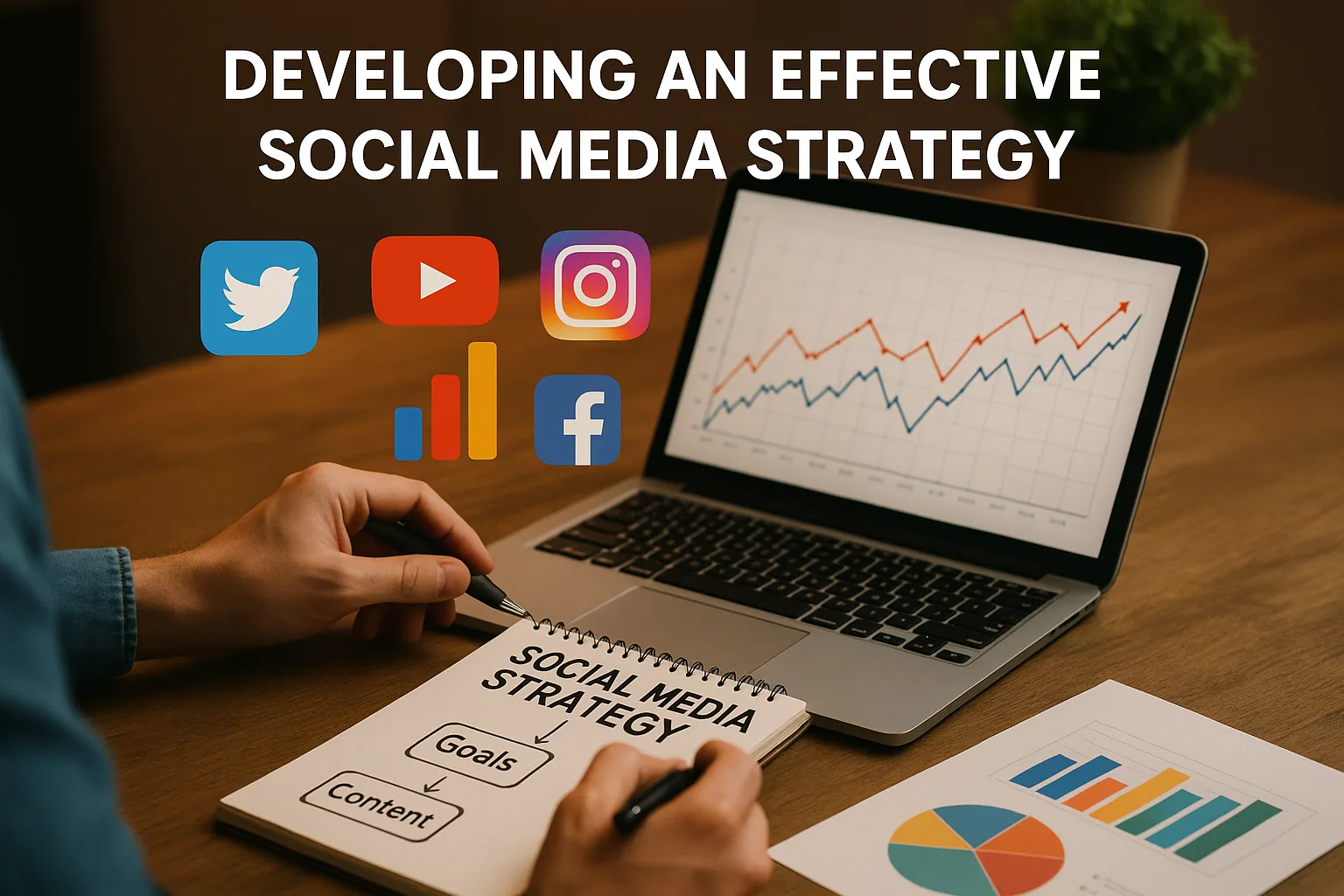
Developing an Effective Social Media Strategy
This article breaks down how to create a modern, goal-driven social media strategy for your ecommerce brand. You’ll learn why understanding your audience is non-negotiable, how to set measurable goals, and how to develop a content engine that actually fuels growth. We’ll walk through actionable frameworks like SMART goals, content calendars, and performance metrics—plus explore engagement tactics, platform selection, and tools to track ROI. Whether you're just starting out or refining an existing strategy, this article gives you everything you need to position your brand for consistent traction on social.
Rethinking Social Media Strategy in 2025
There was a time when simply being present on social media was enough. But with ever-shifting algorithms, increasingly savvy audiences, and content overload, throwing up a few posts and hoping for engagement just doesn’t cut it anymore.
Instead of treating social media as a promotional dumping ground, brands now need to build a strategy rooted in planning, personality, and performance. For ecommerce brands, particularly those navigating growth in competitive niches, social media becomes a powerful extension of your brand voice, not just a distribution channel.
At Easy Ecommerce Marketing, we’ve helped countless online stores shift from inconsistent posting to structured systems that increase awareness, drive conversions, and create loyal communities. And it starts with rethinking what “strategy” really means.
Start With the End: Define Your Social Media Objectives
A winning strategy doesn’t begin with content. It begins with clarity of purpose. What role do you want social media to play in your marketing funnel?
Before you choose platforms or create a single post, you need to align on your SMART goals:
- Specific: Do you want to grow your audience, increase website traffic, or generate leads?
- Measurable: What will success look like? (E.g., reach, engagement rate, click-throughs)
- Achievable: Are your goals realistic given your current resources?
- Relevant: Do these goals support broader business objectives?
- Time-bound: When should this goal be achieved?
Once goals are set, translate them into Key Performance Indicators (KPIs). If your goal is to grow brand awareness, monitor metrics like impression share and engagement rate. For conversion-focused campaigns, track click-through rates, social ROI, and conversion funnel benchmarks.
Know Thy Audience: Research Before You Reach
Great content without the right audience is wasted effort. Social platforms reward relevance, and relevance starts with audience research.
Use both quantitative and qualitative methods to build detailed buyer personas. These profiles should reflect demographics, buying behaviors, content preferences, and pain points. Ask yourself:
- What platforms does your audience use?
- Are they looking for inspiration, education, or support?
- Do they respond better to video marketing or written posts?
This persona segmentation not only guides platform selection, but also determines tone of voice, visual design, and frequency.
For instance, if your audience skews younger and engages with short-form, visual storytelling, lean into ephemeral content like Stories or Reels. If you're B2B or selling a considered purchase, platforms like LinkedIn or long-form thought leadership posts may drive more impact.
"Your strategy is only as strong as your understanding of your audience. Don't assume—research."
Also consider social listening as an ongoing habit, not just a one-time exercise. Tools like Hootsuite or Brandwatch help uncover what people are saying about your brand, competitors, and industry, which can spark campaign ideas and content angles.
Choose the Right Channels, Not All of Them
It’s tempting to try to be everywhere—but this usually leads to being effective nowhere.
Use your audience insights to determine social channel fit. Prioritize platforms based on where your personas are already active, and focus on mastering a few rather than scattering your resources.
Here’s a quick example of platform alignments based on audience and objective:
PlatformBest ForInstagramVisual content, UGC, brand storytellingTikTokTrend-driven engagement, micro-influencersLinkedInB2B content, employee advocacy, thought leadershipPinterestProduct discovery, lifestyle contentFacebookCommunity building, retargetingX (formerly Twitter)News-style updates, live engagement
Use this to build your platform-specific guidelines, deciding not just where you’ll post—but how each platform will play a distinct role in your content strategy.
If you’re unsure where to begin, our free marketing audit can help you identify which platforms are most aligned with your goals and audience behaviors.
Planning Your Content Like a Pro
With goals and platforms in place, it’s time to build a content engine. This is where many ecommerce brands drop the ball—because they focus only on products, not storytelling.
Effective social media content balances promotion with personality and uses structured planning to stay consistent.
Start by creating content buckets or themes—these are recurring categories that reflect your brand values, customer interests, and business objectives. Examples include:
- Educational: Tips, how-to content, FAQs
- Entertaining: Behind-the-scenes, memes, pop culture tie-ins
- Inspirational: Customer stories, brand mission, social impact
- Promotional: Product launches, seasonal sales, limited offers
Use a content calendar to map these themes across the month. This helps prevent over-promotion and ensures a healthy mix that keeps followers engaged.
Don’t forget to bake in content repurposing and content curation. Not every post needs to be original. You can turn blog posts into carousels, republish customer reviews as UGC, or curate industry news that aligns with your values.
If you need help crafting content that fits this model, explore our services page where we offer monthly content packages designed for ecommerce growth.
Mastering Engagement: From Attention to Action
If your content is the engine, engagement is the fuel that keeps your strategy moving forward. Without meaningful interaction, your brand becomes another silent voice in an already crowded feed.
This is where community management takes the spotlight.
It's not just about replying to comments. It's about creating conversations, showing up consistently, and building trust. Whether you're a startup or scaling ecommerce brand, investing in engagement increases brand awareness, improves your conversation rate, and builds social proof—all of which amplify your visibility on most platforms.
Here are some actionable engagement techniques:
- Pose thought-provoking questions in captions to invite responses.
- Use Instagram Stories for quick polls and Q&As.
- Leverage UGC by resharing customer photos, reviews, or testimonials.
- Tag customers, collaborators, or micro-influencers in posts to boost reach.
- Follow back and interact with relevant accounts in your niche.
The goal is to create a two-way relationship. Social media is not a megaphone—it’s a phone call. Use features like pinned comments, DMs, and saved responses to streamline interactions while keeping the human element.
Pro Tip: Encourage user-generated content through monthly challenges or giveaways. It creates authentic engagement while giving you valuable assets for future content.
Timing, Frequency & Algorithms: When and How Often to Post
You’ve probably heard the phrase, “Post at the right time.” But what is the right time?
The truth is, publishing times are platform-specific and audience-dependent. That’s why A/B testing is crucial. Try posting the same type of content at different times of the day or week and compare the results using your analytics tools.
General posting guidelines (use as a starting point):
- Instagram: 3–5 times per week; mornings or evenings
- LinkedIn: 2–3 times per week; mid-week mornings
- TikTok: 1–4 times per day; evenings tend to perform better
- Facebook: 1–2 times per day; mid-mornings or early afternoons
But frequency isn’t everything. Consistency and quality win every time. If you're too sporadic, algorithms may suppress your reach. If you're too frequent without value, followers may tune you out.
This is where scheduling tools like Hootsuite or Buffer become invaluable. They help maintain consistency, align with your content calendar, and free up time for actual engagement.
Also, keep in mind how social media algorithms reward certain behaviors:
- Content with fast engagement gets boosted more widely.
- Posts that keep users on-platform (carousels, videos) tend to perform better.
- Brands that use platform-native features (e.g., Reels, Polls, Threads) often get preferential reach.
The key takeaway: Create platform-native content and measure everything.
Hashtags, Visuals & Storytelling: The Creative Edge
Even with smart planning and solid goals, poor creative execution can stall your entire strategy. The competition for attention is fierce. You need scroll-stopping content.
Here's how to elevate your creative:
1. Use a Strategic Hashtag Approach
Hashtags are more than categorization—they’re distribution channels. Use a blend of:
- Branded hashtags (e.g., your store name or product lines)
- Industry tags (like #ecommercemarketing or #socialselling)
- Trending or seasonal tags (aligned with current events or platform trends)
Stick to 3–5 relevant hashtags on Instagram, 1–2 on LinkedIn and Facebook, and test combinations over time.
2. Prioritize Visual Content
We are visual creatures. Posts with strong imagery or motion consistently outperform those without. Lean into:
- Short-form video (Reels, TikTok)
- Behind-the-scenes product clips
- Cinematic lifestyle photography
- GIFs and loopable animations
- Infographics (especially for stats or tips)
Visual content doesn’t need to be perfect—it needs to be on-brand and authentic. Think more "real-time human" than overly polished ad.
3. Tell Stories, Not Just Sell
Great content builds a connection before a conversion. Use storytelling to tap into emotions, values, or aspirations.
Instead of simply posting “New Product Just Dropped,” try:
“When we launched our first product, we had 12 followers and a dream. Today, we’re releasing our newest version—crafted from 9 months of customer feedback. Meet the future of ecommerce marketing.”
That’s a story. That’s relatable. That’s memorable.
Don’t Guess—Measure Everything
If you don’t measure your results, you’re just guessing.
A strong social strategy includes regular analysis of key performance metrics. Set aside time weekly or monthly to review:
- Engagement rate
- Impressions vs reach
- Click-through rate
- Saves and shares
- Follower growth
- Social media ROI
Go beyond vanity metrics. The real insights come from tracking performance over time and identifying which content types or topics lead to real business results.
Use tools like Meta Business Suite, Hootsuite, or even Google Analytics to drill into traffic sources, conversion paths, and assisted conversions.
Also consider tracking sentiment around your brand. This “soft” data often surfaces long before conversions show up. It tells you whether your brand is being talked about in a positive, neutral, or negative way—known as brand sentiment.
Building Your Strategy Blueprint: From Chaos to Clarity
By now, you’ve laid the groundwork: goals, audience insights, platform focus, content planning, creative execution, and performance tracking.
Now it's time to bring it all together into a repeatable social media strategy blueprint you can use month after month.
Step-by-Step Framework:
Set Quarterly Objectives
- Choose 1–2 core goals per quarter using SMART formatting.
- Align each goal with 2–3 KPIs (e.g., follower growth, CTR, engagement rate).
Define Audience Segments
- Build or revisit buyer personas.
- Update based on platform performance and social listening feedback.
Map Platforms to Purpose
Assign each social platform a clear objective. For example:
- Instagram = UGC + product awareness
- LinkedIn = Authority-building + partner outreach
- TikTok = Brand voice + reach via trends
Create Monthly Content Calendar
- Mix content buckets to balance value-driven and promotional content.
- Schedule ahead using automation tools.
- Leave room for spontaneous or trending posts.
Distribute & Engage
- Publish based on best times per platform.
- Assign team members (or tools) to manage community replies daily.
Track, Analyze, Optimize
- Use analytics tools to evaluate post-level and campaign-level performance.
- Run A/B tests to validate creative assumptions.
- Adjust content types, captions, hashtags, and publishing times accordingly.
By following this structure, your brand shifts from reactive posting to proactive campaign planning, with clear direction and measurable outcomes.
Influencers, Advocacy & the Power of Others
No social media strategy is complete without addressing the growing power of influencer marketing and employee advocacy.
Today’s consumers trust other people more than they trust brands. Whether that’s a niche content creator on TikTok or a brand evangelist within your own team, your goal is to amplify your message through trusted voices.
Types of influencer campaigns to consider:
- Micro-influencers: Highly engaged niche audiences, great for conversions.
- Ambassadors: Long-term partners aligned with your brand mission.
- Giveaway collaborations: Expand reach through value-packed promos.
- User-generated content features: Create a loop of community and credibility.
And don’t forget about your internal team. If you’re scaling or have employees, encourage them to share brand content via LinkedIn or Instagram Stories. Empowering your people turns your team into a distribution engine.
Staying Agile with Platform Trends
What works today won’t necessarily work next month.
Staying relevant means staying agile. You don’t need to chase every trend, but you do need a pulse on what’s changing across platforms—from algorithm shifts to new features like Threads, link stickers, or AI-generated captioning.
Here’s how to future-proof your strategy:
- Schedule a monthly trend review session.
- Follow platform blogs or creators in the social strategy space.
- Monitor your competitors' top-performing content.
- Experiment with emerging formats like dark social, live streams, or social commerce features.
Keep testing. Keep iterating.
The brands that win in social are those who treat it like a living system—not a set-it-and-forget-it channel.
Wrapping It All Up: Final Takeaways
Developing a high-performing social media presence is no longer optional for ecommerce brands. It's foundational.
Done right, social can:
- Expand your brand voice far beyond your store
- Nurture prospects along the customer journey
- Fuel organic and paid reach
- Turn browsers into fans, and fans into advocates
But the real power lies in treating it as a system.
“When strategy, creativity, and data come together—you don’t just build a presence, you build momentum.”
Whether you're launching a new store or scaling an existing one, investing in a structured, flexible, audience-first approach will pay dividends.
If you’re unsure where to start or need an expert eye, request a free audit. We’ll evaluate your current approach and give you personalized feedback on what to improve—no fluff, just actionable insights.
Ready to Elevate Your Social Media Game?
Explore how our team can help you craft and execute a data-driven, creative-led strategy tailored to your ecommerce goals. See our services and start building a social presence that actually delivers.
Or head back to our homepage to learn more about our full-stack ecommerce marketing solutions.
FAQ: Developing an Effective Social Media Strategy
1. How often should I review and update my social media strategy?
You should review your strategy at least quarterly. Social platforms and audience behaviors shift rapidly, so revisiting your goals, content performance, and audience data every 90 days keeps your efforts aligned and effective.
2. Do I need a different strategy for each social platform?
Yes. While your brand identity should stay consistent, each platform has its own format, culture, and algorithms. Tailor your content type, tone, frequency, and goals for each platform rather than reposting the same content everywhere.
3. Is it better to post daily or focus on fewer, higher-quality posts?
Quality always wins over quantity. Start with a sustainable posting schedule (e.g., 3–5 times/week) and focus on delivering value in each post. As your system and resources grow, increase your output without sacrificing quality.
4. What’s the difference between a content calendar and a campaign calendar?
A content calendar organizes what you’ll post and when. A campaign calendar zooms out to map overarching campaigns (like a product launch or seasonal promotion), including assets, goals, and timelines. Both should work together.
5. What role does SEO play in social media strategy?
While social signals don’t directly impact search rankings, SEO-friendly content (like keyword-rich captions, video titles, or blog shares) can increase visibility. Also, social content often shows up in search results—especially YouTube, LinkedIn, and Pinterest.
6. Should I invest in paid social ads as part of my strategy?
If you want to scale reach or drive conversions quickly, paid social is a powerful complement to your organic strategy. Start with small test budgets to retarget engaged users or boost high-performing content.
7. How do I find the best influencers to work with?
Use influencer discovery tools or manual research to find authentic creators who align with your brand values, have engaged audiences, and produce content in your niche. Look beyond follower count—engagement and content quality matter more.
8. Can I automate my social media strategy?
You can automate posting and reporting, but not everything should be automated. Engagement, trend response, and community-building require a human touch. Use tools to support consistency, not to replace authenticity.
9. How do I handle negative feedback or social media crises?
Establish a response protocol: acknowledge, address respectfully, and take the conversation offline if needed. Never delete comments unless they violate community guidelines. How you respond publicly reflects your brand integrity.
10. What tools do I need to execute a social media strategy effectively?
At a minimum:
- A scheduling tool (like Hootsuite or Buffer)
- A design tool (like Canva or Adobe Express)
- Analytics dashboards
- A shared content calendar
- Optional: CRM integrations, influencer platforms, hashtag generators
The right tools streamline workflow and give your team better visibility into what’s working.