Halloween Marketing Ideas for Online Stores
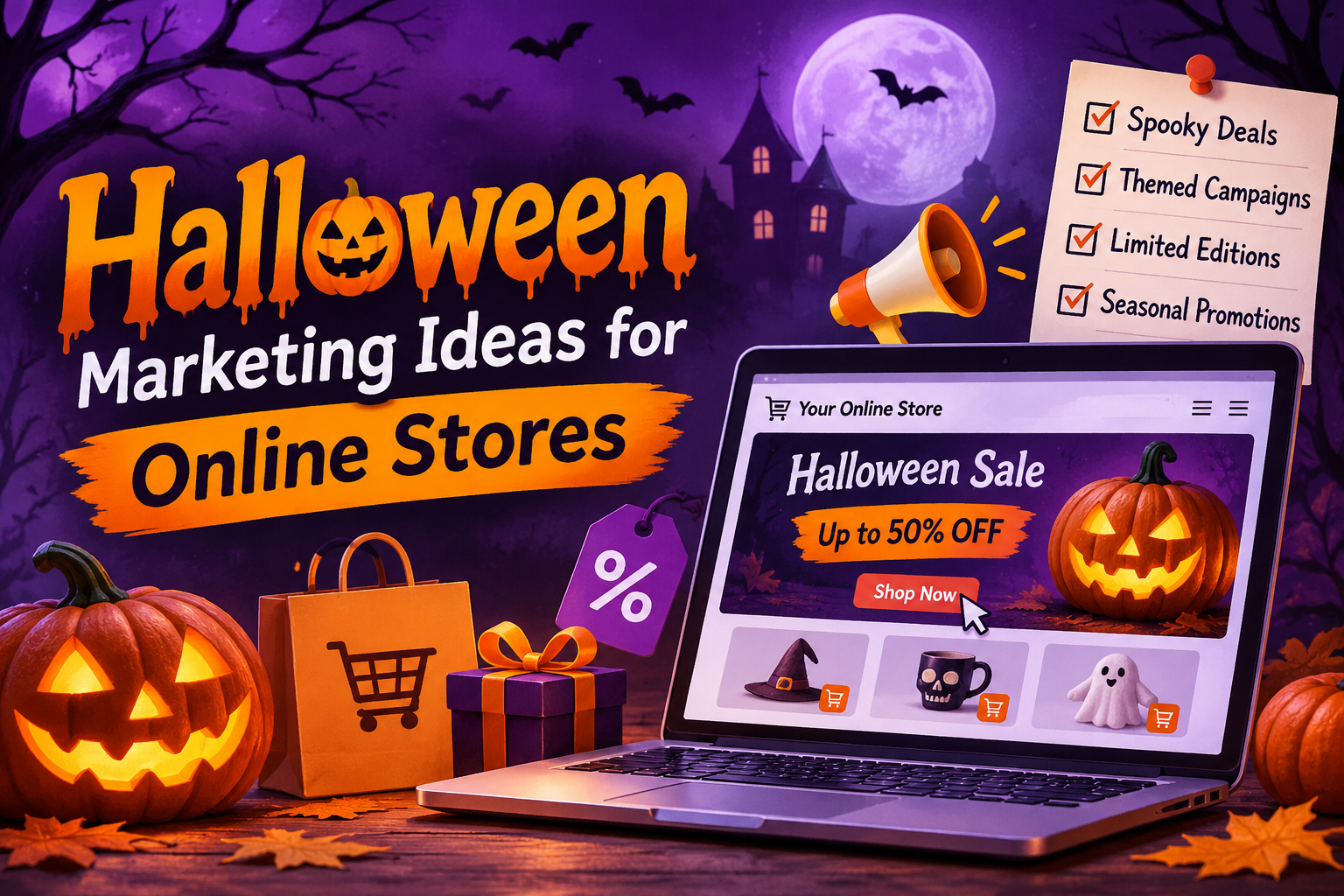
Halloween Marketing Ideas for Online Stores: The Essentials
Halloween is a fantastic opportunity for online retailers to attract new customers, increase sales and give their brand a memorable seasonal twist. And you don't need to sell costumes, pumpkins or spooky decorations to get involved.
Here's what makes a successful Halloween marketing campaign:
Start early: Plan your Halloween promotions in August or September, giving yourself enough time to create content, prepare offers and build anticipation.
Create irresistible offers: Use limited-time discounts, themed product bundles, mystery promotions and exclusive deals to encourage purchases.
Give your website a Halloween makeover: Seasonal banners, dedicated landing pages and themed product collections can make your store feel fresh and relevant.
Get creative on social media: Halloween competitions, interactive posts, short-form videos and user-generated content can help increase engagement.
Make email marketing work harder: Send personalised Halloween offers, countdown campaigns and timely reminders to your subscribers.
Focus on conversions, not just traffic: Measure your campaign's sales, average order value, conversion rate and return on investment.
Keep everything relevant to your brand: The most effective Halloween marketing ideas feel like a natural extension of your business rather than a forced seasonal gimmick.
The biggest takeaway? Successful Halloween ecommerce marketing combines creativity with commercial thinking. Give customers a reason to pay attention, a compelling reason to buy and a smooth shopping experience that makes purchasing effortless.
Why Halloween Marketing Matters for Ecommerce Businesses
Halloween isn't just about fancy dress, haunted houses and bowls of sweets anymore.
For online retailers, it's a golden opportunity to inject personality into their marketing, reconnect with existing customers and attract shoppers who might otherwise scroll straight past their products.
Think about it.
Every October, consumers are surrounded by pumpkins, ghosts, skeletons and spooky season promotions. Social media feeds become more colourful, brands experiment with playful messaging, and shoppers start looking for everything from Halloween party supplies to seasonal gifts.
That creates a valuable opening for ecommerce businesses.
Even if your store sells skincare, jewellery, homeware, fitness equipment or everyday essentials, you can still develop creative Halloween marketing campaigns that appeal to your audience.
The trick is finding the right connection between the occasion and what your customers actually want.
Halloween Creates a Natural Reason to Buy
One of the biggest challenges in ecommerce marketing is giving customers a compelling reason to purchase now rather than later.
Halloween helps solve that problem.
Because the occasion has a fixed date, retailers can build genuine urgency around seasonal collections, promotional offers and delivery deadlines.
For example:
-
A beauty brand could launch a limited-edition Halloween skincare bundle.
-
A jewellery retailer might promote gothic-inspired accessories or dark gemstone collections.
-
A homeware store could showcase autumnal candles, cosy blankets and seasonal decorations.
-
A pet accessories business could create Halloween-themed collars, toys and gift boxes.
-
A stationery brand might introduce spooky notebooks, planners and illustrated greeting cards.
Notice something?
Not every example involves selling traditional Halloween merchandise.
That's the beauty of seasonal marketing. You can take products you already sell and present them through a fresh, timely perspective.
Seasonal Campaigns Can Strengthen Customer Relationships
Halloween marketing isn't exclusively about generating immediate sales.
It's also an opportunity to make your brand more memorable.
A well-executed campaign can encourage customers to engage with your content, share your promotions, explore unfamiliar products and return to your store after the season ends.
Creative Halloween marketing strategies can help you:
-
Increase brand awareness through seasonal social media content and advertising.
-
Attract new customers searching for Halloween gifts, products and special offers.
-
Encourage repeat purchases by rewarding existing customers with exclusive promotions.
-
Improve customer engagement through competitions, quizzes and interactive experiences.
-
Increase average order value with themed bundles and complementary product recommendations.
-
Build your email subscriber list through relevant seasonal incentives.
However, there's an important distinction between a campaign that generates attention and one that actually makes money.
A viral Halloween video might attract thousands of views, but those views mean very little commercially if they don't lead to qualified website visits, subscribers or sales.
That's why your Halloween marketing ideas for online stores should always connect back to measurable business objectives.
Set Your Halloween Marketing Goals Before Getting Creative
Before designing a spooky homepage or announcing a monster discount, decide what success looks like.
Are you trying to generate more revenue? Clear slow-moving stock? Acquire first-time customers? Increase repeat purchases?
Different objectives require different tactics.
| Marketing objective | Suitable Halloween strategy | Key metric |
|---|---|---|
| Increase revenue | Limited-time Halloween promotions | Total sales |
| Attract new customers | Social media advertising and seasonal SEO | New customer acquisition |
| Increase order values | Halloween product bundles | Average order value |
| Build customer loyalty | Exclusive subscriber offers | Repeat purchase rate |
| Grow your audience | Halloween competitions and giveaways | Qualified subscribers |
| Improve profitability | Targeted offers and conversion optimisation | Campaign profit and ROI |
For example, if your goal is to increase average order value, offering 20% off everything might not be your smartest move.
A carefully designed product bundle could encourage customers to spend more while protecting your profit margins.
Likewise, if customer acquisition is your priority, a targeted Halloween advertising campaign may deliver more useful results than offering discounts exclusively to existing subscribers.
You can use an ecommerce ROI calculator to explore how changes in traffic, conversion rates and order values could influence your marketing returns.
Remember: The best Halloween marketing campaign isn't necessarily the loudest or most elaborate. It's the one that achieves your commercial goals without unnecessarily sacrificing profitability.
Halloween Sales and Promotional Ideas That Encourage Customers to Buy
Let's get to the exciting part.
Halloween provides plenty of opportunities to experiment with creative offers, themed discounts and limited-time promotions.
But here's where many online stores go wrong.
They announce a generic discount, add a pumpkin to their homepage and hope the sales start rolling in.
That's not really a strategy.
The strongest Halloween online store promotions give shoppers a clear reason to participate while making the offer feel relevant, timely and worthwhile.
Here are some Halloween sales ideas you can adapt to your own products and customers.
1. Launch a Limited-Time Halloween Flash Sale
There's something irresistible about a genuinely time-limited offer.
Customers know they have a specific opportunity to save money, and that can encourage shoppers who are already considering a purchase to make a decision.
A Halloween flash sale could last:
-
24 hours for a short, high-impact promotion.
-
48 hours over a weekend.
-
Three days leading up to Halloween.
-
One evening for a themed "Fright Night" shopping event.
You could promote your offer with messaging such as:
Our Halloween Flash Sale Has Arrived
The countdown is on. Enjoy 20% off selected favourites until midnight on 31 October. Once the clock strikes twelve, these offers disappear.
The important thing is making the deadline genuine.
If customers discover that your supposedly exclusive Halloween discounts continue indefinitely, your future promotions may become less convincing.
How to make it work:
-
Select products with enough margin to support the discount.
-
Create a dedicated promotional landing page.
-
Announce the sale through email and social media.
-
Add a countdown timer displaying the actual offer deadline.
-
Retarget interested shoppers where appropriate.
-
Review revenue, conversion rates and profitability afterwards.
Extra tip: Consider giving email subscribers early access before opening the promotion to everyone. This rewards your existing audience while creating an additional reason to join your mailing list.
2. Create Halloween-Themed Product Bundles
Want to increase average order value without simply slashing prices?
Product bundles could be your secret weapon.
Instead of encouraging customers to purchase a single item, combine complementary products into an appealing seasonal package.
For example:
| Online store type | Halloween bundle idea |
|---|---|
| Beauty and skincare | The Midnight Self-Care Collection |
| Homeware | The Haunted Home Essentials Bundle |
| Fashion accessories | The Dark & Dramatic Accessories Edit |
| Pet products | The Trick-or-Treat Pet Gift Box |
| Stationery | The Spooky Desk Essentials Kit |
| Food and confectionery | The Halloween Movie Night Treat Box |
These bundles don't necessarily require brand-new products.
You can often combine existing inventory, create themed photography and package everything under a compelling seasonal name.
That's particularly useful for smaller ecommerce businesses with limited product development budgets.
Make your bundles more appealing by:
-
Combining products that naturally complement one another.
-
Offering a modest saving compared with purchasing items individually.
-
Including attractive seasonal packaging where practical.
-
Showing the individual and combined prices clearly.
-
Featuring bundles prominently on relevant product pages.
-
Suggesting complementary items at checkout.
A bundle should feel thoughtfully curated rather than like a collection of products you're struggling to sell.
Customers are much more likely to respond when the combination solves a problem, makes a good gift or offers genuine convenience.
3. Run a Mystery Halloween Discount Campaign
Here's a Halloween promotion idea that introduces a little suspense into the shopping experience.
Instead of announcing a fixed discount, invite customers to reveal a mystery offer.
For example:
"Trick or Treat? Reveal Your Halloween Surprise."
Customers click a promotional banner, open a mystery envelope or participate in a simple interactive experience to discover their reward.
Possible rewards could include:
-
10% off their next order.
-
15% off selected products.
-
Free delivery above a qualifying spend.
-
A complimentary gift with purchase.
-
Exclusive access to a limited-edition collection.
You could even create a virtual trick-or-treat experience where visitors select one of several illustrated doors to reveal an offer.
This approach combines Halloween gamification with promotional marketing, making the experience more engaging than a standard discount banner.
However, keep the mechanics simple.
If customers have to complete multiple steps, provide unnecessary personal information or navigate confusing pop-ups just to discover an offer, the experience can quickly become frustrating.
Also, be transparent about eligibility, reward availability and promotional terms. If rewards are randomised, make sure the campaign complies with applicable UK promotional marketing rules.
Best for: Brands with an established audience, repeat visitors or a product range that supports different promotional incentives.
4. Offer a Halloween Gift With Purchase
Not every promotion needs to involve reducing your prices.
Sometimes, adding something extra creates a stronger sense of value.
A Halloween gift-with-purchase campaign rewards customers who meet a qualifying spending threshold.
For example:
A Little Something Wicked
Spend £50 or more and receive a complimentary Halloween surprise with your order. Available while promotional stocks last.
The gift could be a small branded accessory, sample product, seasonal sticker pack or another inexpensive item that fits your brand.
The key is choosing something customers will genuinely appreciate.
A random novelty item might generate a brief smile, but a useful or desirable gift can strengthen the overall shopping experience.
To protect your margins:
-
Set the qualifying threshold above your current average order value where commercially sensible.
-
Calculate the total cost of the gift, packaging and fulfilment.
-
Choose an item that complements your core products.
-
Clearly communicate the promotion's conditions.
-
Monitor whether customers increase their basket values to qualify.
This Halloween marketing strategy works particularly well for single-brand online stores because the complimentary gift can reinforce your brand identity.
A thoughtful branded item may also encourage customers to remember your business long after Halloween.
5. Reward Loyal Customers With Exclusive Halloween Offers
Your existing customers already know your products.
They've purchased from you before, experienced your service and developed at least some familiarity with your brand.
So why treat them exactly like complete strangers?
Halloween is an excellent opportunity to show loyal customers a little extra appreciation.
You could offer:
-
Early access to your Halloween sale.
-
An exclusive discount for previous customers.
-
A complimentary gift for repeat purchasers.
-
Priority access to seasonal product launches.
-
Double loyalty points during a promotional period.
-
A private Halloween collection preview.
For example, you might send an email with the subject line:
"You've Been Invited to Our Private Halloween Sale"
Inside, explain that existing customers can shop selected offers 24 hours before the public launch.
This creates a sense of exclusivity without necessarily requiring a deeper discount.
It's also an effective way to make your Halloween email marketing feel more personal.
Instead of sending identical messages to everyone, segment your audience based on purchase history, product interests or previous engagement.
Someone who regularly purchases skincare products should ideally receive different recommendations from a customer who primarily buys accessories.
The more relevant your offers, the better the shopping experience.
And when customers feel recognised rather than bombarded with generic promotions, they're more likely to remain engaged with your brand.
6. Introduce Halloween Early Bird Offers
Why wait until the final week of October to start generating sales?
Some customers begin planning Halloween purchases weeks in advance, particularly when products require delivery, personalisation or preparation.
An early bird promotion gives these shoppers a reason to purchase sooner.
For example:
"Get Halloween Ready: Save 15% When You Shop Before 10 October."
You could offer early access to seasonal products, special bundle pricing or free delivery above a specified order value.
This approach can help you spread demand across a longer period rather than relying entirely on last-minute purchases.
It may also reduce pressure on fulfilment operations during the busiest days of your campaign.
Consider creating three promotional stages:
-
Early September: Introduce your Halloween theme and begin building awareness.
-
Late September to mid-October: Launch early bird promotions and seasonal product collections.
-
Late October: Focus on genuine final-order deadlines, last-chance offers and products that can still arrive in time.
Be careful with delivery promises.
If customers are purchasing products specifically for Halloween, receiving them on 2 November may be a major disappointment.
Clearly display your final recommended ordering dates, particularly for personalised products or deliveries to remote locations.
A well-planned Halloween promotion should create excitement without creating unnecessary customer service problems.
7. Use Halloween Free Shipping Promotions Strategically
Sometimes, the simplest Halloween promotion ideas are the most effective.
Free shipping can be particularly appealing to shoppers who dislike seeing unexpected delivery charges at checkout.
But offering free delivery on every order isn't always commercially sensible.
Instead, consider setting a minimum spend.
For example:
No Tricks. Just Free Delivery.
Enjoy free UK standard delivery when you spend £45 or more during our Halloween promotion.
If your average order value is £32, a £45 free-shipping threshold could encourage some customers to add another product to their basket.
However, the threshold should be based on your actual margins, shipping costs and customer purchasing behaviour.
You could also experiment with:
-
Free shipping on selected Halloween bundles.
-
Complimentary delivery for loyal customers.
-
A limited-time free shipping weekend.
-
Free shipping when purchasing two or more qualifying products.
Make the offer visible on your homepage, product pages and basket.
And don't forget mobile shoppers.
A promotional message that looks fantastic on a desktop screen but disappears on mobile could mean missing a substantial portion of your audience.
Your ecommerce website design should make important promotional information easy to find without distracting customers from completing their purchases.
Halloween Social Media Marketing Ideas That Get People Talking
Halloween and social media are a match made in marketing heaven.
It's one of those rare occasions when customers actively expect brands to have a little fun. Ordinary product photography can become something more imaginative, familiar brand messages can take on a spooky twist, and even the most straightforward ecommerce business can experiment with creative storytelling.
But there's a catch.
Posting a photograph of a pumpkin with the caption "Happy Halloween" isn't much of a marketing strategy.
If you want your Halloween social media campaigns to generate meaningful results, you need content that encourages people to stop scrolling, interact with your brand and ultimately visit your online store.
Here are some Halloween social media marketing ideas that can help you do exactly that.
8. Run a Halloween Social Media Competition
Who doesn't enjoy the possibility of winning something?
Halloween competitions are an excellent way to encourage social media engagement while introducing your products to potential customers.
And the best part?
You don't necessarily need an enormous prize budget.
A thoughtfully chosen product bundle from your own brand can be more valuable than an expensive, unrelated giveaway because it attracts people who are genuinely interested in what you sell.
Halloween competition ideas include:
-
Best Halloween costume: Invite followers to share their most creative costumes.
-
Pumpkin carving competition: Ask customers to submit photographs of their carved pumpkins.
-
Spooky pet contest: Encourage pet owners to share Halloween photographs of their animals.
-
Halloween home makeover: Invite followers to showcase their seasonal decorations.
-
Caption competition: Post a funny Halloween-themed product photograph and ask followers to create a caption.
-
Halloween product giveaway: Offer a themed bundle from your store as the prize.
For example, a homeware brand could run a competition called "Show Us Your Haunted Home", encouraging customers to share photographs of their Halloween decorations.
A pet accessories retailer might launch "The Spookiest Pet of the Year", with a bundle of branded products for the winner.
The possibilities are practically endless.
How to make your competition successful:
-
Choose a prize that appeals to your target customers.
-
Create an eye-catching Halloween promotional graphic.
-
Explain exactly how people can enter.
-
Set a clear closing date.
-
Publish transparent eligibility and winner-selection rules.
-
Promote the competition across your relevant marketing channels.
-
Announce the winner according to your published terms.
Keep participation straightforward.
Requiring customers to complete five different actions just to enter a competition can discourage otherwise interested participants.
Also, make sure your campaign follows the relevant platform rules and UK promotional marketing requirements.
Marketing tip: Think beyond the number of entries. A competition that attracts 200 genuinely interested potential customers could be more valuable than one that attracts 5,000 people who only want a free prize.
9. Create Spooky Short-Form Videos for Instagram and TikTok
You don't need a Hollywood production budget to create entertaining Halloween video marketing content.
In fact, some of the most engaging social media content feels spontaneous, relatable and refreshingly simple.
Instagram Reels, TikTok videos and Facebook Reels give online stores an opportunity to showcase their products through seasonal storytelling.
Instead of producing another standard product demonstration, give your content a Halloween twist.
Try these Halloween video ideas:
| Video concept | How it works |
|---|---|
| The Halloween transformation | Show an everyday product display becoming a spooky seasonal scene |
| Behind the screams | Share behind-the-scenes footage of your Halloween campaign preparations |
| Trick or treat product reveal | Reveal a mystery product or promotional offer |
| Three spooky ways to style it | Demonstrate different seasonal uses for one product |
| Halloween packing orders | Show your team preparing seasonal customer orders |
| The haunted product collection | Introduce several products through a dramatic themed reveal |
| Halloween customer favourites | Showcase popular products with seasonal captions and music |
For example, a jewellery brand could create a short video showing three accessories styled for different Halloween party outfits.
A beauty retailer might demonstrate a dramatic evening skincare routine with atmospheric lighting and a playful seasonal caption.
A homeware store could transform a plain living room into a cosy Halloween setting using products already available in its collection.
The key is to make the content entertaining while keeping your products central to the story.
Make Your Halloween Videos More Effective
Start with a compelling opening.
Social media users make quick decisions about whether content deserves their attention, so avoid spending the first several seconds displaying a lengthy introduction.
Instead, open with something visually interesting or curiosity-driven.
For example:
"Your Halloween decorations are missing one thing..."
"Three ways to make your home feel haunted without spending a fortune."
"We gave our bestselling product a Halloween makeover."
Use clear on-screen captions, keep your message focused and finish with a relevant call to action.
That might involve encouraging viewers to explore your seasonal collection, visit your online store or comment with their favourite product.
Remember to use music and sound effects that you're permitted to use commercially.
The goal isn't simply to create a viral Halloween video. It's to produce content that attracts the right audience and gives them a reason to explore your brand.
10. Encourage Halloween User-Generated Content
Sometimes, your customers can create more convincing marketing content than your business ever could.
Why?
Because seeing real people enjoying products can make a brand feel more authentic and relatable.
User-generated content, often called UGC, includes photographs, videos, reviews and social media posts created by customers rather than the business itself.
Halloween offers plenty of opportunities to encourage this type of participation.
You could invite customers to share:
-
Photographs featuring your products in Halloween decorations.
-
Creative seasonal outfits incorporating your accessories.
-
Halloween gift boxes they've put together using your products.
-
Before-and-after photographs of seasonal room makeovers.
-
Videos unboxing Halloween-themed orders.
-
Their favourite ways to use your products during autumn.
Create a memorable campaign hashtag that reflects your brand.
For example, a fictional candle brand called Midnight Glow might use #MidnightGlowHalloween to collect customer photographs of spooky candle displays.
You could then feature selected submissions on your social media accounts, product pages or Halloween landing page, provided you have the necessary permission.
This creates two benefits.
First, customers feel more involved with your brand.
Second, potential shoppers get to see your products in real-life settings.
That's particularly useful for single-brand ecommerce businesses trying to build trust and recognition.
Turn Customer Content Into a Seasonal Campaign
Rather than requesting customer photographs once, create an ongoing Halloween content series.
For example:
"31 Days of Halloween Inspiration"
Each day throughout October, feature a customer photograph, product styling idea or seasonal recommendation.
You don't need 31 customer submissions before you begin. Mix customer content with your own product photography, useful tips and behind-the-scenes posts.
This gives your audience a reason to keep returning while providing a consistent theme for your Halloween content calendar.
Just remember that a hashtag isn't automatic permission to reuse someone's content. Obtain appropriate consent before featuring customer photographs in your marketing, especially paid advertising.
11. Launch an Interactive Halloween Poll or Quiz
Not every Halloween social media post needs to sell something directly.
Sometimes, the best way to encourage future purchases is simply to get people interacting with your brand.
Instagram Stories, Facebook posts and other interactive formats are ideal for quick Halloween polls, quizzes and seasonal questions.
And because they're easy to participate in, they can encourage engagement without demanding much effort from your audience.
Halloween poll ideas:
-
Trick or treat?
-
Haunted house or horror movie marathon?
-
Pumpkin spice or hot chocolate?
-
Classic Halloween decorations or modern gothic styling?
-
Early Halloween shopping or last-minute panic?
-
Which of our products deserves a spooky makeover?
You could also create a product-focused Halloween quiz.
For example:
"What's Your Halloween Shopping Personality?"
Participants answer a few playful questions before receiving a product recommendation.
A homeware brand might suggest one of three seasonal styles:
-
The Cosy Pumpkin Lover: Warm colours, candles and autumnal accessories.
-
The Gothic Minimalist: Dark tones, understated decorations and elegant details.
-
The Halloween Enthusiast: Statement decorations, bold accessories and dramatic seasonal styling.
Each result could link to a relevant product collection.
This is where Halloween gamification becomes commercially useful.
Instead of simply entertaining visitors, you're helping them discover products that suit their preferences.
For a small ecommerce store, even a simple interactive quiz can create a more memorable shopping experience than another generic promotional post.
Halloween Email Marketing Ideas That Turn Subscribers Into Customers
Social media is brilliant for attracting attention.
But email marketing gives you something equally valuable: a direct way to communicate with people who have already shown an interest in your business.
And during Halloween, that existing relationship can become particularly useful.
Your subscribers might have purchased from you before, joined your mailing list for a discount or browsed your products without completing an order.
A carefully planned Halloween email campaign gives you an opportunity to reconnect with those shoppers.
However, there's a difference between sending a thoughtful seasonal promotion and bombarding your audience with endless discount emails.
The most effective Halloween email marketing ideas combine compelling subject lines, relevant product recommendations, attractive visuals and clear calls to action.
12. Create a Halloween Email Countdown Campaign
One email announcing your Halloween sale is a start.
But a structured series of messages can help you build anticipation, introduce your offers and remind interested customers before a genuine promotion ends.
Think of it as a Halloween countdown.
Rather than repeating the same message several times, give each email a different purpose.
Here's an example campaign for an online store running a Halloween promotion from 20 to 31 October.
| Send date | Email theme | Main objective |
|---|---|---|
| 15 October | Something spooky is coming | Build anticipation |
| 20 October | Our Halloween sale starts now | Announce the promotion |
| 24 October | Your Halloween favourites await | Showcase selected products |
| 28 October | Don't miss these seasonal offers | Re-engage interested shoppers |
| 31 October | Last chance: Halloween sale ends tonight | Communicate the genuine deadline |
You can adapt this schedule based on your audience, products and previous email performance.
A store selling Halloween decorations might need to promote much earlier because customers require delivery before the event.
A retailer offering discounts on everyday products could potentially continue its promotion until Halloween night.
Write Halloween Email Subject Lines People Want to Open
Your subject line is the first thing subscribers see.
Make it relevant, specific and interesting.
Here are some Halloween email subject line ideas:
-
Something Spooky Is Coming to Our Store
-
Your Exclusive Halloween Treat Is Inside
-
No Tricks, Just Halloween Savings
-
Our Halloween Sale Has Officially Begun
-
Frighteningly Good Offers on Your Favourites
-
Your Halloween Surprise Awaits
-
These Halloween Deals Won't Last Forever
-
Last Chance: Our Halloween Offers End Tonight
-
You've Been Invited to Our Halloween Event
-
A Little Halloween Treat, Just for You
Avoid making every email sound like an emergency.
If every message claims to be your "biggest sale ever" or "final chance", subscribers may eventually stop taking your promotions seriously.
Also, ensure that your subject line accurately reflects the offer inside.
A compelling subject line should create curiosity, not mislead customers.
13. Personalise Your Halloween Email Offers
Imagine receiving an email promoting Halloween dog costumes when you've only ever purchased kitchen accessories from a store.
Not particularly relevant, is it?
Now imagine receiving an email featuring products similar to those you've previously browsed or purchased.
That's a much more useful experience.
Halloween email personalisation allows you to tailor promotions to different customer groups instead of sending identical offers to everyone.
You could segment subscribers based on:
-
Previous purchases.
-
Product categories they've shown interest in.
-
Average order value.
-
First-time versus repeat customers.
-
Previous promotional engagement.
-
Recent website browsing activity, where appropriately tracked.
-
Customer preferences they've chosen to share.
For example, a fashion accessories brand might send one Halloween email featuring gothic jewellery to customers interested in statement accessories.
Another segment could receive an email showcasing elegant black handbags and evening accessories.
Both campaigns use a Halloween theme, but the products reflect different customer interests.
That's what makes personalisation valuable.
It helps you deliver a more relevant message without needing to create entirely separate seasonal campaigns.
Don't Forget Your Halloween Abandoned Cart Emails
Not everyone who adds a product to their basket completes their purchase.
Some shoppers become distracted. Others compare prices, reconsider delivery costs or simply decide to return later.
A Halloween abandoned cart recovery campaign can remind eligible customers about products they've left behind.
For example:
Did Something Scare You Away?
You left a few favourites in your basket. They're still waiting for you, but our Halloween promotion ends soon.
Return to your basket and complete your order before the offer disappears.
Keep the message helpful rather than overly pushy.
Show the products left in the basket, make it easy to return to checkout and clearly explain any relevant promotional deadline.
You don't necessarily need to offer an additional discount.
Sometimes, a straightforward reminder is enough.
Make sure your email and SMS activity respects applicable consent, privacy and direct marketing requirements.
Marketing tip: Review your Halloween email campaigns using more than open rates. Click-through rates, conversion rates, revenue per recipient and unsubscribes provide a more useful picture of campaign performance.
Halloween Website Design Ideas That Create a Better Shopping Experience
Your social media campaign looks fantastic.
Your email subject lines are getting attention.
Your Halloween promotions are ready.
But what happens when someone clicks through to your website?
If they arrive on a confusing homepage, struggle to find your offers or encounter a frustrating checkout experience, all that marketing effort could go to waste.
That's why Halloween website design should be part of your overall campaign strategy.
You don't need to rebuild your entire ecommerce store.
In most cases, a few carefully chosen seasonal changes can create a more engaging shopping experience while keeping your brand recognisable.
14. Give Your Online Store a Halloween Makeover
A Halloween website makeover can be as subtle or dramatic as your brand allows.
For some businesses, dark backgrounds, atmospheric photography and bold seasonal typography might feel appropriate.
For others, a simple autumn-inspired banner and a few playful illustrations will be more effective.
The important thing is maintaining consistency with your existing brand identity.
After all, customers should still recognise your business.
Halloween website design ideas include:
-
Add a seasonal homepage banner promoting your Halloween offers.
-
Introduce subtle pumpkin, bat or cobweb illustrations.
-
Create Halloween-themed product photography.
-
Feature seasonal product collections on your homepage.
-
Update promotional banners with Halloween messaging.
-
Highlight relevant product bundles.
-
Use seasonal colours that complement your existing branding.
-
Add a clear link to your Halloween sale or promotional collection.
For example, a minimalist skincare brand could introduce an elegant black-and-gold Halloween campaign without suddenly turning its entire website bright orange.
A playful stationery retailer might take a more colourful approach, using illustrated ghosts, pumpkins and quirky product photography.
Both approaches can work.
The difference is understanding what feels natural for your audience.
Keep Your Halloween Website User-Friendly
It's tempting to go overboard with animations, pop-ups and spooky effects.
But excessive decoration can make your website harder to use.
Avoid:
-
Autoplaying loud Halloween sound effects.
-
Animations that interfere with navigation.
-
Promotional pop-ups that repeatedly interrupt shopping.
-
Dark backgrounds that make product descriptions difficult to read.
-
Large seasonal images that slow down page loading.
-
Countdown timers that cover important mobile content.
Your website should still load quickly, work properly on mobile devices and make purchasing straightforward.
A Halloween makeover should enhance your customer experience, not haunt it.
15. Build a Dedicated Halloween Landing Page
If you're investing time and money in Halloween marketing campaigns, sending every visitor to your generic homepage might not be the best approach.
A dedicated Halloween landing page gives shoppers one clear destination for your seasonal offers.
Instead of making visitors search through multiple categories, you can present everything relevant in one place.
For example, your landing page might include:
-
A clear Halloween campaign headline.
-
A short explanation of your seasonal promotion.
-
Featured Halloween-themed products or collections.
-
Exclusive bundles and limited-time offers.
-
Customer reviews or relevant social proof.
-
Delivery information and promotional deadlines.
-
A prominent call to action.
A headline could be:
"Halloween Has Arrived: Discover Our Frighteningly Good Offers"
Follow it with a short introduction explaining what customers can expect.
Then showcase the products or bundles that matter most.
If you're running paid advertising, you can also create landing pages tailored to different audiences or promotions.
For instance, an advert promoting a Halloween gift bundle should ideally lead directly to that bundle or a relevant collection rather than an unrelated homepage.
This creates a more consistent journey between the advertisement and the shopping experience.
Your landing page can also support your wider ecommerce SEO strategy when it provides useful, relevant content and targets appropriate seasonal search terms.
However, don't create dozens of near-identical Halloween pages simply to target slightly different keywords.
Focus on genuinely useful content that helps shoppers discover products and make purchasing decisions.
Should You Reuse Your Halloween Landing Page Each Year?
In many cases, yes.
If Halloween is an annual part of your marketing calendar, maintaining a reusable seasonal landing page can be more practical than creating a completely new URL every October.
For example:
yourstore.co.uk/pages/halloween
You could update the products, promotional details, imagery and messaging each year while retaining the same page address.
This helps maintain consistency across future campaigns and gives you a stable destination for relevant internal links.
Just make sure the page is kept accurate.
An old Halloween promotion, expired discount code or outdated delivery deadline can quickly undermine customer confidence.
Halloween Product and Merchandising Ideas for Single-Brand Online Stores
Here's a common misconception about Halloween ecommerce marketing:
You need to sell Halloween products to participate.
You don't.
In fact, some of the most creative Halloween marketing ideas for online stores involve taking existing products and presenting them in a completely different way.
For a single-brand ecommerce business, this is especially useful.
You might not have the resources, manufacturing flexibility or commercial justification to launch an entirely new seasonal product range.
But you can still create a compelling Halloween shopping experience using the products you already sell.
16. Create a Halloween-Inspired Product Collection
One of the simplest Halloween retail marketing ideas is to curate a seasonal collection from your existing inventory.
Rather than manufacturing new products, identify items that naturally fit the occasion.
Think about colour, styling, mood, gifting and seasonal usefulness.
For example:
A jewellery store could create:
-
Midnight Jewellery Collection
-
Gothic Glamour Accessories
-
Halloween Party Essentials
A homeware store could create:
-
Haunted Home Collection
-
Cosy Autumn Evenings
-
Halloween Hosting Essentials
A beauty brand could create:
-
Midnight Skincare Rituals
-
Halloween Party Preparation
-
Autumn Self-Care Favourites
A clothing brand could create:
-
Dark & Dramatic Styles
-
Halloween Night Outfits
-
Autumn Wardrobe Essentials
The products themselves don't need to change.
What changes is the context in which customers discover them.
A black handbag might be an everyday accessory throughout the year, but during October, it could become part of a curated Halloween party collection.
A scented candle could be positioned as an essential addition to a cosy Halloween movie night.
A dark-coloured notebook might become part of a gothic-inspired stationery edit.
This is seasonal merchandising at its most practical.
You're helping customers imagine how your existing products fit into their Halloween plans.
Make Your Seasonal Collection Easy to Shop
Once you've chosen your products, give the collection a clear identity.
Use a descriptive collection name, appealing photography and a short introduction explaining the theme.
You could also include:
-
Product recommendations for different budgets.
-
Complementary items that work well together.
-
Seasonal gift suggestions.
-
Relevant customer reviews.
-
Clear delivery information.
-
Links to related products within your store.
Avoid adding unrelated items simply to make the collection look bigger.
A smaller, thoughtfully curated selection can provide a better shopping experience than a large collection with no obvious theme.
17. Launch a Limited-Edition Halloween Product or Packaging Design
If your business has the flexibility to introduce seasonal variations, Halloween can be an opportunity to create something special.
Limited-edition Halloween products can generate excitement because they offer customers something different from your regular range.
But you don't necessarily need to develop an entirely new product.
Sometimes, a small seasonal variation is enough.
Ideas include:
-
Halloween-themed packaging for existing products.
-
A limited-edition colour or design.
-
Seasonal labels or product sleeves.
-
Special Halloween gift boxes.
-
A temporary product bundle with exclusive presentation.
-
A Halloween-inspired variation of a popular product.
For example, a candle brand could introduce a seasonal label and themed gift packaging for an existing fragrance.
A stationery brand might release a limited-edition notebook cover.
A skincare company could create a Halloween gift set featuring established products in special packaging.
The commercial advantage is that you're using an existing product foundation while introducing something fresh.
However, consider the practical costs.
Seasonal packaging, minimum order quantities, additional photography and leftover inventory can affect profitability.
Before committing, estimate how many units you're realistically likely to sell.
For smaller online stores, a limited run or made-to-order approach may reduce the risk of being left with unsold Halloween stock.
Remember: Scarcity should be genuine. If you're advertising a limited-edition product, make sure the claim accurately reflects its availability.
Interactive Halloween Marketing Campaigns That Keep Customers Engaged
Halloween gives online stores something that most other seasonal marketing opportunities don't: a ready-made excuse to be mysterious, playful and a little unexpected.
And that's where interactive Halloween marketing campaigns really come into their own.
Instead of simply showing customers another advertisement or promotional banner, you can invite them to participate in something.
A game. A challenge. A mystery. A seasonal experience.
When done well, these activities can make your brand more memorable, encourage customers to spend longer exploring your store and introduce products they might otherwise overlook.
The important thing is making participation enjoyable without turning the shopping experience into an obstacle course.
18. Create a Halloween Virtual Treasure Hunt
Imagine visiting an online store and discovering that a handful of Halloween pumpkins have been hidden throughout its product pages.
Each pumpkin reveals a clue.
Find them all, and you unlock a special Halloween reward.
It's simple, entertaining and gives visitors a reason to explore more of your website.
A virtual Halloween treasure hunt can be particularly effective for ecommerce businesses with several product categories or collections.
For example, you could hide five small Halloween illustrations across your store.
Each illustration contains a letter or number.
Customers collect the clues and enter the completed code on a dedicated promotional page to unlock a reward.
Possible rewards include:
-
A Halloween discount code.
-
Free delivery on a qualifying order.
-
A complimentary product sample.
-
Access to an exclusive seasonal bundle.
-
Entry into a Halloween prize draw.
You could call your campaign "The Great Halloween Hunt" or "Find the Hidden Pumpkins".
The idea is to make product discovery feel like an experience rather than a chore.
How to Run a Halloween Treasure Hunt
-
Choose three to five pages you want customers to explore.
-
Add a small, recognisable Halloween graphic to each page.
-
Create a simple set of clues.
-
Explain the rules on your homepage or campaign landing page.
-
Offer a relevant reward for completing the challenge.
-
Test the experience across desktop and mobile devices.
-
Track participation, product page visits and resulting purchases.
You don't need complicated software to get started.
A basic version could involve collecting a promotional code from several product descriptions.
However, make sure the experience remains accessible, and avoid hiding essential information or making the challenge unnecessarily difficult.
Marketing tip: Use the treasure hunt to introduce customers to products or collections they may not already know about. That way, the campaign supports product discovery as well as engagement.
19. Introduce a Halloween Spin-to-Win Promotion
Want to add an element of surprise to your Halloween promotions?
A spin-to-win campaign can transform a straightforward discount offer into a playful seasonal interaction.
Customers spin a virtual wheel to reveal a promotional reward.
The wheel might feature Halloween-themed sections such as pumpkins, ghosts, bats and haunted houses.
Each section corresponds to an offer.
For example:
| Halloween wheel section | Promotional reward |
|---|---|
| The Friendly Ghost | 10% off selected products |
| The Haunted Pumpkin | Free delivery over £40 |
| The Midnight Bat | 15% off a qualifying order |
| The Witch's Cauldron | Complimentary gift with purchase |
| The Skeleton Surprise | Exclusive seasonal bundle offer |
The attraction is straightforward.
Customers don't know which reward they'll receive until they participate.
That creates curiosity and makes the promotional experience more memorable.
But don't confuse engagement with profitability.
A spin-to-win campaign needs careful planning to ensure the rewards make commercial sense.
Before launching, calculate the potential cost of each offer and decide how frequently customers can participate.
If rewards are awarded randomly, publish clear terms, explain any restrictions and ensure the promotion complies with relevant UK rules.
Also, avoid making customers spin a wheel before they can browse your products.
The game should be optional, not an obstacle.
For a single-brand ecommerce store, this type of campaign can work particularly well when it encourages shoppers to discover more of your own product range.
20. Launch a Halloween Customer Challenge
Not every interactive Halloween campaign needs to involve discounts.
Sometimes, giving customers a creative challenge is enough to generate excitement.
A Halloween customer challenge encourages your audience to create something, share an experience or participate in a themed activity connected to your products.
For example:
A homeware brand: Challenge customers to create a Halloween table setting using items they already own.
A beauty brand: Invite followers to share their favourite Halloween-inspired beauty looks.
A stationery business: Run a spooky illustration or creative journalling challenge.
A clothing brand: Encourage customers to style one product in three different Halloween outfits.
A pet accessories store: Ask customers to photograph their pets enjoying an autumn adventure.
These challenges create opportunities for user-generated content while helping customers imagine new ways to use your products.
You could run the challenge over seven days, two weeks or the entire month of October.
For example:
The Seven-Day Halloween Style Challenge
Seven days. Seven creative ideas. One opportunity to show us your Halloween style.
Join our seasonal challenge, share your creations and discover inspiration from our community.
The challenge doesn't necessarily need a prize.
You might simply feature selected entries on your social media accounts, with permission, or create a gallery of customer submissions.
If you do offer a prize, make the selection criteria and promotional terms clear.
The most successful challenges give customers a reason to participate beyond the possibility of winning something.
They encourage creativity, community and a sense of connection with your brand.
Halloween Influencer Marketing and Brand Collaborations
You don't need a celebrity endorsement or an enormous advertising budget to introduce your online store to new audiences.
Sometimes, the most effective Halloween influencer marketing campaigns involve working with smaller creators who have established trust within a specific community.
And because Halloween is such a visual occasion, it offers plenty of opportunities for creative collaborations.
The challenge is finding partners whose audiences are genuinely interested in your products.
21. Partner With Relevant Micro-Influencers
Micro-influencers can be useful partners for smaller ecommerce businesses because their content often focuses on a particular interest, lifestyle or product category.
For example, a homeware brand might collaborate with a creator who shares home styling ideas.
A jewellery retailer could work with someone who creates fashion and accessories content.
A skincare company might partner with a beauty creator producing Halloween preparation routines.
Rather than asking an influencer to publish a generic promotional photograph, develop a seasonal concept that fits their usual content.
Halloween influencer collaboration ideas include:
-
A Halloween product unboxing.
-
A seasonal styling tutorial.
-
A Halloween gift guide.
-
A behind-the-scenes product review.
-
A themed room transformation.
-
A Halloween preparation video.
-
A short-form video featuring a limited-edition collection.
For example, a homeware creator could produce a video titled:
"Creating a Cosy Halloween Evening at Home"
The video might feature candles, blankets and decorative accessories from your brand.
The products become part of a useful lifestyle story rather than simply appearing in an advertisement.
That's often a more natural way to introduce your business to potential customers.
Choose Influencers Based on Relevance, Not Just Follower Counts
An influencer with 8,000 highly engaged followers interested in your product category may be a better fit than someone with 100,000 followers who rarely discusses similar products.
When evaluating potential partners, consider:
-
Whether their audience matches your target customers.
-
The quality and relevance of their existing content.
-
Their typical engagement and audience interactions.
-
Their experience promoting similar products.
-
The cost of the collaboration.
-
Whether their creative style complements your brand.
You can also provide a unique Halloween influencer discount code or trackable campaign link.
This helps you understand which collaborations generate website visits and sales.
Remember that paid, gifted and affiliate collaborations may require clear advertising disclosures. Make sure creators understand the relevant requirements before publishing.
22. Collaborate With a Complementary Brand
What if you could introduce your products to another business's audience while offering customers something genuinely useful?
That's the appeal of Halloween brand collaborations.
For a single-brand online store, partnering with a complementary business can create opportunities to reach new customers without developing an entirely new product range.
The key is finding a partner whose products work naturally alongside yours.
For example:
| Your business | Potential partner | Halloween collaboration |
|---|---|---|
| Candle brand | Independent confectionery brand | Halloween movie night gift bundle |
| Jewellery store | Fashion accessories brand | Gothic-inspired styling campaign |
| Homeware retailer | Artisan food brand | Halloween hosting inspiration |
| Skincare business | Sleepwear brand | Autumn self-care giveaway |
| Stationery brand | Independent bookshop | Spooky reading and journalling collection |
These are illustrative examples, but the principle applies to many ecommerce categories.
The partnership should provide a clear benefit for both businesses and their customers.
How to Structure a Halloween Brand Collaboration
Start with a simple campaign objective.
Do you want to increase awareness, attract new subscribers, generate sales or introduce a new product?
Then agree on a concept that benefits both audiences.
You might:
-
Create a joint Halloween gift guide.
-
Offer a co-branded product bundle.
-
Run a collaborative social media competition.
-
Feature each other's products in seasonal content.
-
Develop a shared Halloween email campaign for appropriately opted-in audiences.
-
Produce a short series of collaborative videos.
Be clear about responsibilities, costs, creative approvals and how campaign results will be measured.
You should also establish how customer information will be handled. A collaboration doesn't automatically give either business permission to add the other's customers to its marketing database.
The best Halloween brand collaborations feel like a natural pairing, not two unrelated businesses trying to borrow each other's followers.
Halloween Advertising Ideas to Attract More Online Shoppers
Organic social media and email marketing can help you reach existing audiences.
But if you want to introduce your Halloween offers to new potential customers, paid advertising may deserve a place in your seasonal strategy.
The advantage of Halloween advertising is that you can build campaigns around specific products, audiences and purchasing intentions.
The disadvantage?
It's easy to spend money without generating profitable sales.
That's why your advertising strategy should start with your commercial goals rather than the size of your promotional budget.
23. Run Targeted Halloween Google Ads and Social Media Campaigns
Paid Halloween advertising can help your store appear in front of customers who are actively searching for relevant products or who may be interested in your seasonal collection.
Different advertising channels serve different purposes.
Google Search Ads can help capture existing demand from shoppers searching for products, gifts and Halloween offers.
Google Shopping campaigns can showcase eligible products with images and prices to people searching for relevant items.
Meta advertising can introduce your Halloween promotions to suitable audiences across Facebook and Instagram.
TikTok advertising may be useful when your products suit engaging, visual short-form content.
Rather than advertising every product in your catalogue, focus on a manageable selection with strong commercial potential.
For example, a jewellery retailer might create separate campaigns for Halloween accessories, gothic jewellery and seasonal gift ideas.
A homeware store could focus on autumn decorations, cosy home accessories and Halloween hosting products.
Match Your Halloween Ads to Customer Intent
Not every shopper is at the same stage of the buying journey.
Someone searching for "Halloween home decoration ideas" may be looking for inspiration.
Someone searching for "buy Halloween candle gift set UK" may be much closer to making a purchase.
Your advertising message should reflect that difference.
| Customer intent | Example advertising approach |
|---|---|
| Looking for inspiration | Showcase styling ideas and seasonal collections |
| Comparing products | Highlight benefits, reviews and product details |
| Searching for a specific product | Promote a relevant product or collection page |
| Considering a purchase | Communicate delivery details and genuine offers |
| Returning to your store | Highlight relevant products or existing promotions |
For ecommerce businesses working with limited budgets, concentrating on relevant purchase-intent searches can be more manageable than trying to reach everyone interested in Halloween.
You can explore different ecommerce PPC advertising strategies to understand how paid search and shopping campaigns fit into your wider customer acquisition plans.
Don't Forget Halloween Retargeting Campaigns
Some customers will visit your store without making an immediate purchase.
Where you have the appropriate permissions and tracking in place, retargeting can help you reconnect with these visitors through relevant advertising.
For example, someone who viewed your Halloween gift collection might later see an advertisement featuring products from that collection.
Someone who visited a seasonal product page could be reminded about an upcoming genuine promotional deadline.
However, avoid showing the same advertisement excessively.
Repetition can quickly turn a helpful reminder into an irritating experience.
Set sensible frequency controls where available, exclude customers when appropriate and monitor whether your advertising generates profitable orders.
Marketing tip: Don't judge Halloween advertising purely by clicks. Track conversion rates, customer acquisition costs, revenue, return on ad spend and contribution profit wherever possible.
Halloween SEO Strategies That Bring Seasonal Shoppers to Your Store
Paid advertising can generate traffic while campaigns are running.
Search engine optimisation offers another opportunity: helping potential customers discover your products through relevant organic searches.
Halloween SEO is particularly useful when your store sells products that naturally connect with seasonal shopping.
But it requires preparation.
Publishing a Halloween gift guide on 30 October and expecting substantial organic traffic the next morning isn't a realistic strategy.
Search engines need time to discover, crawl and evaluate new content, and competitive search results can take longer to influence.
24. Publish Halloween Gift Guides and Seasonal SEO Content
A useful Halloween gift guide can attract shoppers who are looking for ideas but haven't decided exactly what to purchase.
For example, depending on your product range, you could create articles such as:
-
10 Halloween Gift Ideas for People Who Love Autumn
-
How to Create a Cosy Halloween Movie Night
-
Halloween Party Accessories That Complete Your Outfit
-
Spooky Home Décor Ideas for Small Spaces
-
Last-Minute Halloween Gift Ideas
-
Halloween Self-Care Ideas for a Relaxing Night In
The important thing is choosing topics that connect naturally to products you actually sell.
A jewellery store probably doesn't need to publish a detailed guide to carving pumpkins unless there's a meaningful connection to its audience or products.
Instead, it could create a guide to styling gothic-inspired accessories for Halloween.
A candle brand might publish an article about creating the perfect Halloween atmosphere at home.
A stationery retailer could share creative Halloween journalling ideas.
Each article should provide genuine advice while naturally introducing relevant products.
Optimise Your Halloween Content for Search Intent
Before choosing keywords, consider what the person searching actually wants.
For example:
"Halloween marketing ideas" suggests someone looking for marketing inspiration.
"Halloween gift ideas" suggests someone researching potential purchases.
"Buy Halloween decorations online" suggests stronger transactional intent.
These searches require different types of content.
For your ecommerce store, prioritise keywords that align with your products and customers.
Useful Halloween product SEO elements include:
-
Clear, descriptive page titles.
-
Helpful product descriptions.
-
Relevant collection page headings.
-
Descriptive image alternative text.
-
Internal links between related products and guides.
-
Accurate product availability and delivery information.
-
Appropriate structured data where supported.
-
Mobile-friendly pages that load efficiently.
Avoid stuffing the word "Halloween" into every heading or product description.
Natural, useful content is more valuable than repetitive keyword placement.
You should also review existing seasonal pages before creating new ones. Updating a useful, established page may be preferable to publishing multiple competing versions.
25. Create a Halloween Shopping Experience That Encourages Repeat Purchases
Here's a Halloween marketing idea that often gets overlooked.
What happens after someone buys?
It's easy to focus all your energy on generating Halloween sales and forget about the customer experience that follows.
But a seasonal promotion can introduce first-time buyers to your brand.
And if those customers enjoy their experience, Halloween could become the beginning of a longer relationship.
Think beyond the initial transaction.
You could improve your Halloween customer retention strategy by:
-
Sending clear and timely order updates.
-
Including a thoughtful seasonal thank-you message.
-
Making delivery expectations easy to understand.
-
Offering helpful product care or usage advice.
-
Inviting customers to share feedback after receiving their order.
-
Introducing relevant products based on their purchase.
-
Offering an appropriate incentive for a future order.
For example, a customer purchasing a Halloween gift bundle might receive a follow-up email with ideas for using the products.
A homeware customer could receive seasonal styling inspiration.
A beauty customer might appreciate a simple guide explaining how to incorporate their new products into an existing routine.
These messages provide value beyond another discount.
Turn Halloween Customers Into Long-Term Customers
Once Halloween has passed, you don't need to disappear from your customers' inboxes until the next seasonal promotion.
Instead, develop a thoughtful post-purchase communication strategy.
You might introduce relevant autumn products, provide useful advice or invite customers to explore your wider collection.
As November approaches, some retailers will naturally begin preparing for Black Friday and Christmas.
However, avoid immediately overwhelming new customers with another wave of promotional emails.
Give them time to receive and enjoy their original purchases.
The real opportunity isn't simply making one Halloween sale. It's giving customers a reason to remember your brand and shop with you again.
How to Plan Your Halloween Marketing Calendar
You've now got 25 Halloween marketing ideas for online stores.
But trying to implement all of them at once would probably be a mistake.
A successful campaign needs focus.
For most small and medium-sized ecommerce businesses, choosing four or five complementary tactics and executing them properly is likely to be more manageable than attempting every available Halloween promotion.
Your marketing calendar should account for content creation, website changes, advertising preparation, inventory, fulfilment and customer communications.
Here's a practical example.
Your Halloween Ecommerce Marketing Timeline
| When | What to do | Main objective |
|---|---|---|
| August | Review previous results, research keywords and select campaign objectives | Plan your strategy |
| Early September | Prepare product bundles, photography and promotional offers | Get campaign assets ready |
| Late September | Publish seasonal content and introduce early bird offers | Build awareness |
| 1–10 October | Launch social media content, email campaigns and relevant advertising | Attract shoppers |
| 11–20 October | Promote featured products, collaborations and interactive campaigns | Increase engagement and sales |
| 21–27 October | Highlight genuine delivery deadlines and relevant offers | Encourage timely purchases |
| 28–31 October | Run final promotions where delivery and product suitability allow | Capture remaining demand |
| Early November | Review performance and follow up with customers | Measure results and encourage retention |
This is a suggested schedule rather than a fixed rule.
A retailer selling personalised Halloween gifts may need to close orders earlier.
A store selling digital products could potentially accept orders much closer to Halloween.
The right timeline depends on your products, customers and fulfilment capabilities.
Build Your Halloween Campaign Around One Central Theme
Rather than creating unrelated promotions, develop a consistent campaign identity.
For example:
Campaign theme: "The Halloween Treat Shop"
Your campaign could include:
-
A themed homepage banner.
-
A curated Halloween product collection.
-
A mystery discount promotion.
-
A coordinated email countdown.
-
Social media videos showcasing featured products.
-
A final promotional reminder before the genuine deadline.
Everything connects to the same concept.
This creates a more consistent experience for customers and makes your marketing easier to manage.
It also reduces the amount of creative work required because the same campaign theme can be adapted across different channels.
Create a Realistic Halloween Marketing Budget
Before launching, decide how much you can afford to invest.
Your budget might include:
-
Product photography and creative assets.
-
Advertising spend.
-
Influencer collaborations.
-
Promotional discounts.
-
Complimentary gifts.
-
Packaging materials.
-
Website development.
-
Email marketing tools.
-
Additional fulfilment costs.
Remember that promotional discounts have a financial cost even though they don't appear as a traditional advertising invoice.
If you're offering 20% off a product, that reduction directly affects the revenue you receive.
Your campaign should therefore be evaluated against the margin available after product costs, fulfilment, marketing and other relevant expenses.
For a smaller online store, a modest campaign built around existing products, email marketing and organic social media may be a sensible starting point.
You can expand into paid advertising or more elaborate interactive promotions once you have evidence that the approach is commercially worthwhile.
How to Measure the Success of Your Halloween Marketing Campaigns
Halloween marketing should be fun.
But fun doesn't pay your suppliers, cover advertising costs or keep your ecommerce business profitable.
That's why measuring campaign performance matters.
A campaign might generate plenty of social media engagement while delivering disappointing sales.
Another might attract fewer visitors but generate higher-value orders and stronger profit margins.
Without reviewing the numbers, it's difficult to know which approach actually worked.
Track the Metrics That Matter
Start with a small group of key performance indicators linked to your campaign objectives.
| Metric | What it tells you |
|---|---|
| Website traffic | How many visitors your campaign attracted |
| Conversion rate | The percentage of visitors who completed a purchase |
| Average order value | How much customers spent per order |
| Total revenue | The sales generated during the campaign |
| Customer acquisition cost | How much it cost to acquire a new customer |
| Return on ad spend | Revenue attributed to advertising relative to ad spend |
| Email click-through rate | How effectively your emails encouraged clicks |
| Repeat purchase rate | How many customers returned to purchase again |
| Campaign contribution profit | Revenue remaining after relevant variable costs |
Don't assume that increasing revenue automatically means increasing profit.
Discounts, shipping incentives and advertising expenses can significantly affect your final results.
Calculate Your Halloween Marketing ROI
Imagine your Halloween campaign generates £8,000 in revenue.
Your costs include:
-
£1,200 in advertising.
-
£400 in creative and campaign production.
-
£300 in promotional packaging.
-
£2,800 in product and fulfilment costs.
-
£500 in discounts or other incremental promotional costs, where not already reflected in the revenue figure.
That gives you £5,200 in campaign costs.
Your estimated campaign profit before other overheads would be:
£8,000 − £5,200 = £2,800
Using a simple campaign ROI calculation:
ROI = (Campaign Profit ÷ Campaign Costs) × 100
ROI = (£2,800 ÷ £5,200) × 100 = 53.8%
This simplified example assumes the costs and revenue have been accounted for consistently. In particular, discounts must not be subtracted twice if the £8,000 revenue figure is already net of discounts.
It also doesn't automatically tell you how much of the revenue was incremental or whether the campaign was more profitable than normal trading.
For a more useful evaluation, compare your results against a suitable baseline.
Review What Worked and What Didn't
After Halloween, ask yourself:
-
Which marketing channel generated the most profitable sales?
-
Which promotional offer achieved the strongest conversion rate?
-
Did product bundles increase average order value?
-
Which email campaigns generated the most revenue?
-
Did Halloween social media activity attract relevant visitors?
-
Were any discounts too aggressive?
-
Did delivery deadlines create customer service problems?
-
Which products performed better than expected?
-
Did new customers return after their first purchase?
-
What should you repeat or change next year?
Record your findings while the campaign is still fresh.
This information can make future Halloween marketing strategies more effective and reduce the amount of guesswork involved in planning your next seasonal promotion.
If you're unsure where your ecommerce store is losing potential sales, a free ecommerce marketing audit can be a useful starting point for identifying areas worth investigating.
Frequently Asked Questions About Halloween Marketing Ideas for Online Stores
What Are the Best Halloween Marketing Ideas for Online Stores?
The best Halloween marketing ideas for online stores include limited-time promotions, themed product bundles, Halloween email campaigns, social media competitions, seasonal landing pages and interactive customer experiences.
The right approach depends on your products, audience and commercial objectives.
For smaller ecommerce businesses, a combination of targeted email marketing, relevant social media content and carefully structured offers can be a practical starting point.
When Should Online Stores Start Halloween Marketing?
Most online stores should begin planning their Halloween marketing campaigns in August or September.
This gives businesses time to prepare promotional materials, optimise seasonal pages, arrange stock and develop advertising campaigns.
Customer-facing promotions can begin in September or October, depending on the products being sold.
Retailers offering personalised gifts, decorations or products with longer delivery times should pay particular attention to ordering deadlines.
How Can Small Businesses Increase Halloween Sales?
Small businesses can increase Halloween sales by focusing on relevant promotions, existing customers and products that naturally fit the season.
Useful tactics include:
-
Creating Halloween-themed product bundles.
-
Offering early access to loyal customers.
-
Running a short seasonal email campaign.
-
Publishing engaging Halloween social media content.
-
Introducing genuine limited-time offers.
-
Improving product pages and checkout usability.
Rather than attempting every available marketing tactic, choose a few strategies that suit your budget and audience.
Can You Run Halloween Promotions Without Selling Halloween Products?
Absolutely.
You don't need to sell costumes, decorations or Halloween merchandise to participate in seasonal marketing.
A jewellery store could promote gothic-inspired accessories, while a homeware retailer might showcase cosy autumn products.
Beauty brands, stationery businesses, fashion retailers and many other ecommerce stores can develop seasonal campaigns around existing products.
The important thing is creating a connection that feels relevant to your customers.
What Are Some Low-Budget Halloween Marketing Ideas?
Low-budget Halloween marketing ideas include seasonal email newsletters, social media polls, customer photo challenges, curated product collections and Halloween-themed product photography.
You could also create a Halloween gift guide, introduce a simple promotional code or run a small competition featuring products from your own store.
Many of these activities require more creativity and planning than financial investment.
However, you should still account for staff time, promotional costs and any prizes or incentives.
How Can I Promote My Online Store for Halloween?
Start by choosing a campaign objective, such as increasing sales, attracting new customers or encouraging repeat purchases.
Then select a small number of relevant Halloween promotions.
Create a dedicated seasonal collection or landing page, prepare your email and social media content, and consider targeted advertising if your budget allows.
Make sure your website clearly communicates the offers, delivery deadlines and purchasing information.
Finally, track campaign performance so you can understand which activities generate worthwhile results.
What Should I Post on Social Media for Halloween?
Halloween social media content could include product styling videos, seasonal gift guides, behind-the-scenes footage, customer photographs, interactive polls, competitions and limited-time promotional announcements.
Try mixing entertaining content with useful product information rather than publishing nothing but sales messages.
For example, a homeware store might share Halloween decorating ideas alongside photographs of relevant products.
What Are the Best Halloween Email Subject Lines?
Effective Halloween email subject lines are clear, relevant and interesting.
Examples include:
-
Our Halloween Sale Starts Today
-
Your Exclusive Halloween Treat Is Here
-
Something Spooky Is Coming
-
No Tricks, Just Great Offers
-
Last Chance for Halloween Savings
The strongest subject line will depend on your audience and the actual offer.
Consider testing different approaches and reviewing clicks, conversions and revenue rather than relying exclusively on open rates.
How Can I Increase Halloween Ecommerce Conversions?
To improve Halloween ecommerce conversion rates, make sure your promotions are easy to understand and your website is straightforward to use.
Feature relevant products, provide clear delivery information, display genuine customer reviews and minimise unnecessary checkout friction.
You can also experiment with product bundles, free shipping thresholds and relevant recommendations.
Testing different landing page headlines, product arrangements and promotional messages can help identify improvements.
Are Halloween Discounts Better Than Product Bundles?
Not necessarily.
Halloween discounts can encourage purchases, but they also reduce the revenue earned per item.
Product bundles may increase average order value while allowing you to maintain healthier margins.
The best choice depends on your product costs, customer preferences and commercial objectives.
You may find that a modest bundle saving performs better than a large sitewide discount.
How Do You Measure Halloween Marketing Success?
Measure Halloween marketing success using metrics that connect to your objectives.
These may include revenue, conversion rate, average order value, customer acquisition cost, return on ad spend and campaign profitability.
You should also consider longer-term results, such as repeat purchases and customer retention.
Comparing your performance against previous periods can help you understand whether your Halloween campaign generated meaningful improvements.
Final Thoughts: Make Halloween Marketing Work for Your Online Store
Halloween offers online retailers a chance to do something different.
To experiment with creative campaigns.
To give familiar products a seasonal twist.
To make customers smile, encourage interaction and create shopping experiences that feel a little more memorable.
But successful Halloween marketing ideas for online stores aren't just about pumpkins, ghosts and clever promotional slogans.
They're about understanding your customers and giving them a compelling reason to choose your brand.
A limited-time offer might encourage someone to complete a purchase.
A Halloween gift guide could introduce your products to a new audience.
An engaging social media campaign might help customers discover your business for the first time.
And a thoughtful post-purchase experience could turn that first Halloween order into a lasting customer relationship.
You don't need to implement all 25 ideas.
In fact, you'll often achieve more by selecting a handful of complementary strategies and executing them properly.
Start with your commercial objectives.
Choose promotions that suit your products and margins.
Create engaging content that reflects your brand.
Make your website easy to shop.
And measure the results so you know exactly what to improve next time.
Because the real magic of Halloween ecommerce marketing isn't making your store look spooky for a few weeks. It's turning seasonal attention into meaningful, profitable growth.
If you're looking to improve your ecommerce marketing beyond Halloween, explore the ecommerce marketing services at Easy Ecommerce Marketing and discover ways to strengthen your online store's visibility, customer acquisition and conversion performance.
Make this Halloween memorable for your customers — and worthwhile for your business.