Boost Conversions with Remarketing in PPC Advertising
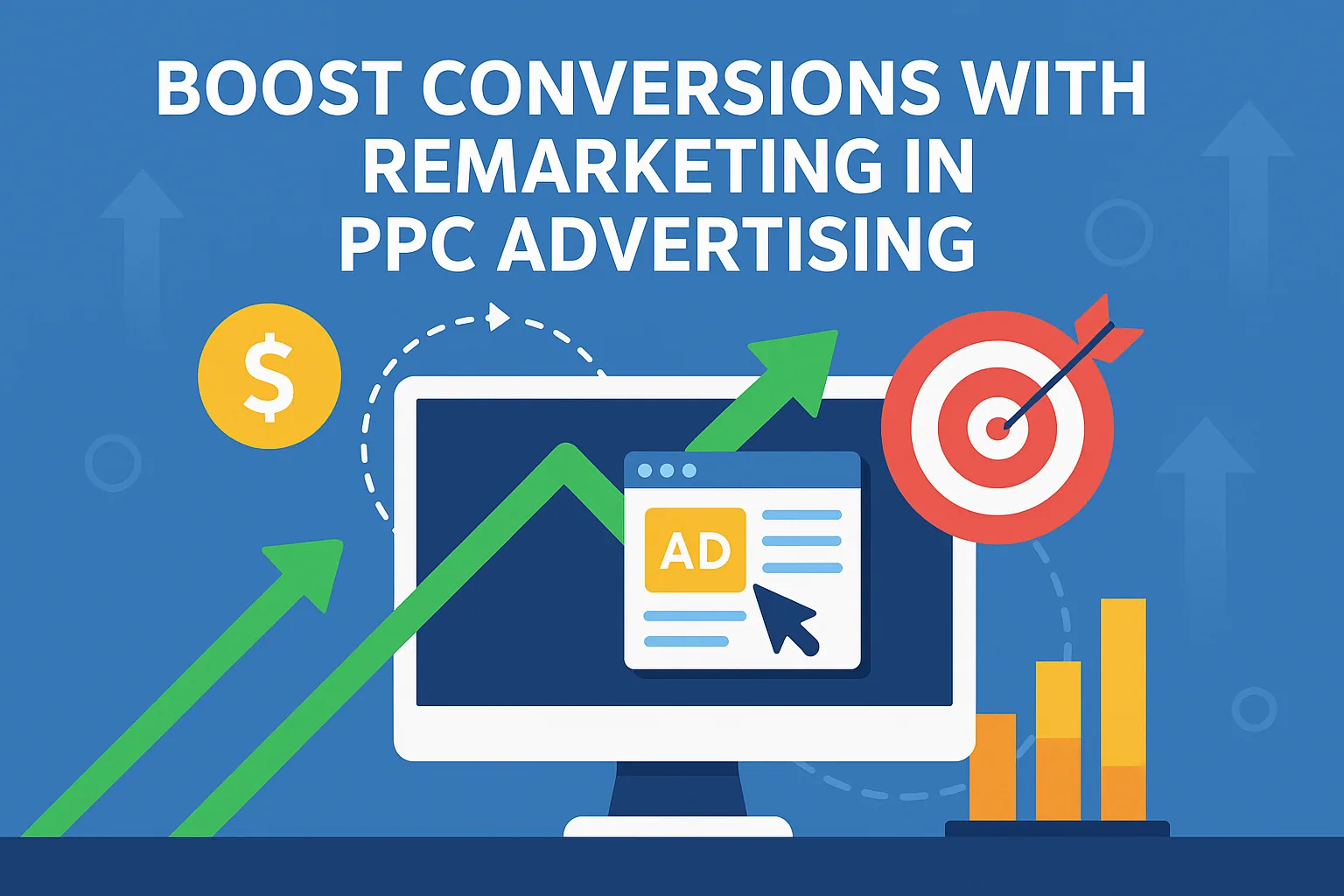
Remarketing is no longer optional—it’s an essential part of an effective digital marketing strategy. In this guide, discover how to use retargeting across channels like Google Display Network, email, and social media to re-engage lost visitors, recover abandoned carts, and maximize your PPC advertising ROI. We explore key tactics such as audience segmentation, behavioral targeting, frequency capping, and dynamic ads to help you unlock consistent, conversion-driven results.
Re-Engagement Is the New Conversion Game
Most visitors won’t convert on their first visit. That’s just a fact of modern ecommerce. But that doesn’t mean they’re gone for good—it means you need to try again, smarter.
This is where remarketing and retargeting step in. These techniques allow you to re-engage people who previously interacted with your brand but didn’t convert. By targeting them with tailored ads across platforms like the Google Display Network or Instagram, you meet them where they already are—with a message that’s more relevant this time around.
Think of remarketing as your second first impression. It’s a chance to be timely, personal, and persuasive.
For ecommerce brands like ours at Easy Ecommerce Marketing, these tactics are crucial. Not only do they improve return on ad spend, but they also increase overall customer lifetime value (CLV) by nurturing longer-term engagement.
Retargeting vs. Remarketing: What’s the Difference?
Although these terms are often used interchangeably, there’s a subtle difference:
- Retargeting typically refers to ads triggered by cookies or tracking pixels. These follow users who visited your site but didn’t convert.
- Remarketing is often tied to email campaigns aimed at past customers or subscribers.
Both strategies aim to bring potential customers back and increase conversions. For example, if someone abandons their cart, you can use email remarketing to remind them, or show dynamic ads of the exact products they left behind.
Shopping Cart Abandonment: The Conversion Goldmine
If someone places items in their cart and leaves, they’re telling you something: “I was almost there.” You can absolutely use that to your advantage.
Ways to recover these customers include:
- Using dynamic ads to display the exact products they were interested in.
- Applying time delay retargeting to avoid appearing too eager.
- Offering a small incentive in your ad copy (e.g. 10% off or free shipping).
Cart abandoners are high-intent users. Reaching them with personalized, timely messaging often results in some of the most cost-effective conversions in PPC advertising.
Get Granular with Audience Segmentation & Behavioral Targeting
Remarketing isn’t about blasting everyone who’s been to your site with the same ad. It’s about precision. Through audience segmentation and behavioral targeting, you can tailor your ads to meet users exactly where they are in the customer journey.
Here are a few audience segments you might create:
- People who visited a product page but didn’t add to cart.
- Users who spent more than 2 minutes on your site.
- Visitors who read a blog post but didn’t subscribe.
Using personalization algorithms, you can craft different ads for each group—making every impression more meaningful.
Want to see how we approach segmentation for ecommerce? Check out our services to explore how we help brands personalize and scale.
Landing Pages: Where the Click Turns into a Commitment
Don’t let your remarketing efforts fall flat with weak landing pages. Once you’ve earned the click, your landing page optimization needs to do the heavy lifting.
Here’s what matters most:
- Headline optimization that matches your ad’s promise.
- Clear, prominent calls to action (CTAs).
- Mobile-friendly layouts with fast loading speeds.
- Use of responsive search ads to adjust messaging dynamically.
- A/B testing to fine-tune your designs and offers.
It’s not enough to get someone back on your site—you need a landing page that convinces them to act.
Every wasted click is a wasted opportunity—and a wasted budget.
Control the Narrative: Avoiding Ad Fatigue with Frequency Capping
When your ads show up too often, users stop paying attention—or worse, become annoyed. This is known as ad fatigue, and it damages your CTR and overall performance.
To stay relevant without being overwhelming, set a frequency cap. This limits how often the same user sees your ad in a given time period.
Here’s a sample sequence using sequential retargeting:
- Day 1–3: Reminder ad with product image.
- Day 4–7: Testimonial or review-based ad.
- Day 8–10: Limited-time discount or urgency offer.
Smart sequencing lets you tell a story and nurture the lead over time—rather than repeating the same pitch again and again.
The Power of a Multi-Channel Strategy
Remarketing works best when it’s not confined to one channel. A multi-channel strategy ensures that you stay in front of potential customers, regardless of where they spend their time.
Effective remarketing platforms include:
- Google Display Network (ideal for display and programmatic advertising).
- Facebook and Instagram for social media remarketing.
- Email remarketing, especially for nurturing and lead nurturing.
By aligning your messaging across channels, you can create a more consistent and trusted brand presence.
Not sure how your current setup is performing? Request a free audit to get expert insights into your PPC and remarketing strategy.
Advanced Tactics to Supercharge Your Remarketing
If you've laid the groundwork with segmented audiences, optimized landing pages, and platform-specific targeting, it's time to level up. Advanced remarketing isn’t just about bringing users back—it's about guiding them forward through the buying journey with more intelligence, more personalization, and ultimately, more ROI.
Let’s explore the strategies that separate average campaigns from great ones.
Predictive Analytics: Market Smarter, Not Louder
What if you could know who is most likely to convert—before you spend another cent? That’s where predictive analytics come in. By analyzing past user behavior, time on site, scroll depth, and conversion paths, you can build models that anticipate future actions.
This data-driven approach allows you to:
- Allocate higher bids to high-probability converters.
- Pause campaigns targeting unlikely-to-convert segments.
- Refine your creative for users based on intent stage.
Predictive analytics transforms remarketing from reactionary to proactive—shifting your budget toward actions that matter most.
Don’t Waste Spend: Use Exclusion Lists Wisely
One of the biggest mistakes in retargeting is showing ads to people who already converted—or to low-quality traffic sources that never will. This is where exclusion lists are essential.
Use them to:
- Exclude recent converters using burn pixels.
- Prevent ad impressions to bounced users or unqualified traffic.
- Filter out competitors or employees from seeing your ads.
It’s not just about who you target—it’s equally about who you don’t. Proper exclusions improve ad relevance and prevent skewed metrics, helping you avoid wasted impressions and improve conversion rate optimization (CRO).
Retention Is the Real Growth Engine
While much of PPC advertising focuses on acquisition, retention marketing is where long-term growth happens. Remarketing plays a key role here by:
- Promoting cross-selling and upselling after the initial purchase.
- Re-engaging customers with value-add content (guides, tips, support).
- Offering loyalty rewards or VIP sales to high-LTV customers.
For example, if someone buys a skincare serum, a follow-up campaign might recommend complementary products like moisturizers or travel kits. Not only does this increase customer lifetime value, but it strengthens brand loyalty.
To learn more about applying lifecycle-based strategies to your ad account, visit Easy Ecommerce Marketing.
Dynamic Personalization with Programmatic Advertising
Programmatic advertising uses AI and automation to serve the most relevant ad to the right person, at the right time, and on the right platform. It’s an ideal fit for remarketing because it allows you to:
- Adjust creative in real time based on user behavior.
- Leverage personalization algorithms to deliver more relevant messaging.
- Optimize bidding dynamically to improve results and reduce cost.
Combined with dynamic ads, programmatic systems scale what’s working—and shut off what’s not—faster than any human could.
This method also ensures your omnichannel retargeting strategy is seamless across devices, platforms, and customer touchpoints.
Email Remarketing: The Channel Everyone Forgets
While display and social ads get most of the attention, email remarketing remains one of the most powerful (and underused) tools for ecommerce.
Why it works:
- You already have a relationship with the user.
- It’s a direct channel, not reliant on platform algorithms.
- It allows for deeper messaging and storytelling.
Examples include:
- Automated follow-ups after shopping cart abandonment.
- Time-sensitive offers for users who haven’t engaged in a while.
- Educational content designed to nurture leads and reduce hesitation.
Email is also an ideal medium for testing attribution modeling, helping you understand how different messages influence final conversions.
CRM Integration: Your Hidden Asset
Connecting your CRM to your advertising platforms opens up a new world of remarketing opportunities. By integrating customer data, you can:
- Target by purchase history, loyalty status, or support tickets.
- Sync segments to create lookalike audiences.
- Personalize campaigns based on lifecycle stage or past behavior.
This approach moves you beyond browser-based targeting into identity-based retargeting, which is more accurate, more controllable, and more scalable.
Geo-Targeted and Engagement-Based Retargeting
Two hyper-focused strategies gaining traction:
1. Geo-Targeted Remarketing
Customize ads based on user location, perfect for promotions, region-specific offers, or local delivery services. This can be layered into other campaigns to improve relevance and CTR.
2. Engagement-Based Retargeting
Rather than targeting all past visitors, hone in on those who took key actions like:
- Watching 75%+ of a product video
- Downloading a guide or freebie
- Clicking through multiple product pages
These users have demonstrated intent. Remarketing to them with tailored ads will yield significantly better performance.
Measuring What Matters: Analytics & Attribution
If you can’t measure it, you can’t improve it. Remarketing success isn’t just about clicks and impressions—it’s about understanding how every user interaction leads (or doesn’t lead) to a conversion.
This is where attribution modeling plays a vital role.
Why Attribution Matters:
Many brands focus on the last-click model, but in remarketing, that’s often misleading. A user might interact with three remarketing ads across platforms, click a fourth, and convert—but all the credit goes to the final click.
Instead, use multi-touch attribution models to:
- Understand how each retargeting touchpoint contributes to conversions.
- Identify drop-off points in your customer journey.
- Optimize your ad spend across channels, not just within them.
Platforms like Google Ads, Meta, and your email service provider all offer attribution tools—but don’t rely on just one source. Cross-check with Google Analytics and any connected CRM systems.
Visualizing Your Funnel: Remarketing Dashboards
To really stay on top of your strategy, build or integrate a remarketing performance dashboard. This gives you a real-time view of campaign metrics like:
- CTR by channel (Google, Meta, Email, etc.)
- Conversion rate by ad format
- Engagement rates (video views, scroll depth)
- Cost per acquisition (CPA)
- Cart abandonment recovery rate
You can build these dashboards using platforms like Looker Studio, HubSpot, or Shopify-integrated tools. Better still, if you're working with an agency or partner, ensure they provide clear, transparent reporting tailored to remarketing KPIs.
Looking for help building a more effective retargeting funnel? We specialize in just that.
Retargeting with Storytelling: Brand Messaging That Converts
People don’t buy from brands—they buy from stories. Remarketing isn't just a tool to push discounts; it's a channel to deepen your brand narrative.
Here’s how to use storytelling in your remarketing ads:
- Sequential messaging: Start with awareness, then shift to trust-building (testimonials), followed by urgency (limited-time offer).
- Lifestyle visuals: Show your product in real-world use to build emotional resonance.
- Content-led retargeting: Drive traffic to blog posts, how-to guides, or case studies instead of just product pages.
This content marketing-retargeting hybrid is especially effective for higher-ticket or consideration-based products, where trust matters just as much as price.
Retargeting Isn’t One-Off: It’s a System
One of the biggest misconceptions about remarketing is that it’s a "set-and-forget" strategy. In reality, successful remarketing evolves constantly with your audience, your product offerings, and your data.
Build your remarketing system around these principles:
- Continuous testing: Rotate creative assets, copy, CTA formats, and placements.
- Lifecycle alignment: Serve different campaigns to leads, first-time buyers, and repeat customers.
- Full-funnel integration: Connect ads, emails, blog content, and customer service into one seamless experience.
- Ongoing learning: Use A/B testing and predictive insights to iterate weekly—not monthly.
“Remarketing done right isn’t reactive. It’s strategic, adaptive, and customer-centric.”
Common Mistakes to Avoid
Let’s quickly highlight the pitfalls that even seasoned marketers sometimes fall into when scaling their remarketing:
- Showing ads to everyone: If you’re not segmenting, you’re burning money.
- Lack of frequency control: Ad fatigue kills performance and hurts brand perception.
- Neglecting post-purchase: Upselling, reviews, and referrals can all be driven by post-sale remarketing.
- Inconsistent messaging across channels: Users should feel like they’re talking to the same brand—not multiple versions of it.
Scaling With Confidence
By now, you should have a full playbook to build a high-performing, omnichannel remarketing system that’s more than just retargeted product ads. Whether your goal is increasing customer lifetime value, lowering acquisition costs, or simply improving campaign efficiency, remarketing delivers—if done right.
And remember, your remarketing strategy is only as good as the data, creative, and experience behind it.
At Easy Ecommerce Marketing, we help ecommerce brands craft remarketing systems that don’t just recover carts—they build customer relationships. From dynamic ads to email sequencing, attribution tracking to CRM integration, we build remarketing that works.
If you’re ready to move from guesswork to growth, let’s take the first step together. Claim your free audit and find out what’s really possible with strategic remarketing.
Putting It All Together
Successful remarketing isn’t about any single trick—it’s about building a strategic ecosystem. Here’s a quick checklist to guide your campaigns:
- ✅ Segment your audiences by behavior and lifecycle stage
- ✅ Implement frequency caps to prevent ad fatigue
- ✅ Use dynamic and programmatic ads to personalize at scale
- ✅ Add exclusion lists to remove converted or low-quality users
- ✅ Connect your CRM for identity-based targeting
- ✅ Reinforce your funnel with email, social, and display channels
- ✅ Analyze and optimize with predictive models and attribution data
Each piece feeds into the next, ensuring that you’re not just running ads—you’re building a high-performance retargeting engine.
Final Thoughts
The digital landscape is noisy, competitive, and constantly shifting. But remarketing gives you the edge: a chance to reconnect with users who already know you—and guide them to take the next step.
Whether you're recovering abandoned carts, increasing customer loyalty, or maximizing your ad spend, the strategies outlined here will give you the control and precision to do it profitably.
Looking to scale your remarketing without guesswork? Let’s talk. Start here to discover how Easy Ecommerce Marketing helps ecommerce brands like yours boost results with conversion-driven strategy and performance marketing expertise.
Frequently Asked Questions (FAQ)
Boost Conversions with Remarketing in PPC Advertising
1. How soon should I start remarketing after launching a PPC campaign?
You can start remarketing as early as your campaign begins generating traffic. However, most platforms require a minimum audience size before your ads are eligible to show (e.g. 100 users for Google Display Network). It’s best to set up tracking pixels from day one so your audience builds passively in the background.
2. What’s the ideal budget allocation for remarketing vs. prospecting ads?
A good starting point is to allocate 20–30% of your total PPC budget to remarketing. This may increase as you generate more traffic and conversions. Remarketing typically has a lower CPA and higher ROI, so it becomes more valuable over time.
3. How long should my remarketing audience window be?
It depends on your product and buying cycle.
- For fast-moving products, a 7–14 day window is effective.
- For considered purchases, use 30–90 days.
You can even create separate campaigns for short- and long-term windows to test performance.
4. What platforms are best for running remarketing campaigns?
The best platforms are:
- Google Ads (Display, Search, and YouTube)
- Meta Ads (Facebook & Instagram)
- LinkedIn (especially for B2B)
- Email platforms with automation (e.g. Klaviyo, Mailchimp)
The right platform depends on your audience and where they’re most active.
5. What’s the difference between static and dynamic remarketing ads?
- Static ads show the same creative to all retargeted users.
- Dynamic ads automatically display products or content based on what the user previously viewed on your site.
Dynamic ads typically perform better because they deliver personalized, relevant content.
6. Can I use remarketing to target users across different devices?
Yes—cross-device remarketing is supported on most major platforms. To do this effectively, you’ll need to use signed-in user data (such as Google or Meta accounts) or integrate your CRM to track users across sessions and devices.
7. How can I improve engagement on my remarketing ads?
To increase engagement (and CTR), consider:
- Using motion (GIFs or short videos)
- Including social proof like reviews or testimonials
- A/B testing multiple headlines and CTAs
- Matching visuals and messaging to your landing page content
Keep the experience relevant and consistent from ad to landing.
8. Are there any privacy or compliance issues with remarketing?
Yes, especially in regions governed by GDPR or CCPA. Always:
- Get clear consent before using cookies or tracking tools.
- Offer opt-outs in your privacy policy.
- Use platforms that comply with data regulations.
Following these rules not only avoids legal risk but builds trust with your audience.
9. What’s the minimum traffic I need to run effective remarketing?
Most platforms require at least:
- 100 active users for Google Display Network.
- 1,000 users for YouTube and Google Search remarketing.
- 100+ for Facebook custom audiences.
If you’re not hitting these numbers yet, focus first on traffic generation before diving into retargeting.
10. How do I know if my remarketing is actually boosting conversions?
Track these key indicators:
- Decreased cost per acquisition (CPA)
- Increased conversion rate among returning users
- Improved click-through rate (CTR) on retargeted ads
- Lift in customer lifetime value (CLV) over time
You can also compare performance between remarketing and prospecting campaigns to validate impact.