Effective Keyword Research for PPC Campaigns
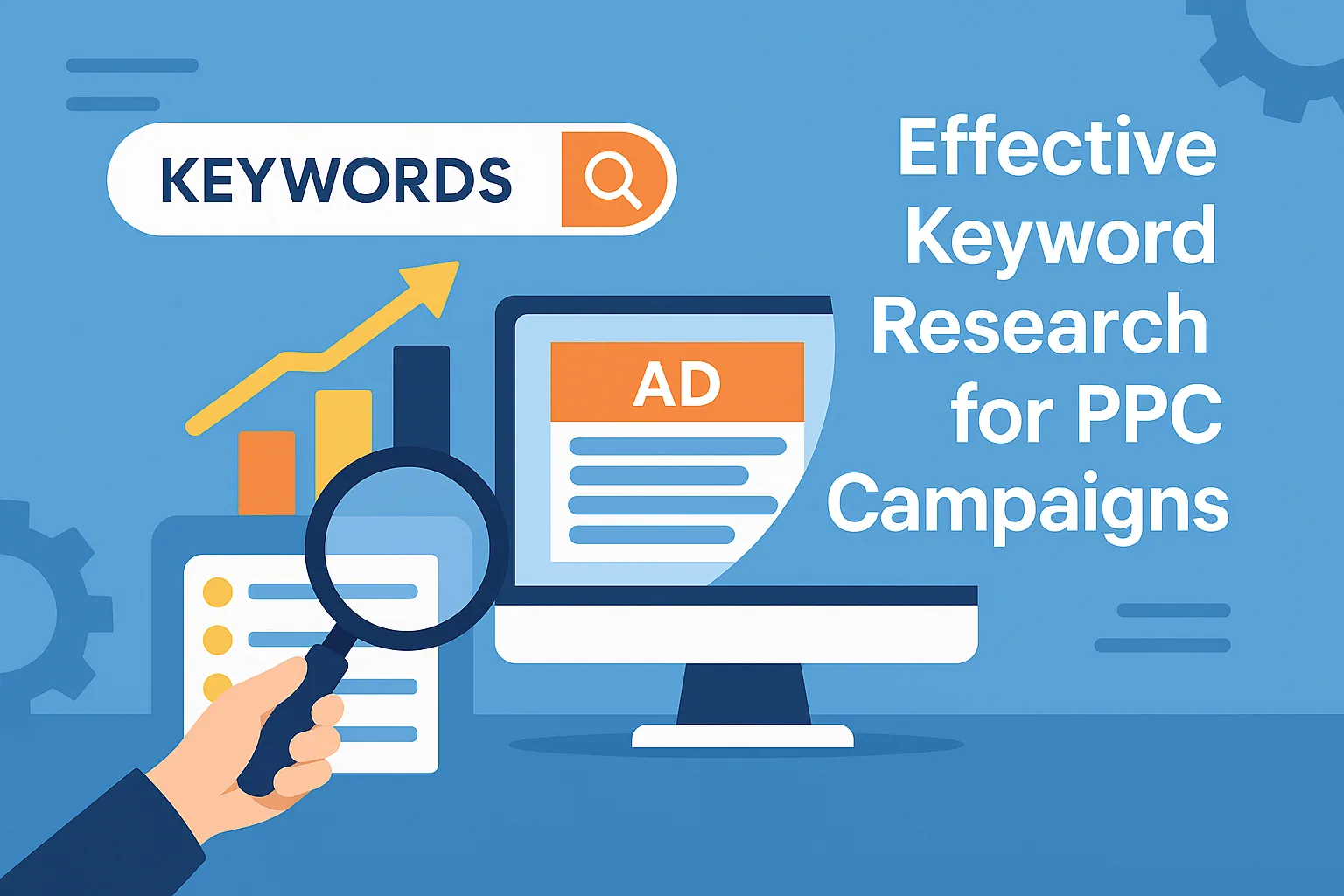
Keyword research is the engine of successful pay-per-click advertising. This article breaks down the process into clear, actionable steps. Here’s the quick version if you want the insights without the long read:
- Every campaign starts with seed keywords that expand into more refined lists.
- Using tools like Google Keyword Planner, Ahrefs, and Semrush Keyword Magic Tool, you can balance search volume, competition levels, and CPC.
- Segmenting keywords into ad groups and focusing on message match between ads and landing pages raises Quality Scores and lowers spend.
- Don’t skip negative keywords—they filter out wasted clicks and protect your ROI.
- Tracking performance and adjusting based on search intent ensures your ads evolve with customer behavior.
This guide will show you how to build smarter campaigns, reduce wasted spend, and consistently improve conversion rates.
The Foundation of Keyword Research
At the heart of any campaign lies PPC keyword research, a balance between data-driven analysis and customer understanding. Think of it as the blueprint: before writing ad copy or setting bids, you need to know which search terms your audience uses—and why.
There are three main categories of keywords to start with:
- Seed keywords: broad, high-level terms describing your product or service.
- Long-tail keywords: highly specific, often lower competition but strong buyer intent.
- Branded and competitor keywords: names of your own business or rivals.
A single campaign without these foundations risks becoming an expensive guessing game.
At Easy Ecommerce Marketing, campaigns are designed with a clear roadmap so keywords are aligned with both conversion funnel targeting and customer intent from day one.
Campaign Objectives and Audience Alignment
Before diving into keyword lists, define campaign objectives. Are you aiming for signups, direct sales, or brand awareness? These goals guide the type of terms you’ll want to include. For example:
- Transactional keywords if you’re pushing for conversions.
- Informational keywords if the goal is nurturing prospects with educational content.
A strong audience match ensures ads appear in front of the right people at the right stage. When combined with geo-targeted keywords and voice search queries, your targeting becomes sharper and less wasteful.
For businesses unsure where to start, a free audit can reveal hidden opportunities in current ad spend and keyword targeting.
Tools of the Trade
Keyword tools aren’t just nice to have—they’re the backbone of accurate research. Popular platforms like:
- Google Ads Keyword Planner – free, reliable for search volume and CPC estimates.
- Ahrefs and SpyFu – strong for competitor keyword analysis.
- Ubersuggest and Soovle – useful for discovering synonyms and variations.
- WordStream Free Keyword Tool – quick for brainstorming lists.
Pairing multiple tools allows marketers to cross-check data, which is especially helpful when filtering out irrelevant terms. For larger campaigns, Auction Insights reveal where competitors are bidding and how aggressively.
Well-researched keywords, grouped into Single Theme Ad Groups (STAGs), set the stage for ads that resonate with both searchers and algorithms.
Making Sense of Keyword Metrics
Not all keywords are created equal. To decide which ones deserve your budget, you need to measure them against critical metrics:
- Search volume – how often the keyword is queried each month.
- Competition level – the intensity of advertiser bidding (high, medium, low).
- Cost-per-click (CPC) – the price you’ll pay per click.
- Cost-per-conversion – a truer metric of profitability, as it links cost directly to outcomes.
This isn’t just a numbers game. For example, a keyword with high search volume but vague intent may attract lots of clicks but few conversions. Meanwhile, a specific buyer intent keyword might drive fewer visitors yet generate higher ROI.
Careful budget allocation between head terms and long-tail keywords keeps campaigns balanced. And ongoing keyword performance monitoring ensures spend shifts towards what actually converts.
Structuring Keywords Into Ad Groups
Once you’ve identified promising terms, the next step is building ad groups. Each group should contain tightly related keywords, ideally no more than 10–20. This improves:
- Quality Score optimization
- Ad copy relevance
- Click-through rate (CTR) and conversion rate
Example structure:
- Generic keywords → “project management tool”
- Long-tail keywords → “affordable project management tool for startups”
- Competitor keywords → “[Competitor name] alternatives”
Organizing them into STAGs (Single Theme Ad Groups) means every search term inside a group points to the same message match in ad copy and the same landing page optimization strategy.
At Easy Ecommerce Marketing’s services page, structured keyword campaigns are paired with conversion-centered design, ensuring clicks flow into a logical, persuasive journey.
The Role of Negative Keywords
If positive keywords are your growth engine, negative keywords are your brakes—preventing wasted spend. For instance, a luxury retailer might want to exclude terms like “cheap” or “free.”
There are three negative match types you can use:
- Broad match negative – blocks any query containing the word.
- Phrase match negative – excludes searches containing the phrase in the same order.
- Exact match negative – prevents your ads from showing only if the query exactly matches the term.
Adding negatives helps refine targeting, keeps ads relevant, and improves Quality Scores. It also ensures a higher quality of traffic vs. quantity, filtering out searches that never would have converted.
Pro tip: Review search query reports regularly. They often reveal irrelevant terms draining your budget—and highlight fresh opportunities for keyword clustering.
Why Competitor Keywords Matter
Studying competitors isn’t about copying their strategy—it’s about identifying gaps. Through competitor keyword analysis, you can discover:
- Keywords they consistently bid on (showing proven value).
- Missed opportunities they’re ignoring.
- Areas where you can deploy competitor conquesting campaigns.
Tools like SpyFu and Semrush Keyword Magic Tool give a window into these activities. From there, you can decide if chasing the same terms aligns with your objectives, or if you’re better off targeting related terms with less competition.
Advanced Keyword Strategies
Once the basics are in place, advanced strategies can elevate campaigns from efficient to exceptional. One of the most powerful approaches is keyword clustering—grouping related keywords by theme. This allows you to cover variations and synonyms in ad copy while still maintaining message match.
Another technique is the concatenation method, where modifiers (like “best,” “affordable,” or “near me”) are combined with product terms. This expands your keyword set quickly without sacrificing relevance. For advertisers with multiple offerings, geo-targeted keywords add precision, ensuring your ads appear only in the right locations.
The goal isn’t more keywords—it’s smarter keywords. Focus on those aligned with clear search intent and stage-specific needs in the conversion funnel.
AI and Automation in Keyword Research
The rise of AI is transforming PPC. Tools powered by AI keyword generation can quickly uncover long-tail opportunities that traditional research may overlook. Platforms like ChatGPT can simulate customer queries, providing insight into how real people might search for solutions.
Meanwhile, AI-driven keyword research also supports smarter budget reallocation, automatically shifting spend to top-performing terms. This helps advertisers stay competitive without constantly micromanaging every keyword.
Blending data from organic SEO is another emerging tactic. Keywords that already perform well in search can often double as profitable PPC targets. This blending of SEO + PPC data closes gaps and maximizes visibility across channels.
Trends Shaping the Future
Looking ahead, several trends will define keyword research in PPC:
- Voice search optimization – catering to natural, conversational queries.
- Cross-channel PPC – coordinating Google Ads with social platforms like Facebook for consistent targeting.
- Search intent alignment with funnel stage – ensuring top-of-funnel keywords educate while bottom-funnel terms convert.
- Landing page personalization – tailoring the on-page experience to the exact query, raising both CTR and conversion rates.
Marketers who adapt quickly to these shifts will secure stronger impression share and more sustainable ROI.
Bringing It All Together
Successful PPC campaigns don’t rely on luck—they’re built on careful keyword research, strategic grouping, ongoing optimization, and smart use of technology. From identifying seed keywords to leveraging competitor gap analysis and embracing AI, every step adds precision and reduces wasted spend.
At Easy Ecommerce Marketing, the philosophy is simple: tailor strategies that not only bring traffic but also convert that traffic into long-term customers. With the right foundation, every click becomes an opportunity rather than a gamble.
Frequently Asked Questions
1. How often should I update my PPC keyword list?
Keyword research is not a one-time task. A best practice is to review your keyword list at least once a month, with weekly adjustments if your campaigns are high-spend or in a competitive niche.
2. What’s the difference between high-intent and low-intent keywords?
High-intent keywords signal a readiness to purchase (e.g., “buy CRM software today”), while low-intent keywords are more informational (e.g., “what is CRM software”). Both have value but should be matched to the right campaign goals.
3. Should I bid on my own branded keywords?
Yes, in most cases. Bidding on branded keywords ensures you dominate the search results for your own brand, protects you from competitors bidding on your name, and usually provides a lower CPC than generic terms.
4. How many keywords should be in a single ad group?
Aim for 10–20 tightly related keywords per group. Keeping ad groups lean makes it easier to write relevant ad copy and maintain strong Quality Scores.
5. Are long-tail keywords really worth the effort?
Absolutely. While they generate lower search volume, long-tail keywords are typically less competitive and deliver higher conversion rates because they capture very specific intent.
6. Can PPC keyword research improve SEO too?
Yes. PPC data provides fast feedback on which keywords convert. You can use this insight to prioritize SEO content targeting the same terms for long-term organic visibility.
7. What are some common mistakes to avoid in PPC keyword research?
Common mistakes include chasing only high-volume terms, ignoring negative keywords, neglecting to group keywords properly, and failing to match search intent with campaign goals.
8. How do I balance budget across branded, generic, and competitor keywords?
A typical approach is to allocate 20–30% to branded keywords (low-cost, high-conversion), 50–60% to generic and long-tail keywords, and 10–20% to competitor keywords. This ratio can be adjusted as performance data comes in.
9. What role does Quality Score play in keyword strategy?
Quality Score impacts both ad ranking and CPC. Higher Quality Scores result in lower costs and better ad placement. Optimizing ad relevance, CTR, and landing page experience all contribute to higher scores.
10. Is PPC keyword research different for eCommerce vs. service-based businesses?
Yes. ECommerce campaigns often rely heavily on product-specific and transactional keywords, while service-based businesses benefit more from solution-focused and local search keywords. Both require keyword intent mapping to the conversion funnel.