How Does Optimizing Meta Tags Contribute To On-Page SEO?
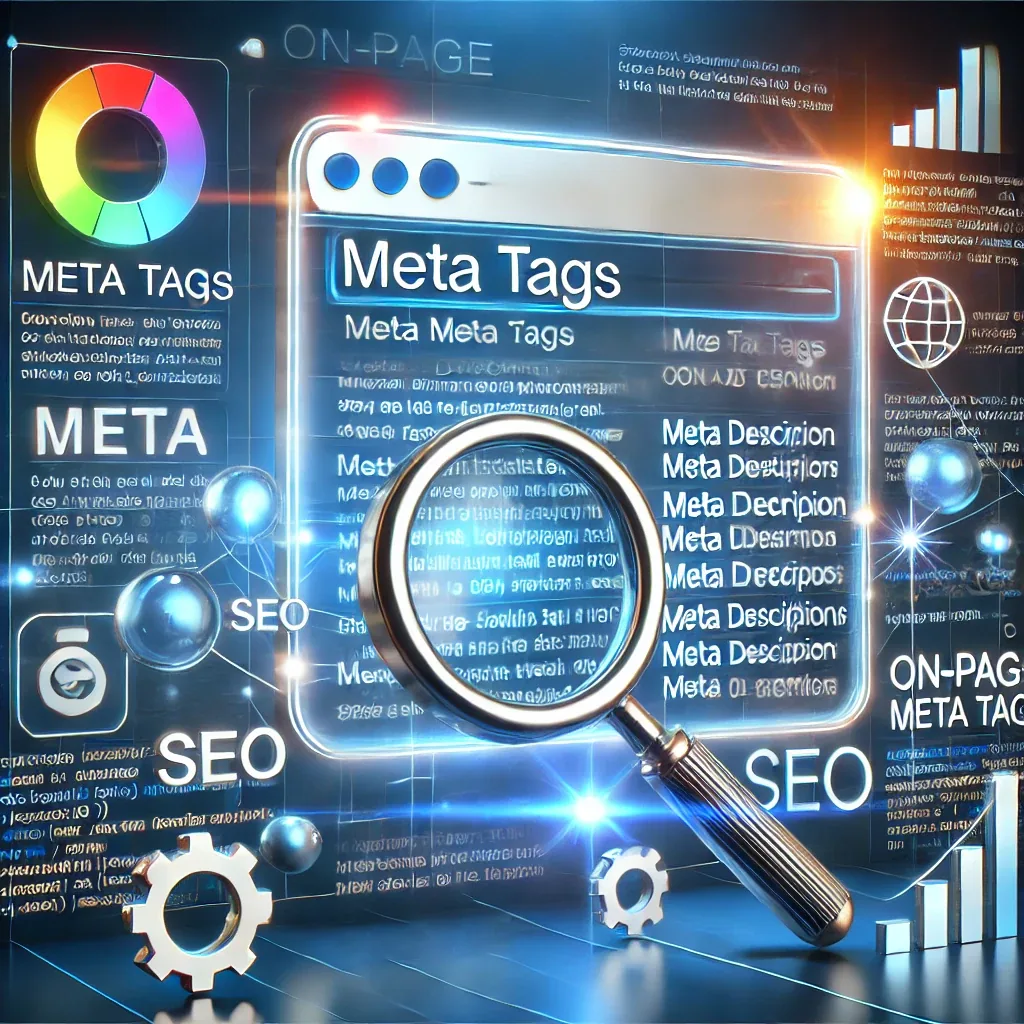
Meta tags are one of the most crucial yet overlooked elements of on-page SEO. They serve as a direct line of communication between your website and search engines, influencing how your pages are indexed, ranked, and displayed in search results. A well-optimized title tag improves click-through rates (CTR), while a compelling meta description enhances user engagement. Other tags, such as the meta robots tag, canonical tag, and Open Graph tags, play key roles in indexing, content structure, and social media visibility.
In this guide, we break down how different meta tags contribute to search engine optimization (SEO) and provide actionable insights to enhance your website’s organic traffic. Whether you're refining your HTML head section, conducting an SEO audit, or optimizing for Google’s Core Web Vitals, this article will help you structure your metadata strategy for maximum impact.
The Power of Meta Tags in On-Page SEO
Meta tags might not be visible to your visitors, but they play a crucial role in how search engines interpret your content. These HTML elements define what your page is about, guiding search engines on how to display your site in search engine results pages (SERPs).
Why Are Meta Tags Important?
Search engines rely on structured data and semantic search optimization to understand user intent. Without properly optimized meta tags, even the best content can go unnoticed. Here’s what they help with:
- Improved CTR: A well-crafted title tag and meta description entice users to click on your page.
- Better Indexing: The meta robots tag ensures search engines crawl and index your pages correctly.
- Content Hierarchy: Header tags (H1-H6) structure your page for both users and search engines.
- Mobile Optimization: The viewport meta tag ensures your content is displayed correctly across all devices.
- Eliminating Duplicate Content: A canonical tag helps consolidate duplicate URLs, preventing SEO dilution.
- Enhanced Social Sharing: Open Graph tags and Twitter card tags optimize how your content appears on social platforms.
“Optimizing meta tags is like writing an invitation to both search engines and users. If the invitation is vague or unclear, nobody shows up.”
Title Tags: The First Impression That Counts
Your title tag is the first thing users see in search results. It’s a Google ranking factor that directly impacts search intent and CTR. A poorly written title tag can cause users to scroll past your page, while an optimized one can boost engagement.
Best Practices for Title Tag Optimization:
- Keep it under 60 characters to prevent truncation in SERPs.
- Include primary keywords near the beginning.
- Ensure it matches the H1 tag for consistency.
- Avoid keyword stuffing—semantic keywords work better for NLP in SEO.
- Add modifiers like "Guide," "Best," or "How To" to capture user interest.
Example of a well-optimized title tag:
html
<title>Meta Tag Optimization: A Guide to Better On-Page SEO</title>
If you’re unsure about your title tags, consider using an SEO plugin like Yoast SEO or RankMath to analyze and refine them.
Meta Descriptions: Driving Click-Through Rates
While meta descriptions don’t directly influence search rankings, they play a significant role in CTR. Think of your meta description as an advertisement for your content—it should summarize what users will gain by clicking on your page.
Best Practices for Meta Description Optimization:
- Limit it to 150-160 characters for maximum visibility.
- Include primary and LSI keywords naturally.
- Make it compelling and action-driven with a clear CTA.
- Ensure it aligns with your title tag to maintain relevance.
Example of a strong meta description:
html
<meta name="description" content="Learn how optimizing meta tags can improve your on-page SEO, increase CTR, and boost search engine rankings. Read our expert guide!">
By refining your meta descriptions, you can increase engagement, reduce bounce rate, and improve conversion rates.
Get a free SEO audit to analyze your meta tags and ensure they align with your SEO strategy.
Meta Robots Tag: Controlling Indexing and Crawling
The meta robots tag instructs search engines on whether to index or follow links on a page. It’s particularly useful for managing duplicate content, preventing low-quality pages from being indexed, and ensuring Google crawlers focus on your best pages.
Common directives for the meta robots tag:
html
<meta name="robots" content="index, follow"> <meta name="robots" content="noindex, nofollow">
- Index, follow: Allows search engines to index the page and follow links.
- Noindex, nofollow: Prevents indexing and stops search engines from following links on the page.
- Noindex, follow: Tells search engines to follow the links but not index the page itself.
Using meta robots tags strategically can prevent thin content from affecting your rankings and help maintain a healthy SEO structure.
Canonical Tags: Preventing Duplicate Content Issues
Duplicate content can confuse search engines and split your ranking potential between multiple URLs. A canonical tag tells search engines which version of a page is the "main" one, consolidating ranking signals.
Example of a canonical tag:
html
<link rel="canonical" href="https://easyecommercemarketing.com/meta-tag-guide">
This is particularly useful for eCommerce sites, where similar product pages may exist with different URLs. By implementing canonical tags, you can preserve your rankings and prevent content dilution.
Learn more about our SEO services to improve your meta tag implementation.
Enhancing SEO with Schema Markup
While meta tags play a crucial role in on-page SEO, structured data takes optimization to another level. Schema markup is a type of metadata that helps search engines understand the context of your content beyond simple keywords. It enables rich snippets in search engine results pages (SERPs), which can increase click-through rates (CTR) significantly.
Why Schema Markup Matters for SEO
Schema markup helps search engines categorize and display your content more effectively, leading to:
- Rich snippets (star ratings, FAQs, product prices).
- Better search visibility through structured enhancements.
- Higher CTR, as users see more relevant information before clicking.
Example of JSON-LD Schema Markup for a product page:
json
{ "@context": "https://schema.org", "@type": "Product", "name": "SEO Optimization Guide", "description": "A comprehensive guide to optimizing your website’s meta tags for better search rankings.", "brand": "EasyEcommerceMarketing", "aggregateRating": { "@type": "AggregateRating", "ratingValue": "4.8", "reviewCount": "320" } }
By integrating structured data, you make it easier for Google’s search algorithm to prioritize your content. You can implement schema markup manually or use an SEO plugin like Yoast SEO or RankMath to automate the process.
“If you’re not using structured data, you’re missing out on potential traffic. Google is shifting towards understanding user intent, and schema helps with that.”
Need help with structured data implementation? Check out our SEO services.
Leveraging Open Graph and Twitter Card Tags for Social Media SEO
Your SEO strategy isn’t just about search rankings—it extends to social media visibility as well. Open Graph tags (for Facebook, LinkedIn) and Twitter card tags optimize how your content appears when shared on social platforms.
Benefits of Open Graph Tags
- Ensure proper image and title formatting when shared.
- Boost engagement by making links more visually appealing.
- Prevent incorrect thumbnails or missing meta data.
Example of Open Graph meta tags:
html
<meta property="og:title" content="How Meta Tags Improve On-Page SEO"> <meta property="og:description" content="Learn how optimizing meta tags can enhance search rankings and boost organic traffic."> <meta property="og:image" content="https://easyecommercemarketing.com/images/meta-tags-guide.jpg"> <meta property="og:url" content="https://easyecommercemarketing.com/meta-tags-guide">
Twitter Card Optimization
For Twitter, use the Twitter card meta tags to display rich previews.
Example:
html
<meta name="twitter:card" content="summary_large_image"> <meta name="twitter:title" content="Boost Your SEO with Meta Tag Optimization"> <meta name="twitter:description" content="Discover how meta tags improve your website's visibility in search results and on social media."> <meta name="twitter:image" content="https://easyecommercemarketing.com/images/seo-meta-tags.jpg">
Adding Open Graph and Twitter tags ensures your content is properly formatted across different platforms, improving engagement rates and brand recognition.
The Role of Alt Text in Image Optimization
While meta tags improve textual SEO, image optimization is equally important. Alt text (alternative text) provides context to search engines about the content of images, which enhances image search rankings and improves user experience (UX) for visually impaired users.
Best Practices for Alt Text Optimization
- Describe the image accurately using relevant keywords.
- Keep it concise yet informative.
- Avoid keyword stuffing—use semantic keywords naturally.
- Ensure every image has an alt attribute to prevent accessibility issues.
Example of optimized alt text for an SEO-related image:
html
<img src="seo-checklist.png" alt="SEO checklist for optimizing meta tags and improving rankings">
When done right, alt text helps improve both organic traffic and accessibility compliance.
Get a free audit to check if your images are optimized properly.
Hreflang Tags: Optimizing for Multilingual SEO
If your website targets international audiences, using hreflang tags is essential for search intent optimization across different languages and regions.
Why Hreflang Matters
- Helps Google serve the correct language version to users.
- Prevents duplicate content issues across multilingual pages.
- Improves search visibility for country-specific search engines.
Example of an hreflang tag for an English and Spanish version of a webpage:
html
<link rel="alternate" hreflang="en" href="https://easyecommercemarketing.com/en/meta-tags-guide" /> <link rel="alternate" hreflang="es" href="https://easyecommercemarketing.com/es/meta-tags-guide" />
Without proper hreflang implementation, your SEO rankings could suffer from duplicate content penalties and reduced international traffic.
Page Speed, Metadata Strategy, and SEO Audits
Impact of Page Speed on SEO
Search engines prioritize fast-loading websites in rankings. A slow site affects user experience (UX) and increases bounce rates.
Ways to improve page speed:
- Optimize images and use next-gen formats (WebP).
- Implement browser caching and minify CSS/JavaScript.
- Use a content delivery network (CDN) for global users.
The Importance of SEO Audits
Regular SEO audits help detect:
- Duplicate title tags and meta descriptions.
- Broken links and crawl errors.
- Slow-loading pages affecting rankings.
If you haven’t conducted an SEO audit recently, it’s time to get a free analysis.
Common Meta Tag Mistakes That Hurt Your SEO
Meta tags are powerful, but if misused, they can hurt your rankings instead of helping them. Many websites make avoidable mistakes that prevent search engines from correctly interpreting and ranking their content. Below are some common meta tag errors and how to fix them.
1. Duplicate Title Tags and Meta Descriptions
Search engines expect unique metadata for each page. If multiple pages have the same title tag or meta description, it can lead to:
- Keyword cannibalization, where search engines don’t know which page to rank.
- A weakened CTR, as repetitive titles reduce user engagement.
- Poor indexing, as duplicate content may be ignored.
How to Fix It:
- Conduct an SEO audit to identify duplicate meta tags.
- Use dynamic meta descriptions for product pages if needed.
- Ensure every page has a unique, keyword-optimized title tag and description.
2. Missing or Empty Meta Descriptions
While meta descriptions don’t directly impact rankings, they affect CTR, which indirectly influences SEO. If a meta description is missing, Google will auto-generate one, often pulling irrelevant content from the page.
How to Fix It:
- Write engaging, keyword-rich meta descriptions under 160 characters.
- Use active language and a call to action (e.g., “Learn more,” “Shop now”).
- Ensure each page has a meta description relevant to its content.
Example of a strong meta description:
html
<meta name="description" content="Learn how to optimize meta tags for better search rankings, higher CTR, and improved SEO performance. Read our expert guide today!">
If you're unsure which pages need meta description updates, get a free audit to check for missing metadata.
3. Ignoring the Meta Robots Tag
The meta robots tag tells search engines whether to index a page and whether to follow links. Incorrect use can result in:
- Important pages not being indexed (noindex mistakenly applied).
- Low-quality pages being indexed, diluting SEO strength.
How to Fix It:
- Use noindex for thank-you pages, duplicate content, and admin pages.
- Use index, follow for pages you want to appear in search results.
- Check robots directives with Google Search Console.
Example:
html
<meta name="robots" content="index, follow">
For pages that shouldn’t be indexed:
html
<meta name="robots" content="noindex, nofollow">
4. Failing to Implement Canonical Tags
Duplicate content confuses search engines, splitting SEO value between multiple pages. A canonical tag consolidates ranking signals and ensures search engines prioritize the correct page.
How to Fix It:
- Identify duplicate content issues (e.g., similar product pages, multiple URLs for the same content).
- Implement rel="canonical" on pages that should be considered the “main” version.
Example:
html
<link rel="canonical" href="https://easyecommercemarketing.com/meta-tags-guide">
Need help resolving duplicate content issues? Explore our SEO services.
Advanced Meta Tag Strategies for Maximum SEO Impact
Once you’ve mastered the basics, it’s time to go beyond simple title tags and meta descriptions. Here are advanced meta tag techniques that can further improve your search rankings.
1. Using Latent Semantic Indexing (LSI) Keywords in Meta Tags
Google’s search algorithm understands semantic relationships between words. Instead of repeating the same keyword, use LSI keywords to make your metadata more natural and diverse.
Example:
Instead of just using “SEO optimization”, include related terms like:
- Search engine rankings
- On-page SEO strategies
- Metadata strategy for organic traffic
2. Optimizing for Google’s Core Web Vitals
Google’s Core Web Vitals measure user experience through page load speed, interactivity, and stability. Slow-loading pages with unoptimized meta tags can negatively impact bounce rates and rankings.
How to Optimize:
- Ensure title tags load quickly (no unnecessary redirects).
- Use Open Graph tags to optimize social media previews.
- Implement preload hints for faster font and image loading.
Example of a preload hint:
html
<link rel="preload" href="https://easyecommercemarketing.com/fonts/custom-font.woff2" as="font" type="font/woff2" crossorigin="anonymous">
3. Utilizing Semantic Search Optimization
Google now prioritizes search intent over exact-match keywords. Using natural language processing (NLP) in SEO improves how your meta tags align with user queries.
How to Optimize:
- Write meta descriptions that answer user questions.
- Use structured data to enhance Google’s understanding of content.
- Optimize header tags (H1-H3) for better content hierarchy.
Example:
Bad meta description:
html
<meta name="description" content="Best SEO tags for search rankings. Optimize today.">
Optimized for NLP:
html
<meta name="description" content="Want higher Google rankings? Learn how meta tag optimization boosts on-page SEO, improves CTR, and enhances user experience.">
Final Checklist for Meta Tag Optimization
✅ Ensure every page has a unique, keyword-optimized title tag
✅ Write compelling meta descriptions that improve CTR
✅ Use Open Graph and Twitter card tags for social sharing
✅ Apply meta robots tags correctly to prevent indexing issues
✅ Implement hreflang tags for multilingual SEO
✅ Optimize for Google’s Core Web Vitals to improve page speed
✅ Use LSI keywords and NLP strategies for better semantic relevance
✅ Run regular SEO audits to detect and fix metadata errors
Final Thoughts: Why Meta Tags Still Matter
Meta tags may seem like a small part of SEO, but they have a massive impact on how search engines and users interact with your site. By optimizing metadata correctly, you can:
- Increase organic traffic with compelling SERP snippets.
- Improve search rankings by structuring metadata for Google’s search algorithm.
- Enhance user experience (UX) by making your content easier to find and navigate.
- Boost brand authority with structured data and rich results.
If you haven’t optimized your meta tags recently, now is the time. Even small changes can lead to significant ranking improvements over time.
Need Expert Help?
If you want a detailed SEO analysis, get a free SEO audit and see how well your meta tags are optimized.
Looking for professional SEO services? Let us optimize your website for maximum visibility.
By mastering meta tag optimization, you’ll gain a competitive edge in the ever-evolving world of search engine optimization. Start optimizing today!
Frequently Asked Questions (FAQ)
1. Do meta tags still matter for SEO in 2024?
Yes. While meta tags have evolved over time, they still play a critical role in on-page SEO. Title tags and meta descriptions impact click-through rates (CTR), while meta robots tags, canonical tags, and structured data help search engines properly index and display content.
2. Can meta tags alone improve my website’s ranking?
Meta tags are important, but they are only one piece of the SEO puzzle. While optimized meta tags can improve visibility in search engine results pages (SERPs) and attract more clicks, ranking also depends on content quality, backlinks, site speed, and user experience (UX).
3. What is the difference between meta keywords and LSI keywords?
Meta keywords were once used to tell search engines what a page was about, but Google no longer considers them a ranking factor due to keyword stuffing. Latent Semantic Indexing (LSI) keywords, on the other hand, are semantically related words that help search engines understand content better. Using LSI keywords naturally in your title tags and meta descriptions can improve search intent matching.
4. How can I check if my meta tags are optimized correctly?
You can use SEO tools like Google Search Console, Screaming Frog, SEMrush, or Ahrefs to audit your meta tags. Additionally, get a free SEO audit to analyze your site’s title tags, meta descriptions, and structured data for improvements.
5. Should I include my brand name in the title tag?
It depends. Including your brand name in title tags can help with brand recognition and click-through rates, especially if your brand is well-known. However, if you have limited space (Google typically displays up to 60 characters), it’s often better to prioritize keywords and search intent.
6. Can I leave meta tags blank and let Google generate them?
Technically, yes, but it’s not recommended. If you don’t specify a title tag or meta description, Google will generate one automatically, often pulling irrelevant text from your content. This can result in lower engagement and fewer clicks. Writing your own optimized meta tags gives you control over how your page appears in search results.
7. How often should I update my meta tags?
Meta tags should be reviewed regularly, especially after:
- A Google algorithm update that affects on-page SEO.
- A content refresh where you update key pages.
- A decline in click-through rates (CTR) on certain pages.
Using Google Search Console to track CTR and impressions can help you determine when adjustments are needed.
8. Do meta tags affect page speed?
Most meta tags do not directly affect page speed, but certain elements within the HTML head section—such as large Open Graph images, unnecessary tracking scripts, or heavy structured data markup—can impact loading times. Use optimized metadata and avoid bloated code to keep your site running smoothly.
9. Should I use the same meta tags for similar pages?
No. Each page should have unique meta tags tailored to its specific content. Duplicate title tags and meta descriptions can confuse search engines and lead to lower rankings due to content cannibalization. If you have similar pages, use canonical tags to consolidate ranking signals.
10. What’s the best way to write a compelling meta description?
A well-written meta description should:
- Summarize the page’s content in 150-160 characters.
- Include a primary keyword naturally.
- Use action-driven language (e.g., "Discover," "Learn," "Try").
- Encourage users to click by addressing a problem or benefit.
Example:
html
<meta name="description" content="Struggling with SEO? Learn how optimizing meta tags can boost your website’s rankings, increase CTR, and improve visibility. Read our expert guide today!">