How Exactly Does SEO Work?
Search Engine Optimization (SEO) is the key to unlocking visibility in today’s crowded digital world. Whether you're aiming for more traffic, better rankings, or enhanced user engagement, understanding SEO is crucial. This article explains the core mechanics of SEO, from technical setups to content strategies, breaking down the essential elements to help you leverage it effectively. You’ll discover the role of keywords, backlinks, and user experience, alongside tips on aligning your site with search engine algorithms like Google’s RankBrain.
The Foundation of SEO Success: Visibility and Relevance
To thrive online, you need more than just a functional website. Search engines like Google or Bing evaluate countless factors to determine how your content ranks on Search Engine Results Pages (SERPs). These rankings are influenced by:
- Relevance: How closely your content matches a user's query.
- Authority: The trustworthiness and expertise of your site.
Organic vs. Paid Search
SEO focuses on organic search, which is the unpaid section of the results page. Unlike paid search (PPC), which relies on advertising, organic results depend on the quality and relevance of your content.
For instance, your content strategy should prioritize keywords that match user search intent. Explore our services to see how we tailor keyword strategies for effective results.
How Search Engines Understand Your Site
Search engines rely on three core actions to rank your content effectively: crawling, indexing, and ranking.
Crawling
Search engines use bots to “crawl” your site, collecting data about your pages. The structure of your URL and proper use of robots.txt files ensure these crawlers can navigate efficiently.
Indexing
After crawling, search engines decide whether your content is valuable enough to include in their database. Factors such as duplicate content and poor website architecture can hinder this process.
Ranking
Once indexed, your content competes for placement on SERPs. Factors like backlinks, page speed, and mobile optimization influence where your page lands. Curious about your current rankings? Get a free SEO audit to see how your site performs.
The Role of Content in SEO
Content is the backbone of SEO, bridging the gap between your brand and your audience. But not just any content will do—it needs to be relevant, high-quality, and strategically optimized.
Keyword Research: The Starting Point
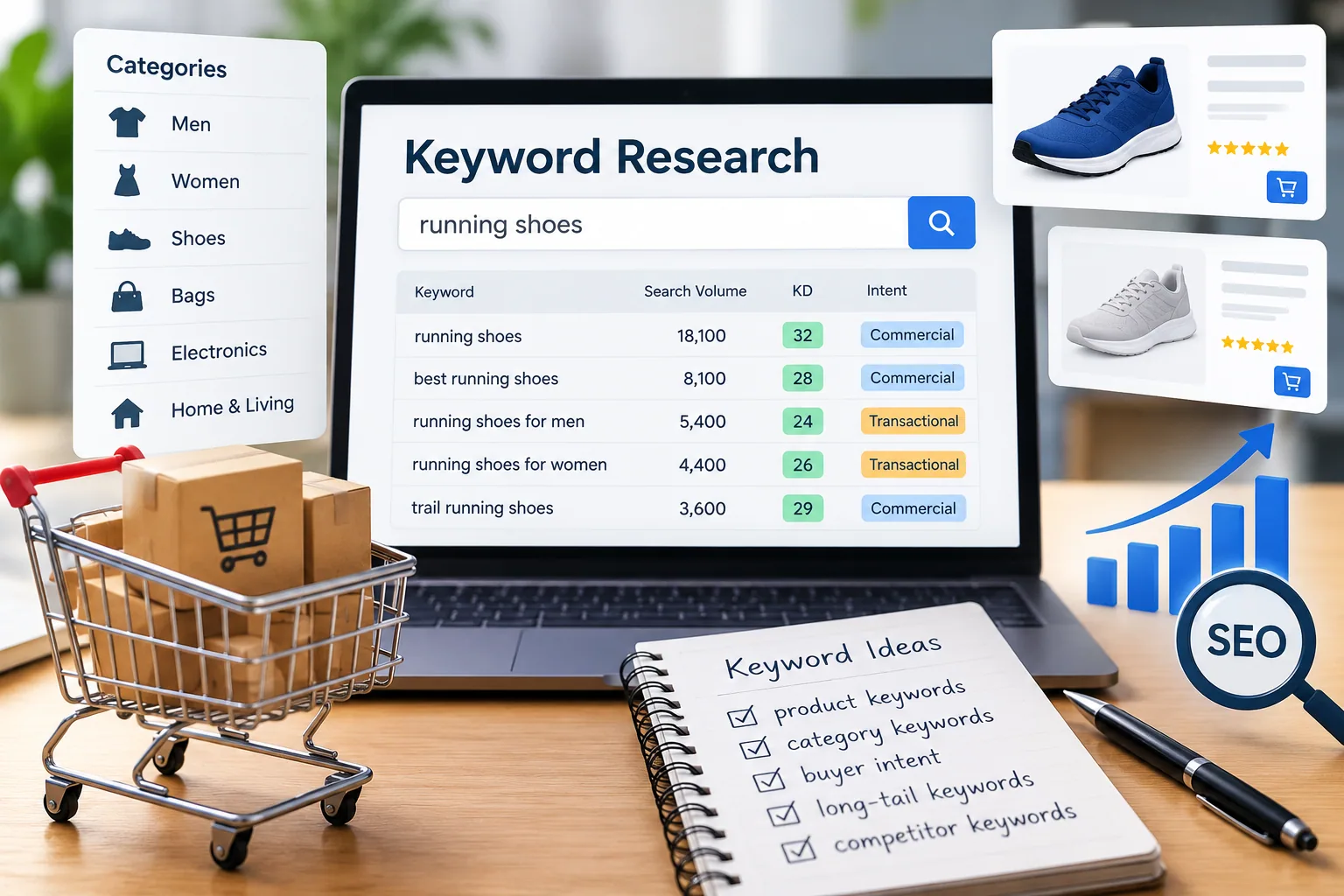
Keywords act as the bridge between user queries and your site. Targeting long-tail keywords ensures you’re addressing specific user needs. Tools like SEMrush or Ahrefs can uncover valuable terms to incorporate into your title tags, meta descriptions, and headers.
Structuring for Success
A well-structured page not only improves user experience but also helps search engines understand your content. Use:
- Headers (H1, H2) to organize sections.
- Internal links to guide users (and crawlers) deeper into your site.
- Multimedia optimization (e.g., alt-text for images) to enhance relevance.
For example, your product and collection pages should feature semantic keywords to make your offerings stand out. Learn more about optimizing product pages by browsing our main site.
Enhancing User Experience with Technical SEO
Technical SEO lays the groundwork for your content to shine. Search engines reward sites with seamless navigation and fast loading times. Here’s what you need to focus on:
Site Speed
A slow site frustrates users and leads to higher bounce rates. Compress images, leverage caching, and optimize your code to reduce loading times.
Mobile Optimization
With most searches happening on mobile devices, having a mobile-friendly design is essential. Responsive layouts and clickable buttons can significantly improve user engagement.
HTTPS
Ensure your site is secure. Search engines favor sites using HTTPS, as it signals trustworthiness.
By mastering these technical elements, your site aligns with best practices, improving both organic traffic and engagement metrics.
Building Authority: The Power of Backlinks
Backlinks, or inbound links, are a cornerstone of off-page SEO. These are links from external websites pointing to your content, serving as a vote of confidence in your site's credibility and authority. However, not all backlinks are created equal.
What Makes a Quality Backlink?
- Relevance: Links from sites related to your niche carry more weight.
- Authority: A link from a high-domain authority site is more impactful than one from a low-quality source.
- Diversity: A variety of referring domains signals a natural and credible link profile.
Earning high-quality backlinks often involves content marketing and outreach strategies. For example, publishing in-depth blog posts or case studies can attract natural backlinks from sites looking to cite reliable sources. Consider how our blog at Easy eCommerce Marketing incorporates data-driven insights that appeal to industry professionals.
How to Earn Backlinks
- Guest Blogging: Share your expertise on other platforms in exchange for a link back to your site.
- Resource Pages: Reach out to sites with resource lists and suggest adding your valuable content.
- Broken Link Building: Identify broken links on other websites and offer your content as a replacement.
Backlink strategies should always focus on quality over quantity. Low-quality links can harm your site, as search engines penalize manipulative tactics.
Local SEO: Reaching Nearby Audiences
If your business serves a specific geographical area, local SEO is your ticket to visibility in local search results. Google’s local search algorithm prioritizes businesses with accurate, localized information, so optimizing your presence is essential.
Optimize for Local Search
- NAP Consistency: Ensure your Name, Address, and Phone number (NAP) is identical across your website, Google My Business, and other listings.
- Google My Business: Claim and optimize your profile with engaging images, accurate hours, and customer-friendly descriptions.
- Local Keywords: Incorporate location-specific terms into your content, like "e-commerce services in New York."
A robust local SEO strategy helps you show up in searches like “e-commerce services near me.” Want to see how well your local efforts stack up? Schedule a free audit to discover opportunities for improvement.
Leveraging Analytics and Metrics
SEO isn’t a one-and-done activity. It requires constant monitoring and adjustment. This is where tools and analytics come into play, allowing you to measure the success of your efforts and uncover areas for optimization.
Key Metrics to Track
- Organic Traffic: Monitor growth in visits from search engines.
- Keyword Rankings: Track how well your targeted keywords are performing.
- Bounce Rate and Dwell Time: High engagement signals relevance to both users and search engines.
- Conversion Rates: Assess how well organic traffic translates into sales or leads.
Using tools like Google Search Console and SEMrush can help you identify trends and make data-driven decisions. For example, a high bounce rate on your product pages might indicate a mismatch between the content and user intent, prompting a review of your content optimization.
Schema Markup: Speaking Search Engines’ Language
Schema markup is a technical SEO tactic that enhances how search engines interpret your site. By adding structured data to your pages, you help search engines understand and display key information, such as product details or event dates, directly in search results.
Benefits of Schema Markup
- Featured Snippets: Increase your chances of appearing in rich results.
- Enhanced Visibility: Provide users with detailed information, such as ratings or availability, at a glance.
- Higher Click-Through Rates (CTR): Well-presented results often lead to more clicks.
From product pages to blog content, schema markup can be applied across your site. Check out how we utilize structured data to improve visibility on Easy eCommerce Marketing.
Advanced Strategies for Long-Term SEO Success
With foundational SEO tactics in place, it’s time to delve into advanced strategies that leverage cutting-edge technologies and evolving search engine algorithms. These strategies not only future-proof your efforts but also keep you ahead of the competition.
Harnessing AI and Predictive Analytics
Artificial Intelligence (AI) is reshaping how search engines understand content. Google’s RankBrain, for instance, uses machine learning to interpret user queries and deliver results based on context rather than exact keywords.
How to Optimize for AI-Driven Search
- Focus on Natural Language: Write content in a conversational tone, anticipating questions users might ask.
- Use Semantic Keywords: Incorporate related terms and phrases to enhance context and relevancy.
- Optimize for Voice Search: With smart speakers on the rise, ensure your content is concise and answers specific questions.
Predictive analytics tools, like SEMrush and Google Analytics 4, help anticipate trends and adjust strategies before they become obsolete. These tools analyze historical data to identify which topics and keywords will drive future traffic.
Maintaining Content Quality Over Time
Search engines reward websites that continually update and improve their content. Stale or outdated pages may lead to reduced rankings, even for high-quality content.
Strategies for Content Refreshing
- Update Statistics and Data: Ensure any figures or claims are current.
- Expand Content Depth: Add more detailed explanations, FAQs, or multimedia to enhance value.
- Address New User Intent: Modify your content to align with evolving search behaviors.
Pro tip: Use tools like Google Search Console to identify pages with declining traffic, then refresh those to regain relevance.
Technical SEO: The Silent Hero
Technical SEO goes beyond basic optimization to ensure that your site functions seamlessly. While less visible than content or keywords, these elements are critical to maintaining search engine trust and usability.
Core Technical SEO Tactics
- Core Web Vitals: Optimize metrics like page loading speed, interactivity, and visual stability.
- Crawlability and Indexing: Use tools like Sitemaps and robots.txt to guide search engine crawlers effectively.
- Mobile-First Indexing: Ensure your site is mobile-friendly, as Google now predominantly uses the mobile version of sites for indexing.
For businesses looking to master the technical side of SEO, our services page provides tailored solutions.
Social SEO: Amplifying Reach Through Engagement
Although social media platforms don’t directly influence search rankings, they play a vital role in driving visibility and traffic.
How Social SEO Works
- Content Amplification: Sharing blog posts and product updates increases visibility and backlinks.
- Brand Authority: Consistent engagement across platforms builds trust and signals relevance.
- Increased CTR: Users familiar with your brand via social media are more likely to click your links on SERPs.
Integrating social media with SEO strategies ensures your content reaches wider audiences, ultimately boosting organic traffic.
Measuring and Refining Your SEO Strategy
SEO is an iterative process that thrives on continuous measurement and refinement. Without monitoring results, it’s impossible to identify what’s working and where improvements are needed.
Key Tools for Tracking Success
- Google Analytics: Monitor user behavior, conversions, and traffic sources.
- SEMrush/Ahrefs: Track keyword rankings, backlinks, and domain authority.
- Heatmaps: Analyze how users interact with your pages and identify areas for improvement.
Additionally, conducting regular performance reviews—such as our free SEO audit—helps pinpoint actionable areas to optimize for better results.
The SEO Journey: A Final Thought
SEO is not a one-time effort; it’s a journey of consistent improvement, adaptation, and learning. From mastering the technical foundations to leveraging advanced tools and strategies, success in SEO requires a blend of creativity and analytical rigor.
By focusing on quality content, user experience, and staying ahead of algorithm updates, your website can achieve long-term visibility and sustained growth in a competitive online landscape. Visit Easy eCommerce Marketing to explore tailored solutions and take your SEO to the next level.
FAQ: Common Questions About How SEO Works
1. What is the difference between SEO and SEM?
- SEO focuses on improving a website's visibility in organic search results, while SEM (Search Engine Marketing) includes both SEO and paid search strategies like PPC (Pay-Per-Click) advertising.
2. How long does it take to see results from SEO?
- SEO results typically take 3-6 months to show measurable improvement, depending on the competitiveness of your industry, the quality of your content, and the authority of your site.
3. Do small businesses need SEO?
- Absolutely. SEO helps small businesses compete with larger companies by optimizing for local search results and specific niche keywords that attract targeted audiences.
4. What is black hat SEO, and why should I avoid it?
- Black hat SEO involves unethical practices like keyword stuffing, cloaking, and buying backlinks. These can lead to penalties or even removal from search engine results.
5. How do I choose the right keywords for my website?
- Focus on relevant keywords with a balance of search volume and competition. Tools like Google Keyword Planner and SEMrush can help identify terms aligned with your audience's search intent.
6. Why does mobile optimization matter for SEO?
- Google uses mobile-first indexing, meaning the mobile version of your site is prioritized when determining rankings. A mobile-friendly site improves both user experience and SEO performance.
7. What are long-tail keywords, and why are they important?
- Long-tail keywords are specific phrases with lower search volume but higher conversion potential. They help you target users with niche queries and less competition.
8. How does E-A-T impact SEO?
- E-A-T (Expertise, Authoritativeness, Trustworthiness) is part of Google's quality guidelines. Websites that demonstrate these attributes are more likely to rank higher, especially in competitive industries like health and finance.
9. What are featured snippets, and how can I optimize for them?
- Featured snippets are concise answers displayed at the top of search results. Optimize for them by using clear headings, lists, and direct answers to common questions within your content.
10. Can social media activity improve SEO?
- While social signals don’t directly impact rankings, social media can drive traffic, improve brand visibility, and lead to more backlinks—all of which indirectly enhance your SEO.