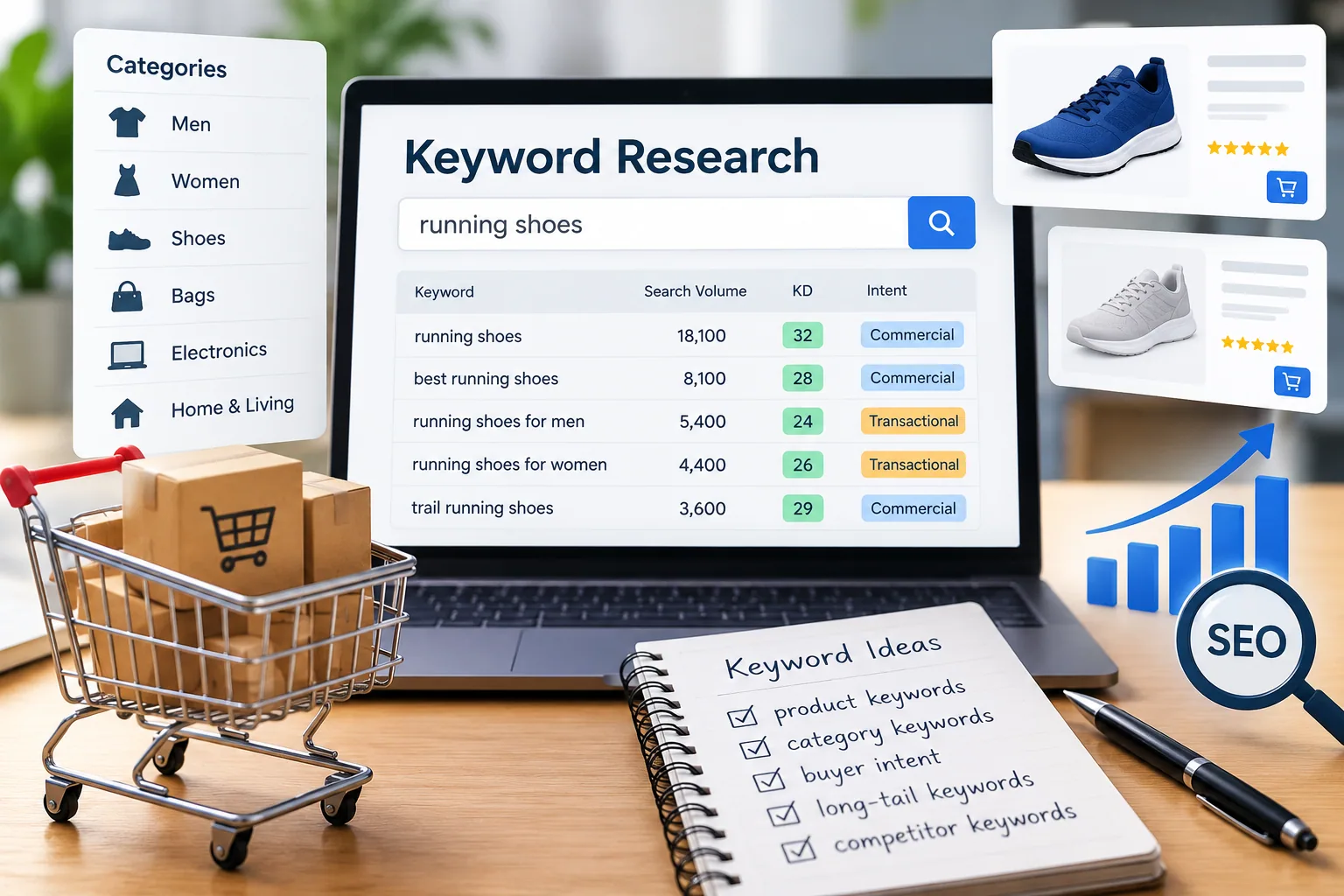
How Is SEO Successful?
Unlocking the Secrets to SEO Success
Search engine optimization (SEO) is more than just ranking on Google—it's about visibility, authority, and long-term growth. A well-structured SEO strategy ensures that businesses attract organic traffic, convert visitors into customers, and maintain a competitive edge in the digital landscape.
This guide explores the key factors that define SEO success, including:
- SEO Fundamentals – How search engines work, the role of Google's algorithm, and why technical SEO matters.
- Keyword Optimization & Content Strategy – The power of long-tail keywords, search intent, and content freshness in creating high-ranking pages.
- Link Building & Domain Authority – How backlinks, internal linking, and the Skyscraper technique contribute to SEO success.
- Technical & Performance Optimization – Enhancing page speed, mobile-first indexing, and structured data to improve user experience (UX).
- Measuring SEO Success – The metrics that matter, including click-through rate (CTR), Google Analytics insights, and ROI.
Whether you're new to SEO or refining an existing strategy, this guide breaks down what works in SEO today—and what doesn't.
Understanding SEO Strategy and Its Role in Business Growth
The foundation of SEO success lies in a well-crafted strategy. Without a clear roadmap, businesses risk getting lost in the digital abyss.
Why an SEO Strategy Matters
An SEO strategy is a structured approach to increasing a website’s search engine rankings through targeted keyword research, on-page optimization, and content marketing. Unlike paid advertising, which delivers immediate but temporary results, SEO is a long-term investment that builds credibility and authority over time.
How Search Engines Determine Rankings
Search engines like Google use complex algorithms to determine which pages appear at the top of search results. Some of the most critical factors include:
- Relevance – How well your content matches the user's search intent.
- Authority – The number and quality of backlinks pointing to your site.
- User Experience (UX) – Factors like mobile optimization, page speed, and bounce rate.
- Technical SEO – Ensuring search engines can crawl and index your site efficiently.
By focusing on these key elements, businesses can improve their visibility and attract high-quality organic traffic.
Keyword Optimization: The Backbone of SEO Success
One of the most important aspects of SEO is keyword optimization. Understanding what your audience is searching for allows you to create content that aligns with their intent.
The Power of Long-Tail Keywords
While broad keywords like “SEO strategy” are highly competitive, long-tail keywords (e.g., “best SEO strategy for small businesses”) are easier to rank for and attract targeted visitors.
Why Long-Tail Keywords Work:
✅ Lower competition – Easier to rank for than short, generic terms.
✅ Higher conversion rates – More specific, meaning users are closer to taking action.
✅ Better alignment with search intent – Helps Google understand context and deliver more relevant results.
Search Intent and Why It Matters
Google prioritizes content that satisfies search intent. This means understanding why users are searching for a specific term:
- Informational Intent – Users are looking for knowledge (e.g., "What is SEO?").
- Navigational Intent – Searching for a specific website (e.g., "Easy Ecommerce Marketing services").
- Transactional Intent – Ready to make a purchase (e.g., "Best SEO service for eCommerce").
By aligning content with search intent, businesses can improve click-through rates and reduce bounce rates.
Pro Tip: Use tools like Google Search Console to analyze which queries bring traffic to your site and refine your content strategy accordingly.
Optimizing Meta Tags and On-Page SEO
On-page SEO involves optimizing individual pages to rank higher and earn more relevant traffic. Key components include:
- Title Tags – The clickable headline that appears in search results.
- Meta Descriptions – A short summary that encourages users to click.
- Header Tags (H1, H2, H3, etc.) – Organizes content for readability and SEO.
- Internal Linking – Strengthens site structure and keeps visitors engaged (SeeourSEOservices).
- Content Clusters – Grouping related content to establish topic authority.
By implementing these on-page techniques, businesses can increase visibility and improve engagement metrics.
Building Authority & Optimizing Performance for SEO Success
In part one, we covered the foundation of SEO success, focusing on keyword optimization, search intent, and on-page SEO. Now, let’s explore how to build authority, improve technical SEO, and optimize performance—key elements that separate high-ranking websites from the competition.
Link Building: Strengthening Authority & Trust
Backlinks are the backbone of off-page SEO and one of the strongest ranking signals for Google. A high-quality backlink profile tells search engines that your website is trustworthy, authoritative, and valuable.
The Power of Backlinks
Not all backlinks are created equal. Google assesses both quantity and quality when determining rankings. A link from a high-authority website carries more weight than multiple links from low-quality sources.
Example: A backlink from a trusted source like Forbes has significantly more value than dozens of links from low-tier blogs.
Effective Link Building Strategies
- Guest Blogging – Write high-quality content for relevant industry sites in exchange for a backlink.
- Broken Link Building – Find broken links on high-authority websites and offer your content as a replacement.
- The Skyscraper Technique – Improve upon existing high-ranking content and reach out to sites linking to the outdated version.
- Competitor Backlink Analysis – Use tools like Ahrefs or SEMrush to analyze competitors’ backlinks and replicate their strategy.
- Internal Linking – Strengthen your own site structure by strategically linking to key pages (ExploreourSEOservices).
A well-executed link-building strategy boosts domain authority (DA) and enhances your chances of ranking for competitive search terms.
Technical SEO: Enhancing Crawlability & Indexing
While content and backlinks help search engines understand relevance, technical SEO ensures your site is easy to crawl and index.
Key Technical SEO Factors
✅ HTTPS Security – Google prioritizes secure websites (SSL certification is a must).
✅ XML Sitemaps – Helps search engines discover and index important pages.
✅ Robots.txt File – Controls which pages search engines can crawl.
✅ Canonical Tags – Prevents duplicate content issues.
✅ Mobile-First Indexing – Google ranks websites based on mobile usability first.
✅ JavaScript SEO – Ensures search engines can properly render JavaScript-based content.
Improving Page Speed & Core Web Vitals
Page speed is a ranking factor, and slow-loading websites suffer from higher bounce rates and lower conversions.
Did you know? A one-second delay in page load time can reduce conversions by 7%.
Ways to Optimize Page Speed
- Optimize Images – Compress images without sacrificing quality.
- Enable Browser Caching – Store website resources locally for faster repeat visits.
- Minify CSS, JavaScript & HTML – Remove unnecessary code to enhance load speed.
- Use a Content Delivery Network (CDN) – Improve load times for users in different locations.
For a detailed breakdown of your website’s technical SEO performance, get a freeSEOaudit and identify areas for improvement.
User Experience (UX) & SEO: Keeping Visitors Engaged
Google doesn’t just rank websites—it ranks experiences. A positive user experience (UX) directly impacts engagement metrics like bounce rate, dwell time, and click-through rate (CTR).
Key UX Factors That Influence SEO
- Mobile Optimization – A mobile-friendly website ensures a seamless browsing experience.
- Intuitive Navigation – Clear menus and site structure help users find information faster.
- Engaging Content Layout – Use visuals, bullet points, and short paragraphs for readability.
- Reduce Pop-Ups & Disruptions – Avoid intrusive ads that frustrate users.
Google’s RankBrain Algorithm prioritizes websites that keep users engaged. If visitors leave too quickly, rankings can drop.
By enhancing UX, websites can increase dwell time, reduce bounce rates, and improve search engine rankings.
Measuring & Tracking SEO Success: The Final Piece of the Puzzle
SEO isn’t just about implementing strategies—it’s about tracking results and refining your approach based on data-driven insights. In this final section, we’ll explore the most important metrics, tools, and performance indicators that determine whether your SEO efforts are truly successful.
SEO Analytics: The Tools That Matter
To accurately measure SEO performance, businesses need to leverage powerful analytics tools. These platforms provide insights into organic traffic, ranking positions, and user engagement.
Essential SEO Analytics Tools
✅ GoogleSearchConsole – Monitors search performance, indexing issues, and keyword rankings.
✅ GoogleAnalytics – Tracks website traffic, bounce rates, conversion rates, and engagement metrics.
✅ Ahrefs/ SEMrush / Moz – Analyzes backlinks, competitor strategies, and keyword difficulty.
✅ PageSpeedInsights – Evaluates page load speed and Core Web Vitals performance.
✅ ScreamingFrog – Audits technical SEO issues, such as broken links and crawlability errors.
Pro Tip: If you’re unsure about your site’s SEO health, get a freeaudit to identify areas for improvement.
Key Performance Indicators (KPIs) for SEO Success
SEO success isn’t measured by a single metric—it’s a combination of multiple KPIs that reflect visibility, engagement, and conversion potential.
1. Ranking Position & Keyword Performance
Why it matters: If your target keywords aren’t ranking on the first page, your traffic potential is limited.
✅ Track your Google rankings for primary and secondary keywords.
✅ Focus on long-tail keywords that align with search intent for higher conversions.
✅ Monitor SERP volatility to understand how algorithm updates impact rankings.
2. Organic Traffic Growth
Why it matters: More organic traffic means your SEO strategy is working.
✅ Use Google Analytics to track increases in organic sessions.
✅ Segment new vs. returning visitors to gauge audience growth.
✅ Optimize for zero-click searches and featured snippets to capture more traffic.
3. Click-Through Rate (CTR) & Dwell Time
Why it matters: A high CTR and longer dwell time signal that your content is engaging and relevant.
✅ Improve meta descriptions and title tags to increase CTR.
✅ Use internal linking (SEOservices) to keep users on your site longer.
✅ Optimize for video SEO and voice search to attract more engaged visitors.
4. Bounce Rate & User Engagement
Why it matters: If visitors leave your site too quickly, Google may lower your rankings.
✅ Enhance page speed and mobile optimization for a better user experience.
✅ Reduce intrusive pop-ups that negatively impact engagement.
✅ Structure content with semantic SEO, making it easier to read and navigate.
5. Backlink Growth & Domain Authority
Why it matters: More high-quality backlinks = stronger domain authority (DA).
✅ Track new backlinks and referring domains in Ahrefs or Moz.
✅ Use competitor backlink analysis to identify link-building opportunities.
✅ Implement broken link building and the Skyscraper technique to earn valuable links.
6. ROI & Conversion Rate
Why it matters: SEO isn’t just about rankings—it’s about conversions and business growth.
✅ Measure organic conversions (sales, leads, or sign-ups).
✅ Compare SEO investment vs. revenue generated for a clear ROI.
✅ Test calls-to-action (CTAs) and landing page optimization for better conversion rates.
Final Thoughts: The SEO Success Formula
SEO success isn’t a one-time effort—it’s an ongoing process of optimizing, measuring, and refining.
The Winning SEO Formula
1️⃣ Develop a Strong SEO Strategy – Align content with search intent and keyword research.
2️⃣ Optimize On-Page & Technical SEO – Improve page speed, mobile performance, and structured data.
3️⃣ Build Domain Authority – Earn high-quality backlinks through content marketing and outreach.
4️⃣ Enhance User Experience (UX) – Keep visitors engaged with clear navigation and interactive content.
5️⃣ Track & Adjust – Use SEO analytics to monitor progress and refine your approach.
Would you like a personalized SEO audit to see where your business stands? Get started with our freeaudit today.
By implementing data-driven strategies and continuously optimizing, your SEO success will translate into long-term growth and higher search engine rankings.
FAQ: Understanding SEO Success
SEO is a complex and evolving field, and businesses often have additional questions beyond the fundamentals covered in the main article. Below are 10 of the most commonly asked questions about SEO success that we haven’t yet explored.
1. How long does it take to see SEO results?
SEO is a long-term strategy, and results vary based on competition, industry, and effort. Generally:
- 3–6 months – Small improvements in rankings and traffic.
- 6–12 months – Noticeable growth with consistent optimization.
- 12+ months – Strong rankings and significant organic traffic gains.
Tip: Patience is key—SEO compounds over time, delivering sustainable growth.
2. Is SEO different for eCommerce websites?
Yes, eCommerce SEO requires additional considerations, including:
- Product page optimization – Using long-tail keywords and detailed meta descriptions.
- Category pages – Structuring content with semantic SEO for better ranking.
- User experience (UX) – Ensuring fast load times, clear navigation, and mobile responsiveness.
- Schema markup – Adding structured data for product reviews, pricing, and availability.
For tailored SEO strategies, check out our SEOservices.
3. Can you rank #1 on Google without backlinks?
While backlinks are a major ranking factor, it’s possible to rank well without them by:
- Optimizing for search intent – Answering user queries better than competitors.
- Improving on-page SEO – Using proper header tags, meta descriptions, and internal linking.
- Enhancing content quality – Publishing long-form, high-value content that earns engagement.
- Using structured data – Making your content more search-friendly.
However, for highly competitive keywords, backlinks are usually necessary.
4. Does social media impact SEO rankings?
Social media doesn’t directly influence Google rankings, but it indirectly helps SEO success by:
- Increasing content visibility, leading to more shares and potential backlinks.
- Driving traffic to your website, which improves engagement metrics.
- Building brand authority, making users more likely to click on your links.
Key takeaway: A strong social media presence supports SEO by amplifying content reach.
5. How does AI impact SEO?
AI-powered SEO tools and Google’s AI algorithms (like RankBrain) are changing the landscape by:
- Understanding natural language processing (NLP) for better search intent matching.
- Generating automated meta descriptions and optimizing content suggestions.
- Identifying SERP trends and predicting ranking shifts.
- Enhancing voice search and personalized search results.
Staying updated on AI in SEO ensures you remain competitive in evolving search algorithms.
6. Can duplicate content hurt my SEO rankings?
Yes, duplicate content can:
- Confuse search engines, leading to poor indexing.
- Cause keyword cannibalization, where multiple pages compete against each other.
- Result in lower rankings due to a lack of unique value.
Solution: Use canonical tags, rewrite similar content, and focus on content freshness.
7. What is programmatic SEO, and should I use it?
Programmatic SEO is the automation of large-scale SEO efforts using data and templates. It’s useful for:
- Generating thousands of landing pages quickly (e.g., travel sites, marketplaces).
- Scaling content production based on search trends.
- Optimizing dynamic content with minimal manual effort.
It’s a great tool for large websites, but quality control is essential to avoid thin, duplicate content.
8. How do local businesses succeed in SEO?
Local SEO helps businesses appear in geographically relevant searches. Key strategies include:
- Optimizing Google My Business (GMB) listings.
- Earning local backlinks from directories and local news sites.
- Encouraging customer reviews to improve credibility.
- Using local keywords (e.g., “best coffee shop in New York”).
For local SEO audits, consider our freeSEOaudit.
9. Why does my website traffic fluctuate?
SEO traffic can fluctuate due to:
- Google algorithm updates affecting rankings.
- Seasonality in search trends (e.g., holiday shopping spikes).
- Competitor activity, like new content or aggressive link building.
- Technical issues, such as slow load times or broken pages.
Regular monitoring using Google Search Console helps diagnose and adjust your strategy.
10. Should I focus on SEO or paid ads (PPC)?
Both have different advantages, and the best strategy depends on your goals:
**SEO (Organic)PPC (Paid Ads)**Long-term, sustainable growthImmediate traffic & resultsBuilds trust & authorityWorks well for short-term promotionsNo cost per clickRequires ad spendSlower to see resultsInstant visibility
For maximum success, businesses should combine both SEO & PPC for a balanced digital marketing strategy.