What Are The Most Effective Strategies For Improving SEO Rankings And Driving Organic Traffic To A Website In 2025?
Search engine optimization (SEO) is evolving rapidly, and what worked a year ago may already be outdated. In 2025, achieving high search engine rankings and generating consistent organic traffic requires a combination of AI-powered automation, semantic search optimization, and a user-first content strategy. This article will break down the latest SEO strategies that will help businesses stay ahead of Google's ever-changing algorithm.
Key takeaways from this article:
- AI in SEO is more critical than ever, with AI-driven tools helping streamline keyword research and content optimization.
- Google’s mobile-first indexing and Core Web Vitals demand that websites prioritize page speed, UX, and technical SEO.
- Understanding search intent is essential, as Google search algorithm updates increasingly focus on delivering content that directly matches user needs.
- Link-building strategies are shifting toward E-A-T (Expertise, Authority, Trustworthiness), making high-quality backlinks more valuable than sheer volume.
- Zero-click searches and Google Discover optimization are reshaping the way content appears in SERPs, emphasizing the importance of structured data and schema markup.
Now, let’s explore the most effective SEO strategies for 2025 in more detail.
The Evolution of SEO in 2025
SEO has come a long way from simply stuffing keywords into content and accumulating backlinks. Today, Google’s ranking factors prioritize user experience, search intent optimization, and AI-generated content. This shift means businesses must rethink their SEO strategies to align with modern search trends.
AI-Driven SEO: The Future of Search Optimization
Artificial intelligence is transforming search engine rankings by automating tedious processes and improving content precision. In 2025, SEO automation tools such as AI-driven content optimization and programmatic SEO are helping businesses create data-driven content at scale.
Some key areas where AI is making an impact:
- AI-generated content tools analyze search trends and create optimized blog posts that match user intent.
- Natural Language Processing (NLP) enhances voice search optimization, making it easier for search engines to understand conversational queries.
- AI-powered search journey mapping predicts what users will search for next, allowing websites to create content that keeps visitors engaged.
For businesses looking to stay ahead of competitors, leveraging AI for keyword research, on-page SEO, and content freshness is no longer optional—it’s a necessity.
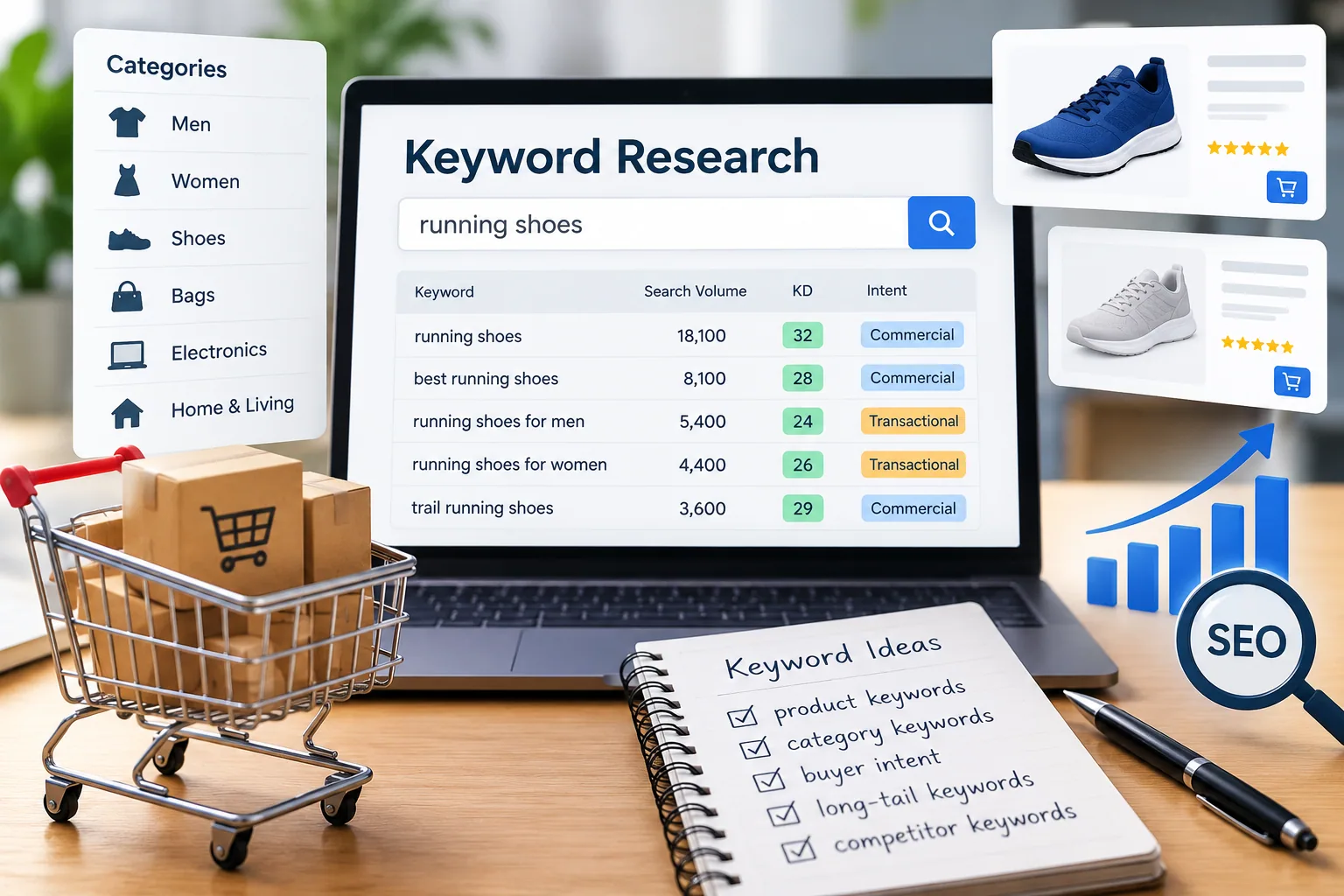
Keyword Research in 2025: Understanding Search Intent
Gone are the days of simply finding high-volume keywords and stuffing them into articles. In 2025, Google focuses on search intent optimization, ensuring content provides direct and meaningful answers to user queries.
How to Conduct Effective Keyword Research
- Use AI and Behavioral Analytics – Tools powered by machine learning analyze search patterns to identify topical authority and semantic search optimization opportunities.
- Focus on Long-Tail Keywords – These phrases align with conversational search queries, increasing your chances of ranking in voice search results.
- Analyze Competitors’ Keyword Gaps – Conducting a competitor analysis helps identify missed opportunities where you can create more authoritative content.
For businesses looking to fine-tune their SEO strategy, EasyE-CommerceMarketing'sfreeaudit provides a comprehensive analysis of missed keyword opportunities and areas for improvement.
On-Page SEO: Structuring Content for Maximum Visibility
Optimizing Title Tags, Meta Descriptions, and Header Tags
A well-optimized title tag and meta description can significantly improve click-through rates (CTR). In 2025, search engines rely on these elements to determine content relevance and search intent.
- Title tags should include primary keywords while maintaining readability.
- Meta descriptions should summarize content concisely and encourage users to click.
- Header tags (H1, H2, H3) should organize content into clear sections for both users and search engine crawlers.
By structuring content properly, businesses improve their chances of appearing in featured snippets and zero-click searches, where users get answers directly from SERPs without clicking a link.
Technical SEO: Enhancing Performance and Indexability
Why Technical SEO Matters in 2025
Without a strong technical SEO foundation, even the best content won’t rank. Google’s Core Web Vitals now factor heavily into search engine rankings, making site speed, mobile responsiveness, and structured data critical.
Key Areas of Technical SEO Optimization
- Mobile-First Indexing – Google prioritizes mobile-friendly sites, so optimizing for mobile SEO is crucial.
- Google PageSpeed Insights – A slow website affects bounce rate optimization and conversion rates.
- Schema Markup & Structured Data – Adding schema markup enhances Google Discover optimization and increases the chances of appearing in featured snippets.
For expert guidance on improving technical SEO, EasyE-CommerceMarketing'sservices can help businesses fine-tune their websites.
Backlink Building: Authority Over Quantity
Backlinks remain one of the strongest ranking factors in Google’s algorithm, but the approach to link-building strategies has changed significantly. In 2025, it's all about quality, relevance, and trustworthiness rather than simply accumulating as many links as possible.
How to Build High-Quality Backlinks in 2025
Prioritize E-A-T (Expertise, Authority, Trustworthiness)
- Google evaluates the credibility of your site based on who is linking to you.
- Links from high-authority domains (e.g., industry-leading blogs, news websites) carry more weight than dozens of low-quality links.
Leverage Broken Link Building
- Identify broken outbound links on authoritative websites.
- Offer your content as a replacement link, ensuring it matches the original intent.
Guest Posting with Value
- Instead of mass-producing guest posts, focus on high-value content that offers unique insights.
- Ensure guest posts contain contextually relevant links rather than forced keyword placements.
Create Link-Worthy Content
- Data-driven studies, original research, and interactive content naturally attract backlinks.
- Long-form content that establishes topical authority is more likely to be referenced by other sources.
For businesses struggling to acquire high-quality backlinks, EasyE-CommerceMarketing offers expert SEO strategies to improve link-building efforts.
Content Marketing: The Heart of Organic Traffic Growth
Content marketing is no longer just about blog posts—it now encompasses video SEO, interactive media, and personalized content strategies. The key to driving organic traffic in 2025 is creating content that aligns with search intent and delivers real value to users.
Key Content Strategies for SEO Success
1. Content Clusters and Pillar Pages
Google favors content clusters, where a pillar page serves as the central hub for multiple subtopics.
Example:
A pillar page on "E-Commerce SEO" could link to cluster content covering:
- Technical SEO for Online Stores
- How to Optimize Product Pages for Search Engines
- SEO Strategies for Google Shopping Listings
By interlinking related content, Google sees your website as an authoritative source, boosting rankings for all connected pages.
2. AI-Generated Content with Human Oversight
- AI-generated content speeds up the content creation process, but human editors must refine it for engagement and trustworthiness.
- AI can help with content freshness by identifying outdated sections that need updates.
3. Video SEO: Optimizing for Visual Search
- Video content ranks in SERPs, especially when optimized with schema markup, transcripts, and metadata.
- Embedding short-form videos into blog posts increases dwell time, a key UX ranking signal.
4. Personalized Content for Multi-Device Search Experience
- Search journey mapping ensures users find content suited to their current position in the funnel.
- AI-driven tools create dynamic content recommendations that enhance conversion rate optimization (CRO).
If your business needs help implementing content marketing strategies, EasyE-CommerceMarketing’sservices offer tailored solutions.
Entity-Based SEO: The Future of Search Engine Understanding
Google’s shift toward entity-based SEO means that search engines no longer rely solely on keywords—they now analyze concepts, relationships, and context.
What is Entity-Based SEO?
Instead of ranking pages based only on keyword density, Google uses semantic search optimization to determine how well a page fits within a broader topic.
Example:
If a webpage discusses “running shoes,” Google understands its relationship with:
- Foot arch support
- Marathon training
- Best brands for different running styles
How to Optimize for Entity-Based SEO:
Use Structured Data & Schema Markup
- Helps Google understand relationships between concepts.
Optimize for Google’s Knowledge Graph
- Ensure your brand appears in Google My Business, Wikipedia, and authoritative directories.
Create Topic-Based Content Instead of Isolated Blog Posts
- Focus on interconnected topics rather than single keyword-targeted articles.
SEO Metrics & Tracking Success in 2025
1. Google Search Console & AI Analytics
- AI-powered tools help identify traffic patterns, search intent shifts, and technical issues.
- Google Search Console remains essential for tracking keyword rankings, indexing issues, and Core Web Vitals performance.
2. Behavioral Analytics & User Engagement
Google is prioritizing user signals such as:
- Bounce rate optimization
- Dwell time (time spent on page)
- Pogo-sticking (users bouncing back to search results too quickly)
By analyzing user behavior, businesses can improve UX and SEO rankings simultaneously.
Local SEO: Dominating Location-Based Searches
For businesses with a physical presence or service area, local SEO is more critical than ever. With mobile searches like “near me” growing exponentially, businesses must optimize for Google My Business (GMB), hyperlocal targeting, and local backlinks.
Key Local SEO Strategies for 2025
1. Optimize Google My Business for Maximum Visibility
- Claim and verify your Google My Business listing.
- Ensure NAP (Name, Address, Phone Number) consistency across all directories.
- Upload high-quality images and videos to enhance credibility.
- Encourage and respond to customer reviews to build trust signals.
2. Hyperlocal SEO: Targeting Customers at a Micro-Level
- Use location-specific keywords (e.g., “best SEO services in [city]”).
- Implement geo-targeted schema markup to improve local search rankings.
- Optimize content for multi-device search experiences, ensuring mobile users receive the most relevant information.
3. Build Local Citations and Backlinks
- Get listed in local directories, industry-specific databases, and chambers of commerce websites.
- Partner with local influencers and community sites to earn relevant backlinks.
- Engage in local PR efforts, such as sponsoring events or featuring in local publications.
By refining local SEO, businesses can drive foot traffic, local conversions, and improved search visibility. To ensure your local SEO strategy is fully optimized, EasyE-CommerceMarketing offers professional auditing and implementation services.
Zero-Click Searches: How to Rank Without Clicks
Google continues to push zero-click searches, where users get answers directly on the SERP (Search Engine Results Page) without clicking a website. These searches include:
- Featured snippets
- People Also Ask (PAA) results
- Knowledge panels
- Google Discover content
While zero-click searches reduce traditional organic traffic, businesses can still benefit by optimizing for featured positions and brand visibility.
How to Optimize for Zero-Click Searches in 2025
1. Target Featured Snippets & Rich Results
- Answer common user questions concisely within 50-60 words.
- Use structured data markup to enhance snippet eligibility.
- Format content using H2, H3, and bullet points, as Google prefers scannable answers.
2. Optimize for People Also Ask (PAA) Boxes
- Identify related questions in Google’s PAA section and create dedicated answers.
- Use FAQ schema to increase the chances of appearing in PAA results.
3. Leverage Google Discover Optimization
- Content freshness is crucial for appearing in Google Discover.
- Use high-quality images, video SEO, and compelling meta descriptions to improve visibility.
- Optimize brand authority, as Discover favors sites with strong E-A-T (Expertise, Authority, Trustworthiness).
By structuring content for zero-click searches, businesses can improve their SERP presence without relying on traditional organic clicks.
Behavioral Analytics in SEO: The Power of Data-Driven Optimization
Google’s algorithm is increasingly user-focused, rewarding sites that enhance engagement, dwell time, and interaction rates. In 2025, behavioral analytics plays a key role in improving SEO performance.
Key User Metrics to Track
1. Bounce Rate Optimization & Dwell Time
- A high bounce rate signals poor relevance or usability.
- Improve internal linking to keep users exploring more pages.
- Use engaging video SEO and interactive content to increase dwell time.
2. Conversion Rate Optimization (CRO)
- Improve call-to-action (CTA) placement and make it mobile-friendly.
- Streamline the checkout process for e-commerce sites.
- Utilize A/B testing to refine landing pages.
3. Multi-Device Search Experience
- Ensure seamless performance across desktop, tablet, and mobile.
- Optimize for voice search by using natural language queries.
- Use progressive web apps (PWAs) to enhance mobile usability.
Understanding user behavior allows businesses to refine SEO strategies based on real-world engagement data rather than assumptions.
The Future of SEO: What to Expect Beyond 2025
SEO is constantly evolving, and staying ahead requires adaptability and long-term vision.
1. AI-Generated Content Will Become More Sophisticated
- AI-powered tools will generate entire articles based on real-time search trends.
- Businesses will need to blend AI content with human creativity to maintain authenticity.
2. Programmatic SEO Will Automate Large-Scale Strategies
- Automated content clustering will help websites scale their organic reach.
- Dynamic search intent analysis will allow businesses to adjust content instantly based on real-time search shifts.
3. Personalized Search Will Redefine Ranking Factors
- Hyper-personalized search results will tailor content based on user history and intent.
- Businesses must adapt to customized search journeys rather than a one-size-fits-all approach.
Final Thoughts: Mastering SEO in 2025 and Beyond
The future of SEO requires businesses to:
✅ Optimize for AI-driven algorithms and voice search.
✅ Improve user experience (UX) and site performance.
✅ Prioritize high-quality backlinks and E-A-T principles.
✅ Adapt to zero-click searches and local SEO shifts.
✅ Leverage behavioral analytics to refine search strategies.
By integrating these strategies, businesses can future-proof their SEO efforts and continue to drive organic traffic in an ever-changing digital landscape.
For a personalized SEO audit, EasyE-CommerceMarketing'sfreeaudit can help identify key growth opportunities.
FAQ: SEO Strategies for 2025
Below are some of the most commonly asked questions regarding SEO rankings and organic traffic growth in 2025 that were not covered in the main article.
1. How do AI-powered search algorithms impact SEO rankings in 2025?
AI-powered algorithms like Google’s RankBrain and MUM (Multitask Unified Model) analyze search intent, user behavior, and content relevance in real time. Businesses need to:
- Create high-quality, user-first content that aligns with search intent.
- Use structured data and schema markup to help AI understand content relationships.
- Optimize for semantic search by covering broad topics in depth rather than focusing on isolated keywords.
2. What is the role of Core Web Vitals in SEO rankings?
Google prioritizes page experience metrics like:
- Largest Contentful Paint (LCP): How fast a page loads.
- First Input Delay (FID): How quickly a page responds to user actions.
- Cumulative Layout Shift (CLS): How stable page elements remain while loading.
To improve Core Web Vitals, websites should:
- Optimize images with WebP compression.
- Minimize JavaScript and CSS render-blocking.
- Implement lazy loading for images and videos.
3. How does voice search impact keyword strategy in 2025?
With the rise of smart assistants (Google Assistant, Alexa, Siri), voice search optimization is crucial.
- Focus on natural language processing (NLP) and conversational queries.
- Optimize for question-based searches (e.g., “How can I improve my SEO ranking?”).
- Use FAQ schema markup to increase chances of appearing in voice search results.
4. What are the best free SEO tools to use in 2025?
For those looking to optimize SEO without a high budget, these free tools are essential:
- Google Search Console (keyword insights & indexing issues).
- Google PageSpeed Insights (site performance & Core Web Vitals).
- Ubersuggest (keyword research & competitor analysis).
- AnswerThePublic (long-tail keyword research).
- Screaming Frog SEO Spider (technical SEO audits).
5. How can social media impact SEO rankings?
While social signals are not a direct ranking factor, they indirectly help SEO by:
- Increasing brand visibility and engagement, leading to more backlinks.
- Encouraging content sharing, which can drive referral traffic.
- Improving E-A-T (Expertise, Authority, Trustworthiness) through user engagement.
Best practices:
- Share blog content on social media platforms.
- Engage in discussions and community forums.
- Leverage influencer collaborations for content amplification.
6. How important is internal linking for SEO in 2025?
Internal linking improves:
- Crawlability: Google bots discover new pages faster.
- User Experience (UX): Guides visitors to related content.
- Page Authority: Passes link equity to lower-ranked pages.
Best practices:
- Use descriptive anchor text (avoid "click here").
- Link to high-value pages within your content.
- Avoid excessive internal links on a single page.
7. What is programmatic SEO, and how does it work?
Programmatic SEO involves using automated templates to generate thousands of optimized pages targeting long-tail keywords. This is useful for:
- E-commerce sites with large inventories.
- Travel & real estate websites needing dynamic location-based pages.
- Comparison & directory sites that generate high-volume pages.
To implement programmatic SEO, businesses should:
- Ensure each page provides unique value (not just duplicated content).
- Use dynamic content elements like pricing, reviews, and location data.
- Optimize for indexing control to avoid search engine penalties.
8. How does Google Discover impact organic traffic?
Google Discover is a personalized content feed that surfaces articles before users even search. To appear in Discover:
- Use high-quality featured images (1200px wide minimum).
- Optimize for E-A-T signals (Google favors authoritative sites).
- Regularly update evergreen content to maintain freshness.
- Focus on engaging headlines and compelling storytelling.
Google Discover can drive massive traffic spikes for businesses that align their content with user behavior trends.
9. What is behavioral analytics in SEO, and why does it matter?
Google now considers user engagement metrics as indirect ranking factors. Behavioral analytics tracks:
- Dwell time: How long users stay on a page.
- Pogo-sticking: Whether users quickly return to search results.
- Conversion rates: How often visitors take action (buy, subscribe, click).
To optimize for behavioral analytics:
- Improve content readability (short paragraphs, bullet points, visuals).
- Use interactive elements (polls, quizzes, videos).
- Personalize the multi-device experience (mobile & desktop consistency).
10. How will search personalization affect SEO rankings?
Google is shifting towards personalized search results based on:
- User search history & preferences.
- Location-based results for hyperlocal SEO.
- Device type (mobile vs. desktop).
To stay competitive:
- Implement dynamic content strategies tailored to user demographics.
- Optimize for hyperlocal SEO with localized landing pages.
- Use first-party data (email lists, CRM insights) to predict search behavior.