What Is The Single Best Piece Of SEO Advice?
In today’s digital landscape, SEO (Search Engine Optimization) has evolved far beyond keyword stuffing and basic on-page tweaks. This article delves into the intricacies of modern SEO, highlighting actionable, strategic steps to enhance search visibility and boost organic rankings. We explore everything from keyword integration and high-quality content to user engagement and on-page SEO essentials, aiming to provide a comprehensive understanding of SEO’s most valuable techniques.
SEO isn’t about isolated practices but rather a cohesive approach to optimizing your content, enhancing user experience, and increasing your brand authority.
Understanding the Core of SEO Success
To succeed in SEO, there isn’t a single magic bullet—there’s a blend of strategic practices aimed at satisfying both user needs and search engine requirements. At the core, SEO relies on:
- Identifying relevant keywords that align with user intent.
- Creating valuable, optimized content that engages users and ranks well.
- Technical enhancements that improve your website’s crawlability and speed.
- Building brand authority through trusted backlinks and consistent content.
Before diving into specific strategies, let’s look at why SEO is essential for businesses like yours on Easy E-Commerce Marketing.
“SEO isn’t just about traffic; it’s about getting the right traffic that converts.”
Why Keyword Research Matters
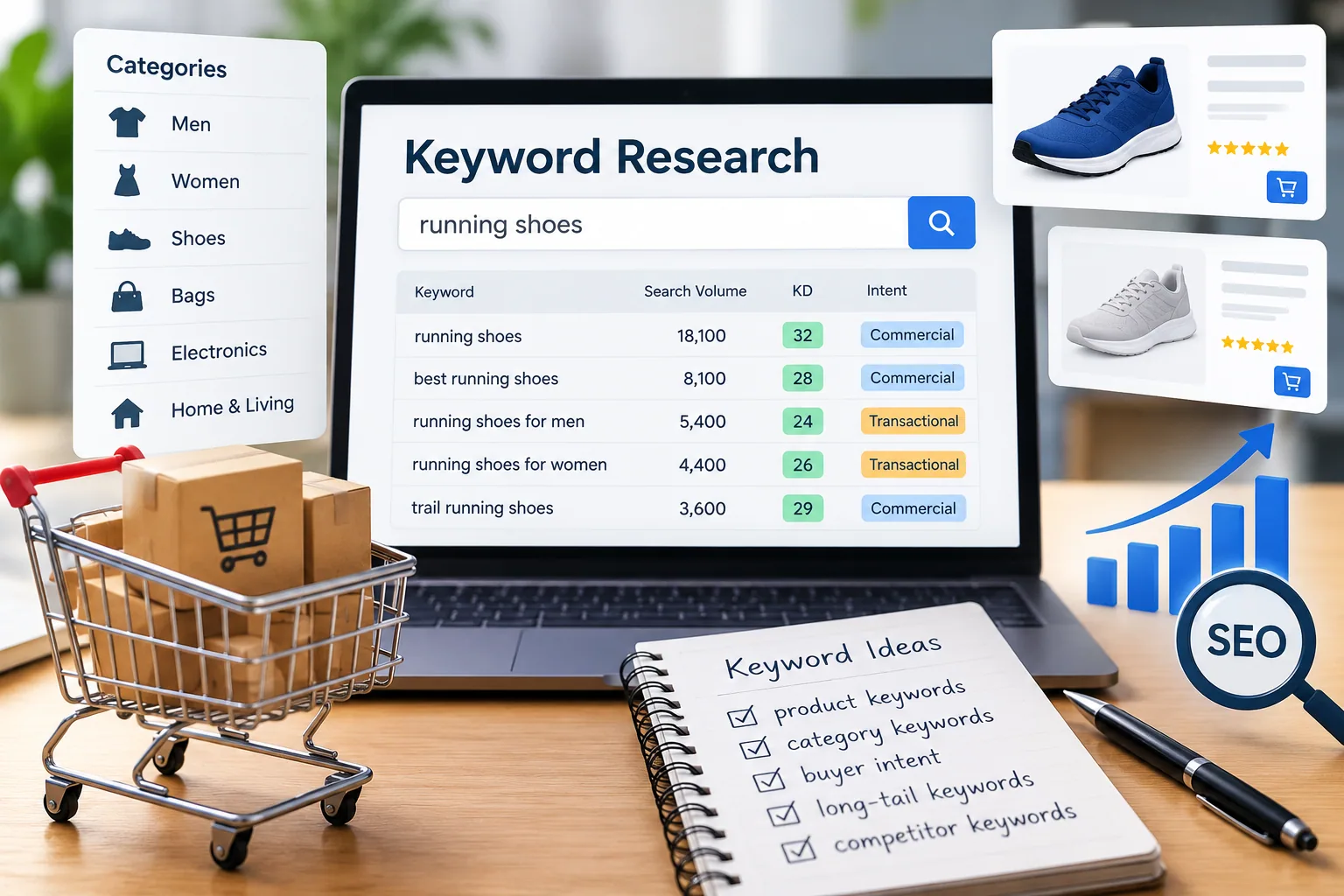
One of the foundational aspects of SEO is keyword research. Targeting the right keywords means understanding what your audience is searching for. When done correctly, it aligns your content with user intent, providing relevant answers to user queries. A combination of short-tail and long-tail keywords helps strike a balance between competitive, high-volume terms and specific phrases with intent-driven potential.
To get started:
- Use tools like Google Analytics and Google Search Console to find initial keywords related to your content.
- Consider long-tail keywords that capture user-specific needs (e.g., “how to optimize an e-commerce product page for SEO”).
- Integrate related terms naturally within the content to provide a richer experience.
For example, our free SEO audit helps identify relevant keywords specific to your business, positioning your website in front of the right audience.
The Value of High-Quality, Optimized Content
Beyond keywords, content is king in SEO. Google prioritizes high-quality, valuable content that provides comprehensive answers to user queries. This means focusing on more than just words—consider your content format, including blog posts, videos, infographics, and guides, all optimized to match the topic.
Steps to Create SEO-Optimized Content
- Research and Plan: Use a content calendar to consistently produce relevant material that engages your audience.
- Content Optimization: Ensure your pages include title tags, meta descriptions, and H1, H2 tags that clearly outline the topic.
- Optimize Readability: Structure content to enhance user experience (UX) with headers, bullet points, and visual elements. This encourages longer dwell times and reduces bounce rates.
Our services can assist in creating a structured content strategy that aligns with both SEO and branding goals, positioning your site as an authority in your niche.
Enhancing User Experience with On-Page SEO Elements
SEO-friendly formatting is critical. Beyond what users read, it’s about how they navigate your content and engage with it. Important on-page SEO elements like title tags, meta descriptions, and a clean URL structure all contribute to making content accessible and attractive to both users and search engines.
Key On-Page SEO Elements:
- Title Tags and Meta Descriptions: Craft engaging and descriptive titles and meta descriptions to improve click-through rates (CTR) from search results.
- Image Metadata: Optimize images with alt text and relevant titles, helping Google understand visual content and improving accessibility.
- URL Structure: Keep URLs clear and include targeted keywords, aiding search engines in ranking relevant pages.
For example, product descriptions on e-commerce pages can benefit from concise URLs that incorporate branded keywords and core terms, establishing clear connections to your main offerings.
Technical SEO: The Backbone of User-Friendly Sites
While content and keywords are vital, technical SEO lays the foundation for a functional, fast, and responsive website. Elements such as page speed, mobile optimization, and site architecture influence user experience directly, especially as search engines increasingly prioritize mobile-first indexing.
Best Practices for Technical SEO:
- Optimize Page Speed: Use tools like PageSpeed Insights to identify load time issues and minimize any slow-loading elements.
- Mobile Optimization: Ensure your site performs well across devices, which is essential for user engagement and Google’s mobile-first indexing.
- Crawlability and Sitemaps: Submit an updated XML sitemap to Google to ensure all pages are indexed correctly, particularly important for growing e-commerce stores.
A fast, user-friendly website keeps visitors engaged, encouraging more clicks and reducing bounce rates, ultimately boosting your SEO effectiveness.
Building Authority Through Trust Signals
In the world of SEO, trust and authority play a pivotal role in determining where your site ranks. Google’s algorithms favor websites that are deemed trustworthy, which is often indicated by backlinks from reputable sources, positive user interactions, and consistency in content quality.
Why Backlinks Are Essential
Backlinks, or inbound links, are signals that other websites recognize your content’s value. When a high-authority website links to your page, it essentially "vouches" for your content, giving your site a boost in credibility. However, not all backlinks are created equal; quality far outweighs quantity here. A few links from respected industry sites will provide more value than numerous links from low-authority domains.
Tips for Earning Quality Backlinks
- Create Link-Worthy Content: Publish unique, high-value content that industry sites want to reference.
- Guest Posting: Reach out to reputable blogs and offer guest posts that link back to your site, driving traffic and authority.
- Use Visual Assets: Infographics, videos, and even well-designed product images can attract organic backlinks when others embed them on their sites.
By aligning your site with authority sites in your industry, you build trust with both users and search engines, which contributes significantly to long-term SEO success. Our free audit tool can identify current backlinks and areas to strengthen your site’s link profile.
Trust Signals Beyond Links
Trust isn’t solely built on backlinks. Google considers user behavior, content quality, and domain authority as signals of reliability. The following practices help establish a trustworthy image for your site:
- Positive User Engagement: Track user engagement metrics such as bounce rate and session duration with tools like Google Analytics. Low bounce rates and longer session durations indicate that users find value in your content, signaling trustworthiness to search engines.
- Social Proof and Reviews: Display customer reviews and testimonials to boost credibility and engagement. Positive feedback reassures users and search engines alike that your brand is reputable.
Crafting a Strategic Content Plan
Content strategy is the foundation of an effective SEO approach. Regular, high-quality content keeps your site relevant and drives continual engagement. But content must be optimized with SEO best practices to maximize impact. Here are some essential elements of an SEO-driven content strategy.
The Role of Consistent Content Creation
Consistency in content publishing signals to search engines that your website is active and relevant. By publishing content regularly, you encourage repeat visitors and keep your audience engaged. Utilize a content calendar to manage the frequency and variety of your posts, ensuring a steady stream of valuable material for users.
Key Tips for Consistent Content Creation:
- Diversify Content Formats: Incorporate blogs, videos, guides, and infographics to appeal to different audience preferences.
- Target Shoulder Niches: Branch out by covering topics closely related to your primary niche. For example, an e-commerce store focusing on skincare products could explore related topics like wellness routines or environmental sustainability, appealing to a broader but relevant audience.
- Content Updates: Regularly refresh old content to maintain relevance and rank for new, trending keywords. Google favors updated content that provides the most current information.
Optimizing Content for Search Intent
Understanding and targeting search intent—the purpose behind a user's search query—is central to effective SEO. Whether users are looking to learn, buy, or compare, your content should address their specific needs to improve engagement and search performance.
To optimize for search intent:
- Analyze User Intent: Differentiate between informational, navigational, transactional, and commercial intent to tailor your content accordingly.
- Use Structured Data: Implement schema markup where relevant to help search engines understand your content’s purpose and make it eligible for Featured Snippets or rich results in search.
Elevating SERP Positioning and Organic CTR
Your content and SEO strategy should also aim to capture prime visibility on search engine results pages (SERPs). By optimizing for organic CTR (click-through rate), you increase the chances of users clicking on your content, enhancing both your visibility and engagement.
Strategies for Improved SERP Positioning
- Target Featured Snippets: Featured Snippets appear at the top of Google’s results, often providing concise answers to user questions. By incorporating “What is” or “How to” sections in your content, you improve the chances of ranking in these snippets.
- Craft Compelling Title Tags and Meta Descriptions: An optimized title tag and meta description are essential for attracting clicks. Craft each title and description to provide a clear, enticing reason for users to click on your link.
- Use Questions as Titles: Google often prioritizes question-based formats in SERPs, especially for voice search. Consider phrasing your titles as questions that match common search queries.
Enhancing Click-Through Rates (CTR)
Increasing your CTR without directly improving rank can still lead to better SEO outcomes. The more users click on your result, the more Google interprets it as relevant and valuable.
- Leverage Rich Snippets: For e-commerce, consider using product, rating, and FAQ schemas to enhance your listings in SERPs with additional information that catches the eye.
- A/B Testing of Titles and Descriptions: Experiment with variations of titles and descriptions to determine which versions yield the highest CTR. Minor tweaks in phrasing or focus can make a noticeable difference.
Implementing these techniques creates a user-focused, search-optimized approach that sets your content apart and drives measurable SEO results.
Advanced Technical SEO for a Stronger Foundation
Technical SEO forms the backbone of a site’s functionality, influencing how efficiently search engines crawl and index your content. Ensuring your site is optimized technically enhances user experience (UX), reduces load times, and ultimately contributes to better rankings and user satisfaction.
Key Technical SEO Elements
- Page Speed: Page load time is a critical ranking factor. Using tools like PageSpeed Insights can help diagnose and improve elements that slow down your site. Faster load times reduce bounce rates, especially on mobile, and create a seamless experience for users.
- Mobile Optimization: With the majority of searches occurring on mobile devices, ensuring a responsive design is crucial. Google’s mobile-first indexing means sites optimized for mobile will perform better in search rankings.
- Site Architecture and Crawlability: Simplify your site architecture to ensure easy navigation and efficient indexing. Use internal links strategically to help Google and users find important pages.
- Structured Data and Schema Markup: By implementing structured data, such as FAQ or product schemas, you enable search engines to understand your content’s purpose better, which can enhance your visibility with rich results.
If you’re unsure where to begin, an SEO audit from our services page can pinpoint technical issues and offer solutions to improve your site’s performance.
Enhancing Crawlability with Sitemaps
An XML sitemap helps search engines discover and crawl your site’s pages effectively, ensuring that every piece of valuable content can be indexed. Regularly update your sitemap to reflect new or modified pages and submit it via Google Search Console.
Pro Tip: Maintain a clean, organized URL structure. Use descriptive URLs that include relevant keywords but avoid unnecessary strings or parameters.
Local SEO: Connecting with Nearby Audiences
For businesses targeting specific geographic regions, local SEO can be a game-changer. By optimizing for local search, you increase the chances of appearing in localized results and reaching customers nearby.
Local SEO Best Practices
- Google My Business Optimization: Claim and fully optimize your Google My Business profile. Include accurate business details, images, service areas, and regular updates to increase your local search visibility.
- Geo-Targeted Keywords: Use location-specific keywords throughout your site, particularly on service or contact pages. For instance, if you sell specialized products in San Francisco, phrases like “San Francisco eco-friendly skincare” can attract targeted local traffic.
- Encourage Local Reviews: Positive customer reviews on platforms like Google and Yelp boost your credibility in local search results. Encourage satisfied customers to leave feedback and respond to reviews promptly to build trust and engagement.
- Local Backlinks: Connect with local organizations, directories, or news outlets to acquire backlinks from trusted sources within your region. These local signals reinforce your relevance to nearby users.
Implementing these steps for local SEO increases your chances of appearing in the local pack and makes it easier for customers in your area to find and trust your brand.
Monitoring and Leveraging Behavioral SEO Metrics
Behavioral metrics are user-based signals that search engines use to gauge a site’s relevance and user satisfaction. High engagement metrics often correlate with better rankings and indicate that users find value in your content.
Essential Behavioral Metrics to Track
- Bounce Rate: A low bounce rate suggests that users find your content valuable and are exploring your site further. Optimize for readability, improve page speed, and provide clear navigation to reduce bounce rates.
- Dwell Time: Dwell time refers to how long users spend on a page before returning to search results. High dwell times signal to search engines that your content is meeting user needs.
- Session Duration: The average time a user spends on your site. Increasing session duration, particularly on high-traffic pages, helps reinforce your site’s quality to Google.
Using Google Analytics and Search Console provides insights into these metrics, allowing you to identify pages that may need updates or additional content. Analyzing user behavior can help refine your SEO strategy, offering clues on where improvements can be made for enhanced user experience.
Practical Tips to Improve User Engagement
- Enhance Content Readability: Break up long paragraphs, use bullet points, and add visuals to keep readers engaged.
- Internal Linking: Guide users to related content within your site. Not only does this reduce bounce rates, but it also distributes link equity and encourages users to spend more time on your site. Explore our SEO services for comprehensive strategies on effective internal linking.
By paying close attention to these behavioral factors, you can build a feedback loop that constantly informs and refines your SEO approach.
Integrating SEO into a Holistic Marketing Strategy
As SEO continues to evolve, it’s essential to treat it as an integral part of your larger marketing strategy. When combined with other channels—such as content marketing, social media, and paid advertising—SEO amplifies your reach, authority, and ability to engage audiences.
SEO as Part of a Unified Approach
- Content Syndication: Share your blog posts, guides, or other high-value content on social media channels to increase visibility and engagement. Syndicating content can also attract natural backlinks.
- Branding with Branded Keywords: Build authority by incorporating branded keywords into content. Consistently associating specific terms with your brand establishes relevance and trust.
- Track Algorithm Changes: Stay updated with SEO algorithm updates and adjust your strategies as needed. Google’s algorithm continuously evolves, and staying agile helps maintain your rankings over time.
For a robust, future-proof SEO strategy, it’s wise to invest in expert guidance. Our team can help tailor an approach that aligns SEO best practices with your brand goals, ensuring sustainable, long-term growth.
Conclusion
What is the single best piece of SEO advice? As we’ve explored, there’s no single answer; SEO success lies in a comprehensive, user-focused approach that blends high-quality content, technical optimization, and consistent user engagement. By implementing these strategies—ranging from keyword research and content optimization to local SEO and behavioral analysis—you build a solid foundation for your brand to thrive in search results.
A well-rounded SEO strategy doesn’t just drive traffic; it attracts engaged, high-intent users who are likely to convert. As the digital landscape shifts, maintaining SEO practices that prioritize user satisfaction and evolving best practices will ensure your site remains competitive and relevant.
For those ready to elevate their SEO, visit our free audit tool to assess your site’s current performance and uncover new growth opportunities. Let’s optimize your website to attract, engage, and retain your ideal audience.
FAQ: The Best Practices for SEO Success
1. How long does it take to see SEO results?
SEO is a long-term strategy, and it can typically take anywhere from three to six months to see noticeable results, depending on factors such as competition, keyword difficulty, and the quality of your optimization efforts. For highly competitive keywords, it may take longer. However, consistent content creation, link building, and technical optimizations can speed up the process.
2. What is the importance of keyword density in SEO today?
While keyword density was once a primary focus in SEO, modern best practices emphasize natural and strategic keyword integration over density. Use keywords where they fit naturally, focusing more on the quality of content and user experience. Overusing keywords can actually harm your SEO by making your content appear spammy.
3. Is it better to focus on short-tail or long-tail keywords?
Both are important, but long-tail keywords tend to be more specific and are often easier to rank for, attracting higher-intent traffic. Short-tail keywords are typically more competitive but can attract a broader audience. Ideally, a balanced SEO strategy will target both types based on relevance and user intent.
4. Does updating older content help SEO?
Yes, updating older content is an effective SEO strategy. Regularly refreshing outdated information, adding new insights, and optimizing with current keywords keeps content relevant and can lead to higher rankings. It also signals to search engines that your site is actively maintained.
5. How important are social signals for SEO?
While social media shares are not a direct ranking factor, social signals can indirectly benefit SEO. Engaging content that performs well on social media often attracts more visitors, increases time spent on site, and can lead to backlinks—all of which support SEO.
6. What is the role of internal linking in SEO?
Internal linking helps distribute link equity across your site, allowing search engines to understand the hierarchy and importance of various pages. It also improves user experience by guiding visitors to related content, increasing dwell time and reducing bounce rates, which can positively impact SEO.
7. Can video content improve my SEO?
Yes, video content can enhance your SEO by increasing engagement, time on page, and attracting backlinks. Optimizing videos with titles, descriptions, and transcripts helps search engines index them, and embedding videos in relevant content can improve rankings.
8. Is mobile optimization still essential for SEO?
Absolutely. With Google’s mobile-first indexing, mobile optimization is critical. A site that performs poorly on mobile devices risks lower rankings. Ensuring a responsive design, fast load times, and mobile-friendly layouts is essential to meet search engine and user expectations.
9. How does user intent impact keyword strategy?
User intent determines the purpose behind a search query, shaping the type of content you should create. For example, informational keywords require detailed, helpful content, while transactional keywords might benefit from product pages or calls-to-action. Aligning keywords with user intent improves relevance and user satisfaction.
10. What is the best way to measure SEO success?
Key metrics for measuring SEO success include organic traffic, keyword rankings, click-through rates (CTR), bounce rates, and conversion rates. Using tools like Google Analytics and Search Console, you can track these metrics over time to evaluate the effectiveness of your SEO strategy and identify areas for improvement.