Why Is SEO Important For Business?
Search Engine Optimization, or SEO, has become a cornerstone of digital marketing. In an increasingly online world, where customers turn to search engines to find products and services, SEO plays an essential role in helping businesses establish visibility, credibility, and authority online. From driving organic traffic to enhancing user experience and improving conversion rates, SEO encompasses many strategies that yield sustainable growth. This article explores why SEO is vital for business, delving into aspects like keyword optimization, content creation, and technical SEO, each of which strengthens a business’s digital presence.
Introduction: The Foundation of SEO in Business Success
A robust SEO strategy is about more than getting your brand noticed online. It builds a foundation of trust, credibility, and user relevance for your business. At Easy eCommerce Marketing, we understand that an effective SEO approach combines content marketing, technical optimization, and strategic link building to position your brand in the competitive digital marketplace.
SEO, fundamentally, is a digital marketing strategy that improves a website’s visibility across search engine results pages (SERPs). But why does visibility matter? Higher rankings in search results mean more opportunities to engage prospective customers, generate leads, and ultimately, increase conversions. In this first part of the article, we’ll cover essential SEO components like keywords, content creation, and user experience (UX), setting the stage for how these elements work together to elevate a brand’s online presence.
Keywords: Building Blocks of SEO
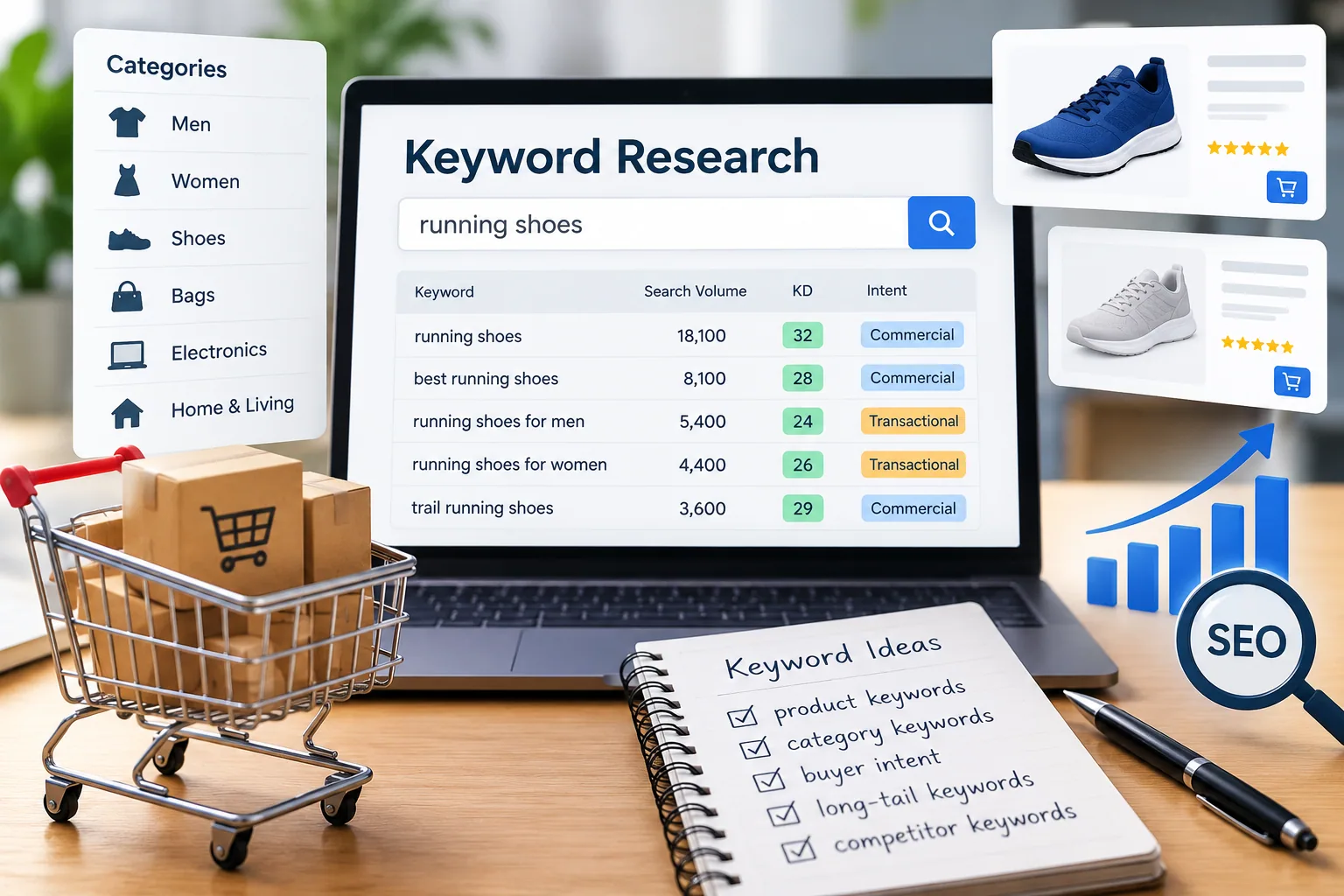
Keywords are at the core of any successful SEO strategy. Keywords and phrases represent the terms that potential customers are typing into search engines when they’re looking for products or services like yours. Strategic keyword analysis helps businesses identify high-value terms that balance search volume with achievable ranking difficulty.
- Long-tail keywords (e.g., “eco-friendly skincare products”) offer a competitive advantage, allowing brands to target specific audience queries. These longer, more descriptive phrases generally have lower competition and higher conversion rates, as they capture searchers with clear purchasing intent.
- Effective keyword targeting extends beyond primary keywords to include related terms and phrases that reflect user intent. Identifying and incorporating secondary keywords into your content increases your chance of reaching diverse audience segments.
To ensure these keywords work effectively, on-page SEO techniques like optimizing meta descriptions, headers, and image alt tags help search engines understand the topic and relevance of each page.
“Effective keyword research forms the basis of a strong SEO strategy by directly aligning content with user needs and search intent.”
Businesses that prioritize keyword optimization see improvements not only in traffic but also in click-through rate (CTR), enhancing organic performance.
Content Creation: Engaging and Informative Content as a Driver for SEO
Quality content creation fuels SEO, providing the information search engines use to rank your pages and the material users engage with on your website. Relevant, well-crafted content answers customer questions, builds brand authority, and encourages longer visits to your site.
- Engage and Educate: By crafting engaging blog posts, guides, and product descriptions, you capture attention and build credibility with potential customers. High-quality content also aligns with Google’s E-E-A-T criteria (experience, expertise, authoritativeness, and trustworthiness), further improving your ranking potential.
- Optimize for Relevance: SEO isn’t solely about quantity but also about relevance. Content optimized for content relevance will perform better in search engines, particularly as Google’s RankBrain and other AI-driven algorithms increasingly focus on understanding user intent over keyword matching.
- Increase User Engagement: When visitors find valuable, relevant content, they’re more likely to explore other parts of your website, reducing bounce rates and increasing organic traffic growth.
At Easy eCommerce Marketing, our team understands that content’s role in SEO is multi-faceted. Effective content drives engagement, encourages social sharing, and builds your brand’s presence across digital spaces. For instance, if you’re looking to improve your content strategy, check out our services page for professional guidance tailored to your brand’s needs.
Technical SEO: Enhancing the User Experience and Boosting Search Performance
Technical SEO covers aspects like site speed, mobile optimization, and website architecture, all of which directly impact user experience (UX) and SEO rankings. A well-optimized site structure helps search engines crawl and index your content efficiently, ensuring your site appears prominently in relevant search results.
- Mobile Optimization: With the advent of mobile-first indexing, Google primarily uses the mobile version of content for indexing. This shift underscores the importance of ensuring your site is mobile-friendly, with responsive design and easy navigation on smaller screens.
- Page Load Speed: Faster page load speeds lead to improved user experience and higher rankings. Google’s algorithms penalize sites with slow load times, as they contribute to poor UX and higher bounce rates. Implementing technical optimization to improve speed is crucial for retaining visitors.
- Structured Data and Markup: Using structured data, such as schema markup, helps search engines understand the content on your page, potentially earning featured snippets or other enhanced SERP features. These rich results increase CTR by providing searchers with immediate answers to their queries.
Through our free audit, Easy eCommerce Marketing identifies key areas for technical improvement, helping you optimize your website for both search engines and users.
In the world of SEO, backlinks are essential for establishing a website’s credibility and authority. A backlink occurs when another website links to yours, signaling to search engines that your content is valuable and trustworthy. Not all backlinks are created equal, however; links from reputable, authoritative sites are far more beneficial than links from low-quality sources.
- Quality Over Quantity: Backlinks from high-authority sites carry significant weight. For example, if a popular industry blog links to your product page, search engines interpret this as an endorsement, boosting your site’s credibility.
- Natural Link Building: Creating valuable content that others want to link to organically is key. Producing comprehensive guides, original research, or infographics can encourage others to share and link back to your site.
- Avoid Black Hat SEO Tactics: Practices like buying links or using spammy link farms may seem tempting, but they violate Google’s guidelines and can lead to penalties. Search engines are constantly refining algorithms to detect and penalize manipulative tactics, underscoring the importance of ethical SEO.
Link building not only improves rankings but also drives referral traffic from users who find your site through these external links. Explore the benefits of ethical link-building and more through our comprehensive services page.
Local SEO: Reaching Nearby Customers
For businesses that serve specific geographic areas, Local SEO is invaluable. Local SEO optimizes your website to appear in searches relevant to your physical location, such as “eco-friendly skincare store near me.” By tailoring your SEO strategy to include local search optimization, you increase your chances of connecting with customers who are searching for products or services in your area.
- Google My Business (GMB): Claiming and optimizing your Google My Business profile is one of the most effective ways to improve local SEO. This profile allows your business to appear in local search results, complete with contact information, hours, and reviews. It’s a direct way to boost visibility and trust in local searches.
- NAP Consistency: Ensuring that your Name, Address, and Phone Number (NAP) are consistent across all online directories helps build trust with search engines. This consistency also reinforces your business’s presence in local search results.
- Local Keywords: Incorporate local keywords that include city or neighborhood names, as these are critical for capturing geographically specific search traffic. For example, “sustainable skincare products in Austin” is a valuable local keyword for a business based in Austin.
For small and medium businesses, local SEO can significantly increase foot traffic and customer inquiries. By optimizing for local searches, you’re positioning yourself as a relevant and accessible choice for local customers. Interested in boosting your local search presence? Start by requesting a free audit of your site.
User Experience (UX) and Technical Optimization: A Seamless Journey for Your Audience
SEO isn’t only about reaching new customers; it’s also about ensuring those customers have a positive experience once they arrive on your site. User Experience (UX) plays a critical role in SEO because search engines prioritize sites that are easy to navigate, engaging, and relevant.
- Website Architecture: A well-organized website structure helps users find information quickly. This includes a clear hierarchy of pages, intuitive menus, and internal links that guide users through a logical journey on your site.
- Mobile Optimization: Given the rise in mobile-first indexing, ensuring your site is mobile-optimized is essential. Mobile users need fast load times, responsive design, and tap-friendly navigation.
- Page Load Speed: Long load times contribute to a higher bounce rate, meaning users are more likely to leave if your page takes too long to load. Google prioritizes sites that load within seconds, rewarding faster sites with higher rankings.
When UX is optimized, users are more likely to stay longer on your site, browse additional pages, and convert, all of which contribute to improved SEO performance.
“A seamless user experience not only improves SEO but also fosters customer loyalty and engagement.”
At Easy eCommerce Marketing, we emphasize the synergy between UX and SEO, ensuring your website offers an intuitive, user-friendly experience.
The Role of AI in Modern SEO: Adapting to Changing Search Algorithms
As search engines grow increasingly sophisticated, artificial intelligence (AI) has become an integral part of the SEO landscape. Google’s algorithms, powered by AI tools like RankBrain, BERT, and MUM, prioritize not only keywords but also user intent and content relevance. Understanding AI’s role in SEO can help businesses align their strategies with Google’s evolving expectations.
- RankBrain and User Intent: RankBrain uses machine learning to interpret search queries based on context and intent, rather than exact keyword matching. This means that content aligned with search intent is more likely to rank, even if it doesn’t include the exact search terms.
- BERT for Natural Language Understanding: BERT, another AI-driven model, analyzes how words in a query relate to each other. This allows Google to provide more relevant results, especially for conversational queries or longer questions. Content that addresses common questions thoroughly is more likely to perform well under BERT.
- Preparing for the Future with MUM: Google’s MUM (Multitask Unified Model) promises to further refine search results by interpreting multimedia content and understanding language nuances. This shift highlights the importance of content relevance and encourages brands to diversify their content with videos, images, and podcasts alongside text.
“As Google’s algorithms evolve, focusing on user intent and content relevance becomes essential to maintaining strong SEO performance.”
With AI reshaping SEO, brands should prioritize content that is relevant, engaging, and genuinely helpful to users. For a deeper look at how AI impacts SEO, consider exploring our dedicated digital marketing services designed to keep your business competitive.
Mobile Optimization and Page Load Speed: Enhancing SEO through User Accessibility
With mobile-first indexing now the standard, search engines prioritize the mobile versions of websites for ranking and indexing. Ensuring your site performs well on mobile devices is not just about making it look good—it’s essential for SEO performance and user experience (UX).
- Responsive Design: A responsive website adapts seamlessly to different screen sizes, whether on a smartphone, tablet, or desktop. Responsive design improves usability, making it easier for visitors to navigate and interact with your site on any device.
- Improving Load Speed: Users expect websites to load in under three seconds. If your page takes longer, there’s a high chance they’ll leave, resulting in a higher bounce rate. Technical optimization to improve load speed, including compressing images and enabling browser caching, can significantly enhance mobile usability and SEO rankings.
- Tap-Friendly Navigation: Ensuring buttons and links are easy to tap on mobile devices prevents frustrating interactions and reduces bounce rates. Tap-friendly navigation also contributes to a positive user journey by making it easy to find information.
As part of a well-rounded SEO approach, mobile optimization and fast load speeds are key. If you’re interested in enhancing your website’s mobile performance, you can consult with our Easy eCommerce Marketing team to identify specific areas for improvement.
Reputation Management and Trust: Building Authority and Customer Confidence
SEO is not just about search engine algorithms; it also involves building trust and credibility with users. Effective reputation management supports brand authority, which in turn boosts SEO by reinforcing your business as a trustworthy resource in your industry.
- Managing Online Reviews: Reviews on platforms like Google My Business or Yelp contribute to local SEO and overall brand trust. Encouraging satisfied customers to leave positive reviews can increase your visibility in local searches and attract more clicks.
- Building Brand Authority: Content that demonstrates E-E-A-T (experience, expertise, authoritativeness, trustworthiness) signals credibility to both users and search engines. Regularly publishing content that reflects industry expertise and authentic insight strengthens your brand’s reputation.
- Avoiding Black Hat SEO Tactics: Practices like keyword stuffing and cloaking might yield short-term gains but can damage your brand’s reputation in the long run. Avoiding these tactics ensures your website remains in good standing with search engines and reinforces your commitment to quality.
Effective reputation management not only strengthens SEO but also builds long-term customer loyalty. For businesses looking to improve their reputation and SEO, our services page details how Easy eCommerce Marketing can support these efforts.
Organic and Paid Strategies: Complementary Paths to Boost Visibility
Balancing organic SEO with pay-per-click (PPC) advertising can enhance your brand’s online visibility, particularly when combined strategically. Organic SEO focuses on building sustainable traffic through content and technical optimization, while PPC offers immediate visibility by placing your business at the top of search results.
- SEO for Long-Term Results: Organic search rankings provide lasting benefits. By investing in content, keyword optimization, and link building, businesses create an SEO foundation that drives traffic over time.
- PPC for Instant Reach: PPC advertising, such as Google Ads, allows brands to reach targeted audiences immediately. It’s useful for promoting specific campaigns, testing keywords, or driving traffic to newly launched pages.
- Integrating SEO and SEM: Combining organic and paid efforts can provide robust results. For instance, running a PPC campaign alongside a new SEO-optimized product launch can increase visibility quickly while organic efforts build authority in the background.
If you’re interested in creating a balanced digital marketing strategy that combines SEO and PPC, check out our free audit to get insights into how these strategies can work together for your business.
SEO Audits: Identifying Opportunities for Growth
A thorough SEO audit is essential for understanding how well your site is performing in search and identifying areas for improvement. Audits cover various aspects, including technical SEO, content quality, and user experience, to help businesses refine their strategies and stay competitive.
- Technical Review: SEO audits examine your site’s technical structure, pinpointing issues like broken links, poor site architecture, or missing alt tags. Fixing these issues enhances search engine crawlability and indexability.
- Content Analysis: Content is reviewed for relevance, keyword optimization, and quality. An audit can identify underperforming pages that could be improved through content updates or keyword refinement.
- Competitive Analysis: Reviewing your competitors’ SEO performance can provide insights into industry trends, keyword opportunities, and effective content strategies that may benefit your business.
Regular SEO audits are crucial for keeping your SEO strategy up-to-date in a constantly changing digital landscape. Start by requesting a free audit with Easy eCommerce Marketing to identify areas where your website can improve its search performance.
Conclusion: The Continuous Impact of SEO on Business Growth
In today’s digital economy, SEO is an indispensable element of any successful business strategy. By focusing on content creation, technical SEO, local SEO, and reputation management, businesses can create a powerful digital presence that builds trust and attracts long-term customers. As algorithms evolve, staying informed about trends like AI in SEO and mobile optimization will be essential for maintaining and growing your search rankings.
SEO is not a one-time effort; it’s a continuous process that adapts to new challenges and opportunities. By committing to a well-rounded SEO strategy, your business will be well-positioned for sustainable growth, competitive advantage, and a strong online reputation.
For more personalized insights and support, reach out to Easy eCommerce Marketing and explore how we can help elevate your business through strategic SEO practices.
FAQ: Common Questions About the Importance of SEO for Business
1. How does SEO differ from other digital marketing strategies?
SEO focuses specifically on improving your site’s organic (non-paid) visibility in search engine results through content, technical optimization, and credibility. Unlike PPC advertising, which requires ongoing ad spend, SEO builds long-term visibility and drives sustained traffic over time. SEO can also enhance the effectiveness of other strategies by improving site usability, boosting credibility, and reinforcing brand trust.
2. Can SEO work for any type of business?
Yes, SEO can benefit nearly any business type, whether you’re an e-commerce store, a local service provider, or a large corporation. While the specific tactics may vary, SEO principles apply across industries, helping each business increase visibility, drive traffic, and reach potential customers actively searching for related products or services.
3. How long does it take to see results from SEO efforts?
SEO is generally a long-term strategy, with results often becoming noticeable within 3-6 months. However, the timeline depends on factors like keyword competition, the current state of your site, and the quality of your SEO efforts. While SEO takes time, the benefits accumulate over time, leading to sustained and scalable growth.
4. How does SEO improve conversion rates?
SEO enhances conversion rates by aligning content with user intent, improving the user experience (UX), and ensuring your site meets user expectations. By delivering high-quality, relevant content and creating an easy-to-navigate website, SEO makes it easier for visitors to find the information they need and take actions like purchasing or contacting your business.
5. What is the role of social media in SEO?
While social media links don’t directly impact search engine rankings, they do increase content visibility and drive referral traffic, which can indirectly support SEO goals. Social media can help amplify your brand, drive traffic to your website, and increase opportunities for organic backlinks, all of which can benefit your SEO.
6. What are common SEO mistakes to avoid?
Common SEO mistakes include keyword stuffing, neglecting mobile optimization, ignoring page load speed, and using black hat tactics like buying backlinks. These practices can harm your site’s SEO and lead to search engine penalties. Ensuring a user-friendly site structure, high-quality content, and compliance with SEO best practices are essential for success.
7. Is it possible to do SEO on my own?
Yes, many SEO basics can be implemented independently, such as optimizing content for keywords and improving site structure. However, advanced SEO often requires specialized knowledge in areas like technical optimization, analytics, and link building. If SEO is crucial for your business growth, partnering with professionals can enhance your results and prevent costly mistakes.
8. How does SEO impact brand reputation?
SEO supports brand reputation by establishing your business as an authoritative and trusted source in your industry. When your content appears at the top of search results, it sends a signal of credibility to users. Additionally, managing your online presence and reviews positively impacts SEO and enhances overall brand reputation.
9. Are there specific SEO strategies for e-commerce websites?
Yes, e-commerce SEO includes optimizing product pages, using structured data for product schema, improving site speed, and ensuring mobile compatibility. Focusing on user-generated content like reviews and using targeted keywords for product descriptions can also enhance visibility and improve the user shopping experience.
10. How does SEO adapt to changes in search engine algorithms?
SEO strategies should evolve to adapt to algorithm updates that prioritize relevance, content quality, and user experience. By staying informed about updates like Google’s RankBrain or MUM, and focusing on user intent and content quality, businesses can keep their SEO practices aligned with search engine expectations and maintain strong visibility over time.